
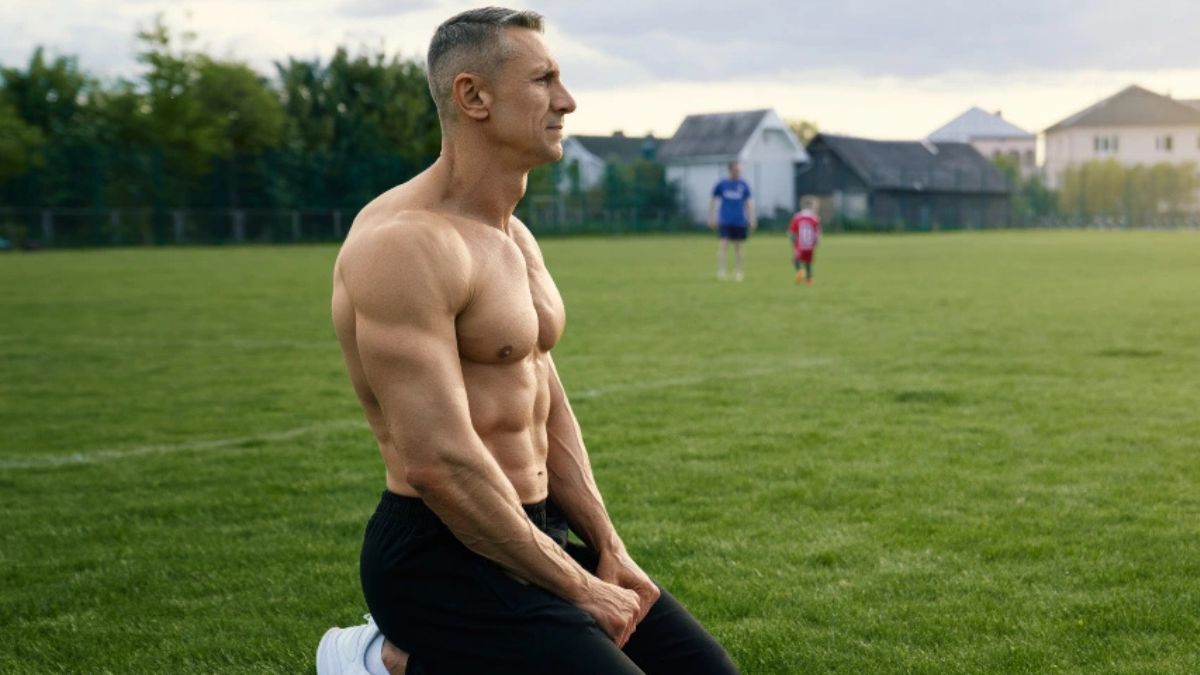
Your workout just ended, but your muscles are tight and your body feels stiff. Without a proper cool-down, you risk waking up tomorrow barely able to move.
That familiar post-workout soreness can derail your fitness goals and leave you skipping your next session.
But what if you could recover faster and feel better? Fitness trainers agree that spending just 10 minutes on targeted cool-down exercises makes all the difference.
These 15 simple movements will help your muscles recover, boost your flexibility, and get you ready for tomorrow’s workout without the pain. Your body will thank you for these extra minutes of attention.
1. Seated Forward Fold

Your hamstrings and lower back work hard during most workouts. This stretch targets both areas effectively while also extending to your calves.
Sit with legs straight out in front, then bend from your hips toward your toes. Many people feel immediate relief along the entire back of their body.
The key is breathing slowly while holding for about 30 seconds. As you exhale, you might notice you can reach a bit farther.
This happens because your muscles relax more with each breath. For extra benefit, flex your feet by pulling your toes toward you.
This activates a deeper stretch through your calves and hamstrings. Anyone with tight legs knows how valuable this simple movement can be after an intense workout.
2. Kneeling Hip Flexor Stretch

Our hips store tension from both workouts and daily life. Kneeling with one foot forward creates a gentle but effective stretch for hip flexors and quads.
Your back knee stays on the ground while your front knee forms a 90-degree angle. The magic happens when you slightly tilt your pelvis.
This small adjustment intensifies the stretch right where most people need it. Hold this position for five full breaths on each side to balance your body.
Hip flexibility affects everything from your walking stride to your posture. This stretch counteracts tightness that builds up from running, cycling, or sitting at a desk all day. Regular practice can lead to better movement patterns and reduced discomfort in your lower back.
3. Cat-Cow Stretch

Your spine needs movement in all directions to stay healthy. This gentle flowing stretch combines two positions that work together to mobilize your entire back.
Start on hands and knees in a neutral position. As you inhale, drop your belly toward the floor while lifting your chest and gaze (cow).
Then exhale and round your spine toward the ceiling while tucking your chin (cat). The beauty lies in the smooth transition between these two shapes.
Moving with your breath creates a rhythmic motion that soothes your nervous system. This stretch offers benefits beyond just your spine.
It gently engages your core muscles and releases tension in your neck and shoulders. After activities that keep your back in one position, like running or weightlifting, this movement brings balance back to your body.
4. Pigeon Pose

Hip tightness affects almost everyone, especially after lower-body workouts. Pigeon pose targets deep rotator muscles that other stretches might miss.
Starting from hands and knees, bring one leg forward with the shin at an angle and extend the other leg behind you.
The position creates an intense sensation in your outer hip and glute area. Many people hold tension exactly where this stretch focuses.
Leaning forward increases the intensity, but always stay within a comfortable range. Your body will open up gradually with consistent practice.
Regular use of this stretch can transform how your hips feel during everyday activities. Athletes particularly benefit from pigeon pose since tight hips can restrict movement patterns and lead to compensations elsewhere in the body. This makes it a valuable addition to any cool-down routine.
5. World’s Greatest Stretch

This name exists for good reason—few movements address so many areas at once. Starting in a lunge position, you place one hand inside your front foot and rotate your upper body.
This creates a comprehensive stretch from your ankles to your shoulders. The genius of this exercise lies in how it combines multiple movements into one flowing sequence.
Your hips open in the lunge while the rotation targets your thoracic spine (mid-back). This area often stiffens from daily activities and needs special attention during recovery.
Athletes across all sports incorporate this stretch into their routines because it addresses common tight spots in one efficient movement.
The dynamic nature makes it especially effective after workouts that involve running, jumping, or lifting. Your body will thank you for taking the time with this one.
6. Seated Spinal Twist

Your spine naturally wants to move in multiple directions. This twist satisfies that need while also targeting your obliques and back muscles.
Sitting with one leg crossed over the other creates the base position for an effective rotational stretch. Twisting toward your bent knee, you’ll feel a gentle wringing sensation through your spine and sides.
This movement helps restore balance after activities that primarily move your body forward and backward. Each side might feel different—that’s completely normal and shows where your body needs attention.
Beyond muscle benefits, this twist stimulates digestion and internal organs. Many people report feeling refreshed after spinal twists because they release tension from the body. For best results, hold the position for 30 seconds on each side, breathing deeply throughout.
7. Figure-Four Stretch

Many fitness problems trace back to tight glutes and piriformis muscles. This stretch specifically targets those hard-to-reach areas.
Lying on your back, cross one ankle over the opposite knee, then pull the uncrossed leg toward your chest. You control the intensity by how close you bring your legs toward your upper body.
This makes it suitable for everyone from beginners to advanced athletes. Many people feel a strong sensation deep in their hip, exactly where tightness often hides.
Adding this to your cool-down routine can help prevent issues like sciatic nerve pain and lower back discomfort. Athletes who run or cycle particularly benefit from regular practice.
The position also gently stretches your lower back, creating a two-for-one recovery movement that efficiently addresses connected areas.
8. Corpse Pose (Savasana)

Never underestimate the power of conscious rest. This seemingly simple position—lying flat on your back with arms at your sides—serves as the final reset button for your nervous system after exercise.
Your body absorbs all the benefits from your workout during this time. While physical stretches release muscle tension, corpse pose calms your mind and nervous system.
Taking five minutes to breathe deeply while completely relaxed sends signals throughout your body that the intense work is complete. Your heart rate normalizes, and stress hormones decrease.
Many people skip this crucial step, missing out on the mental recovery aspects of exercise. Sports psychologists recommend this practice to enhance the mind-body connection and improve overall recovery quality.
Think of it as meditation specifically designed for athletes—a quiet moment that bridges the gap between your workout and the return to daily activities.
9. Standing Forward Fold

Letting gravity do the work makes this stretch particularly effective for tired muscles. Simply stand with feet hip-width apart and bend at your waist, allowing your arms to hang toward the floor.
Your hamstrings, calves, and entire spine benefit from this gentle inversion. With each exhale, you might notice your body sinking a bit deeper.
This natural progression happens without forcing and shows your muscles gradually releasing tension. The position brings fresh blood flow to your head and upper body while creating space between vertebrae that may have compressed during exercise.
A 2021 systematic review published in Frontiers in Physiology found that static stretches like this one after exercise significantly improve short-term flexibility.
While researchers noted it may not dramatically reduce delayed-onset muscle soreness compared to passive recovery, the improved range of motion benefits can help maintain mobility between workout sessions.
10. Child’s Pose

Your body craves this gentle forward fold after any intense activity. Kneeling with big toes touching and knees wide, you sit back on your heels and extend your arms forward.
This creates a wonderful release through your lower back, shoulders, and hips. Many fitness trainers consider this position essential because it counters the effects of exercises that compress the spine.
Your vertebrae get space to decompress while your shoulders and neck relax completely. Slow breathing in this position signals your nervous system that it’s time to switch from “fight or flight” to “rest and digest” mode.
Child’s pose works wonders as a transition between more active stretches or as a reset during your cool-down routine.
The passive nature allows you to fully surrender your body weight to the floor, creating a supported stretch that requires minimal effort but delivers maximum relaxation. Your muscles can finally let go of built-up tension.
11. Standing Quad Stretch

Your quadriceps work hard during most exercise routines, making this stretch particularly valuable. Standing tall, bend one knee and hold your foot behind you, keeping knees aligned and hips level.
This creates a focused stretch along the front of your thigh. Finding balance in this position engages your core stabilizers while stretching your quads.
Many people unconsciously tuck their pelvis during this stretch, which reduces effectiveness. Maintaining a neutral pelvis position ensures you target the muscle properly.
Holding for 20-30 seconds on each side balances out both legs. After activities like running, jumping, or stair climbing, your quads can feel particularly tight.
This stretch addresses that tension directly, helping prevent stiffness later. Regular practice can improve your overall leg flexibility and support better movement patterns in your next workout.
Many athletes notice improved knee comfort when they consistently include this in their cool-down routines.
12. Tricep Stretch

Your arms need attention after pushing movements like push-ups or overhead presses. Raising one arm overhead and bending at the elbow, use your opposite hand to gently press the elbow back. This creates a focused stretch through the back of your arm.
The triceps often get tight without us noticing until we try this specific position. Many individuals experience instant comfort when they correctly stretch this region.
Switch sides and notice if one arm feels tighter than the other—this asymmetry provides valuable feedback about your movement patterns.
Maintaining good tricep flexibility helps with everyday movements like reaching overhead or behind your back. This becomes increasingly important as we age, as shoulder and arm mobility tends to decrease over time.
Taking 20-30 seconds per arm during your cool-down helps maintain functional range of motion and may reduce post-workout soreness in your upper body.
13. Legs-Up-the-Wall Pose

After a workout, your legs sometimes feel heavy with blood and fluid. This simple inversion helps counteract that sensation.
Lying on your back with legs extended vertically against a wall creates a passive position that lets gravity work in reverse.
Blood and lymph that normally pool in your lower extremities during standing or sitting can now flow back toward your heart more easily.
This gentle circulation boost helps clear metabolic waste products that build up during exercise. Many athletes use this position as recovery after particularly intense sessions.
The beauty of this stretch lies in its simplicity and effectiveness. It requires almost no effort to maintain once you’re in position, yet delivers significant benefits.
Five minutes in this pose often leaves your legs feeling lighter and more refreshed. This makes it particularly valuable after activities with repetitive impact like running or jumping.
14. Low-Intensity Cycling/Walking

Gentle movement helps your body transition from intense exercise back to rest. Spending 5-10 minutes walking or easy cycling keeps blood flowing without taxing your recovery systems. This active cool-down approach bridges the gap between workout and daily life.
A 2018 meta-analysis published in Sports Medicine found that active cool-downs like light cycling or walking accelerate blood lactate clearance from muscles.
This research suggests that while these activities may have minimal impact on next-day performance or soreness, they help your body process exercise byproducts more efficiently in the short term.
Many trainers recommend this approach because it allows your heart rate and breathing to gradually return to baseline. The gentle movement maintains circulation without adding stress to already worked muscles.
This makes it easier for your body to shift from exercise mode to recovery mode, potentially supporting your overall training consistency.
15. Cobra Pose/Upward-Facing Dog

Your chest and abs need stretching after activities that keep you in a forward position. Lying face down, press your hands to lift your chest while keeping your hips grounded.
This backbend counteracts the hunched position many of us maintain during daily life. The pose opens your entire front body—from throat to hip flexors—while strengthening your back muscles.
This combination of stretching and mild activation creates balance in your torso. Many people immediately notice improved breathing capacity as their chest expands more fully.
Front-body flexibility plays a crucial role in maintaining good posture. Regular practice of this stretch helps counteract the forward rounding that comes from sitting, typing, or looking at screens.
Athletes who perform activities requiring forward flexion (like cycling or rowing) particularly benefit from this counterbalancing movement. Just a few breaths in this position can reset your posture and provide relief to compressed front-body tissues.