
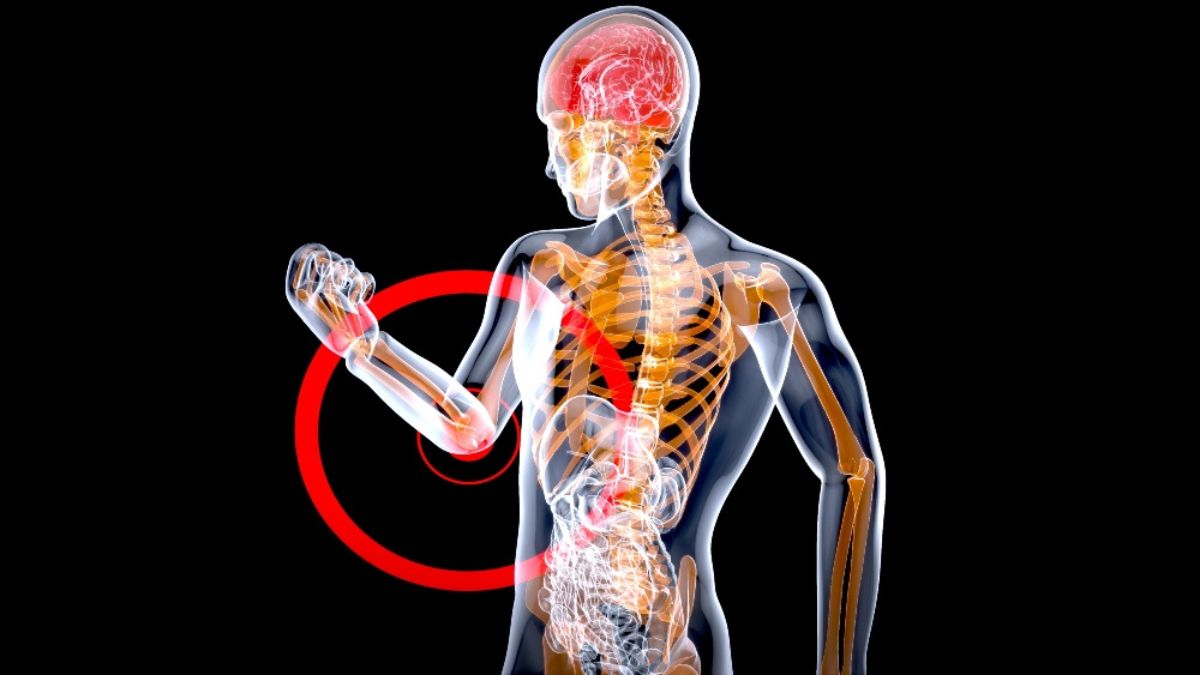
You wake up. Your knees ache. Your shoulders feel stiff.
You’ve been hitting the gym hard. You’re doing all the trendy workouts you see on Instagram. Box jumps. Burpees. High-intensity classes every day.
Those same workouts that promise quick results might be destroying your joints right now.
A study published in BMC Musculoskeletal Disorders tracked 424 CrossFit athletes and found that 48% of them suffered at least one injury during their training history. The shoulders and lower back took the biggest hit.
And it gets worse. According to data from the Department of Health and Human Services, the number of hip replacements increased by 211% between 2000 and 2017. Knee replacements? Up 240%. Scariest of all: doctors are seeing patients in their 30s and 40s needing these surgeries.
In this article, you’ll learn which popular exercises are wrecking your joints. More importantly, you’ll discover what to do instead so you can stay fit without the pain.
Let’s get started.
1. Excessive HIIT Training Without Adequate Recovery

You love HIIT. It burns calories fast. Twenty minutes and you’re done.
But here’s what your gym instructor won’t tell you: Your joints need recovery time. HIIT doesn’t give them that.
Think about what happens during a typical HIIT session. You’re jumping. Sprinting. Doing explosive movements over and over. Each landing sends force through your knees that can be 3-4 times your body weight.
Your meniscus (the cartilage cushion in your knee) takes a beating. Do this day after day, and that cartilage starts to fray. Once it tears, it doesn’t heal on its own.
The Achilles tendon connects your calf to your heel. HIIT’s constant jumping inflames this tendon. You’ll feel it as a sharp pain when you walk.
Your shoulder joints suffer, too. All those burpees and mountain climbers? They’re wearing down the labrum (the cartilage ring around your shoulder socket).
Warning signs:
- Your knees feel creaky the day after HIIT
- You have sharp pain when climbing stairs
- Your Achilles tendon hurts in the morning
What to do instead: Limit HIIT to 2-3 times per week maximum. Take 48 hours between sessions. On other days, do low-impact cardio like swimming or biking. Your joints need that recovery time to repair.
2. CrossFit Without Proper Form Coaching
CrossFit gets people excited about fitness. That’s great.
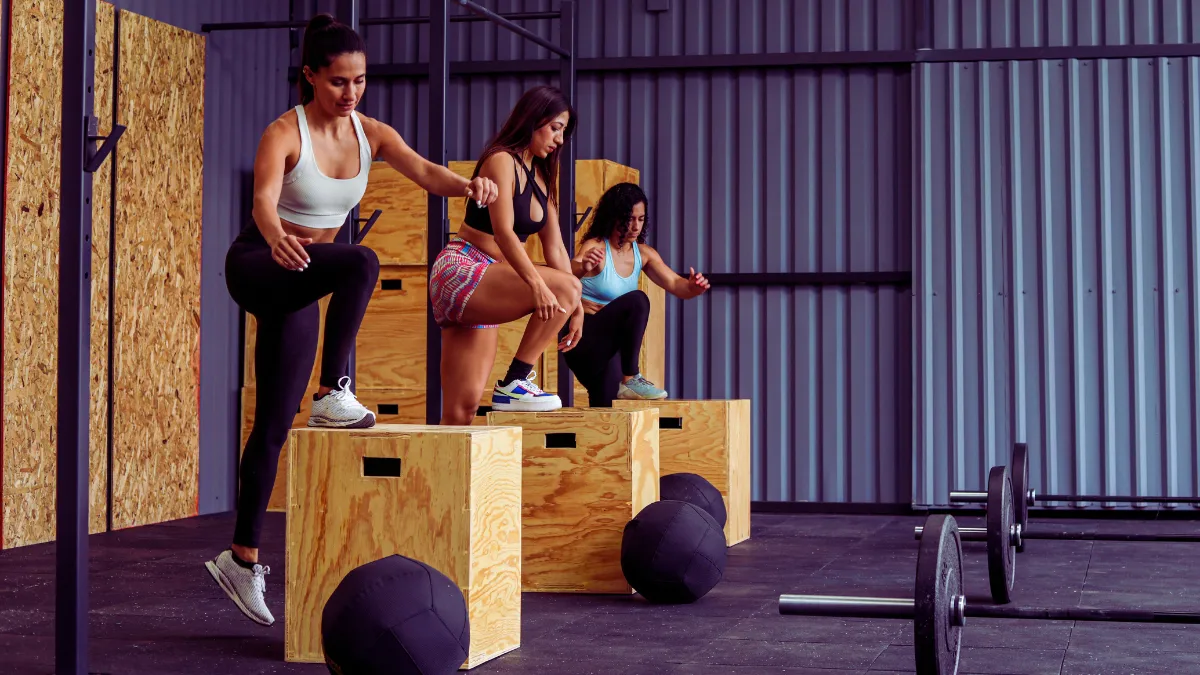
But CrossFit also has a problem. The workouts push you to go faster, lift heavier, and beat yesterday’s time. Form breaks down when you’re racing the clock.
Research published in the Orthopaedic Journal of Sports Medicine studied CrossFit participants over 12 weeks. The results: 32.8% reported at least one injury. The injury rate was 18.9 injuries per 1,000 hours of training. (Source: Orthopaedic Journal of Sports Medicine, 2020)
Where do injuries happen most? Shoulders (19% of all injuries), lower back (15%), and knees (11.7%).
Here’s why: CrossFit combines Olympic lifting, gymnastics, and high-intensity cardio. Each requires perfect technique. When you’re tired and trying to beat the clock, technique goes out the window.
Your lower back rounds during deadlifts. Your knees cave in during squats. Your shoulders roll forward during overhead presses.
These small form mistakes add up. Over months, they create chronic pain and injury.
Warning signs:
- You feel pressure in your lower back during workouts
- Your knees hurt after squats
- Shoulder pain that doesn’t go away
What to do instead: Find a gym with certified coaches who watch your form closely. Scale the workouts. Use lighter weights with perfect technique. Speed and weight don’t matter if you can’t move for a week afterward.
3. Box Jumps with Improper Landing Mechanics
Box jumps look cool. They feel athletic.
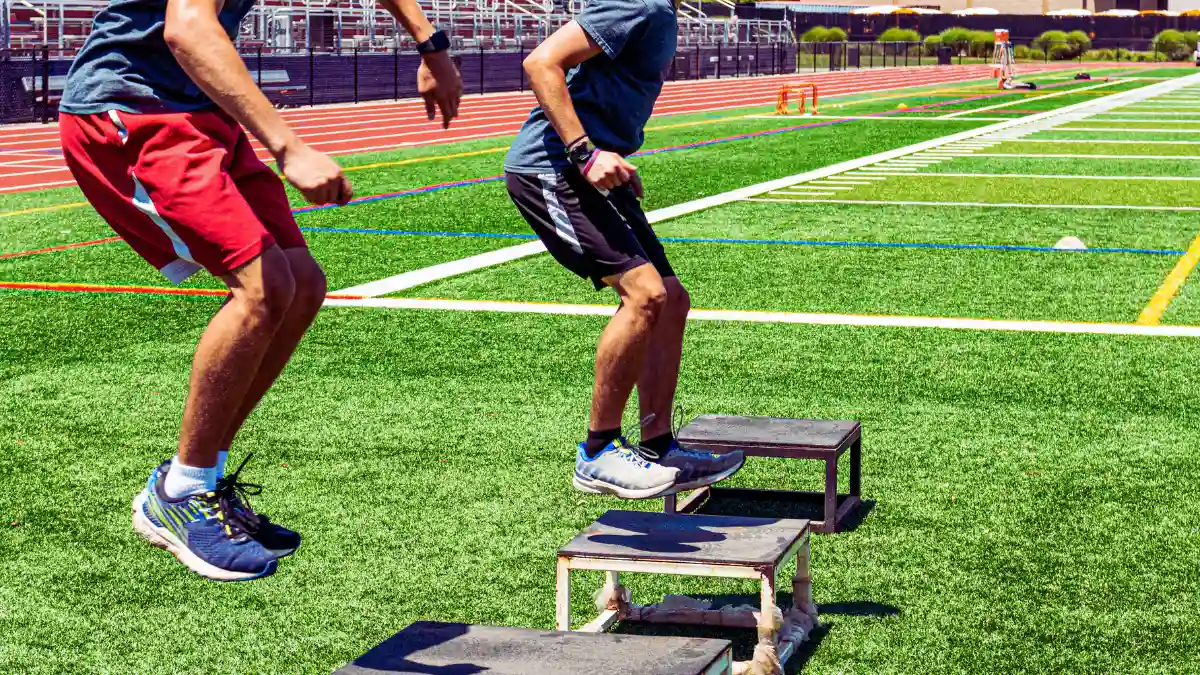
But most people do them wrong. And that’s destroying their knees.
The jump up isn’t the problem. It’s what happens next.
You land on the box. Your knees absorb the impact. Then you jump back down to the floor. Your knees absorb even more impact.
Jump down from a 24-inch box, and gravity multiplies the force on your knees. Do this for 20 reps, three times a week? You’re asking for trouble.
The cartilage behind your kneecap (called the patella) gets crushed repeatedly. It becomes inflamed. This condition has a name: chondromalacia patella. It causes aching pain behind your kneecap that won’t go away.
Think about this: A spin class with 80-100 revolutions per minute means 2,400-3,000 pedal strokes in just 30 minutes. Now imagine that same repetition but with explosive impact each time. That’s what box jumps do to your knees.
Warning signs:
- Pain behind your kneecap that gets worse with stairs
- Your knees feel unstable
- A grinding sensation when you bend your knees
What to do instead: Step down from the box. Don’t jump down. Keep box jump reps low (5-8 max per set). Rest 2-3 minutes between sets. Or skip box jumps entirely and do kettlebell swings for explosive hip power instead.
4. Burpees Done in High-Volume Circuits

Burpees became popular because they work your whole body. No equipment needed.
But burpees are a joint-killer when you do too many.
Here’s what one burpee does to your body: You drop into a squat. Jump your feet back into a plank. Do a push-up. Jump your feet forward. Then explode up into a jump.
Your wrists catch your body weight in the plank position. Your shoulders absorb force. Your knees take impact when you jump back and forth. Then they take even more impact when you land from the final jump.
One burpee? Fine. Fifty burpees in a conditioning workout? Your joints are screaming.
The problem gets worse when you’re tired. Your form breaks down. You start landing with straight legs instead of bent knees. This sends all the force straight into your joints instead of your muscles.
Warning signs:
- Wrist pain that lasts for days
- Knee pain during everyday activities
- Shoulder discomfort when reaching overhead
What to do instead: Use step-back burpees. Step your feet back instead of jumping. Step them forward instead of jumping. Do thrusters from a box (sit on a box, stand up while pressing weights overhead). You’ll get the same conditioning effect without beating up your joints.
5. Spin Classes with Incorrect Bike Setup
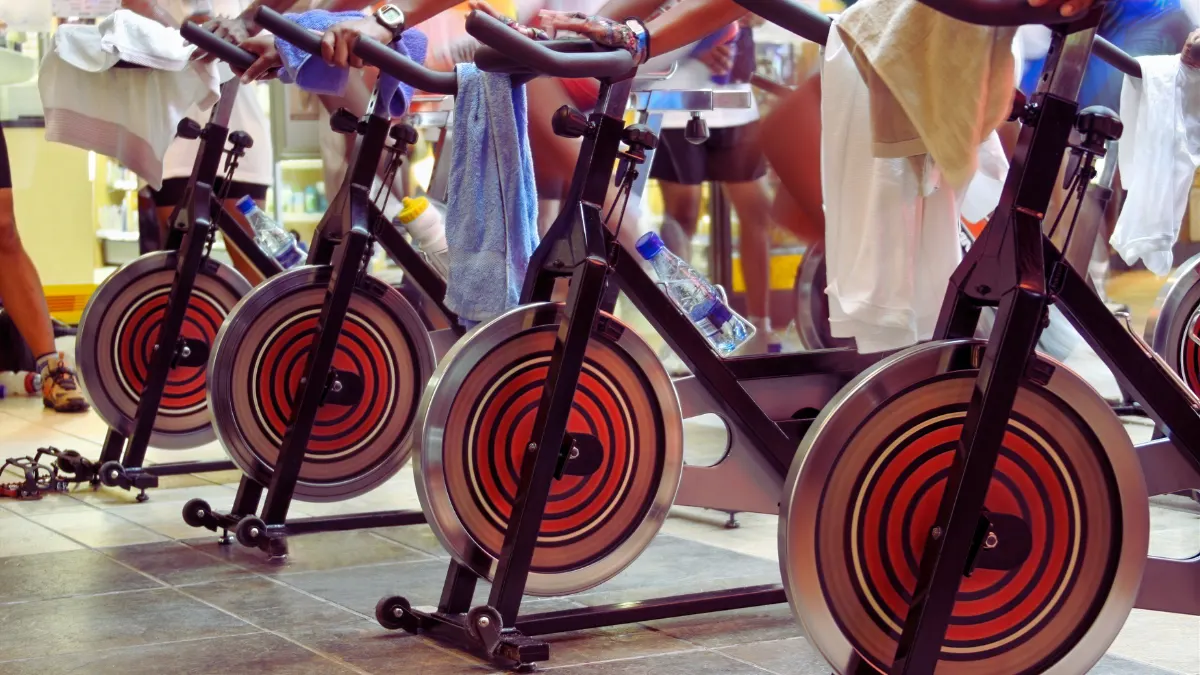
Spin classes are everywhere. They’re supposed to be easy on your joints.
But a 2023 UK study found that 48% of cyclists had experienced knee pain at some point. Over one-quarter (26.1%) had knee pain in the past month.
The problem isn’t cycling itself. It’s the bike setup.
Your saddle is too low. Now your knee bends too much at the top of each pedal stroke. This crushes the cartilage in your knee. Do this for 2,400 pedal strokes in one class, and you’re creating serious damage.
Your saddle is too high. Now your leg fully straightens at the bottom of the pedal stroke. Your hamstring has to work beyond its normal range. This strains the muscle and stresses your knee.
The saddle position matters front-to-back, too. If it’s too far forward, your knee tracks over your toes. This puts extreme pressure on your kneecap.
Spin instructors usually don’t have time to check everyone’s bike setup. So people pedal away with terrible positioning for 45 minutes straight.
Warning signs:
- Pain behind your kneecap during or after class
- The IT band (outside of the knee) feels tight and sore
- Your hips rock side to side when you pedal
What to do instead: Get a professional bike fitting (costs $75-150 but saves your knees). Quick self-check: When pedals are horizontal, your front knee should be over the ball of your foot. At the bottom of the pedal stroke, keep a slight bend in your knee. Use a higher cadence (pedal speed) with lower resistance to reduce knee stress.
6. Running on Concrete Without Proper Cushioning
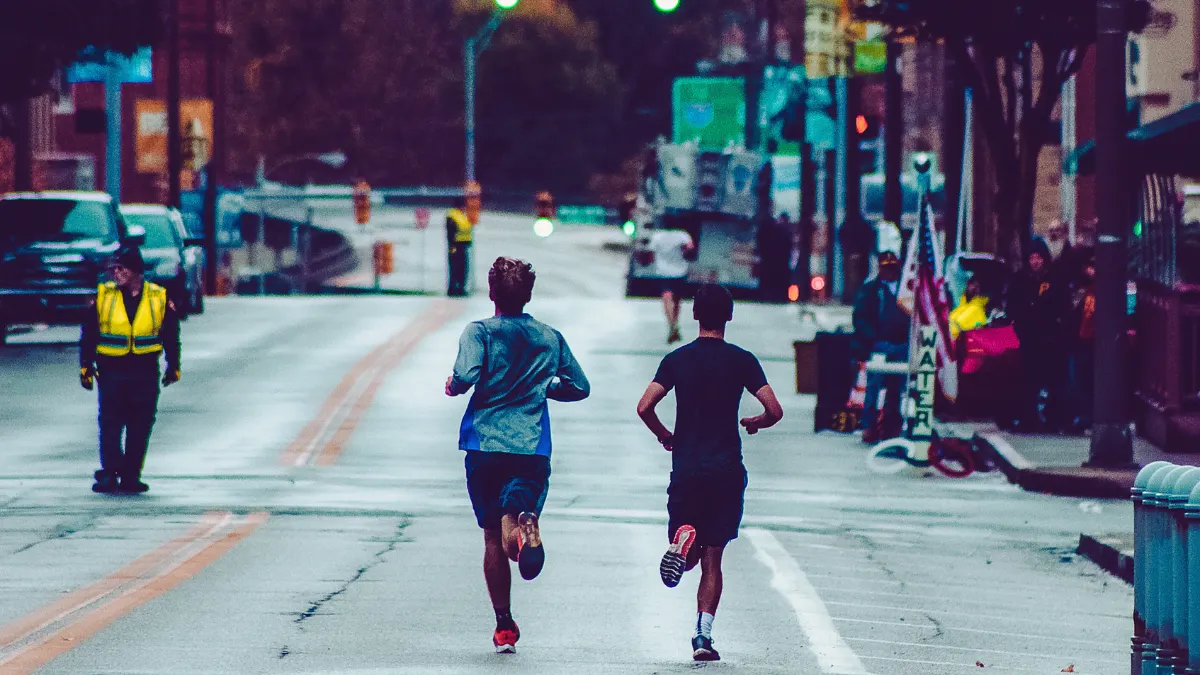
Running is free. You can do it anywhere.
But running on concrete and you’re pounding your joints with every step.
Concrete is hard. Really hard. When your foot hits concrete, the impact travels up through your ankle, knee, and hip. Your cartilage is supposed to absorb this shock. But concrete doesn’t give at all, so your cartilage takes the full force.
Do this enough, and your cartilage gets thinner. Scientists actually measured this.
Professional athletes who did high-intensity treadmill running (minimum 75 minutes per week) for over a year showed thinner cartilage in their knees. The longer they ran, the thinner their cartilage became.
Your running shoes matter too. Old shoes lose their cushioning. After 300-500 miles, the foam breaks down. Now you’re running on concrete with flat, dead shoes.
Warning signs:
- Knee pain that starts during your run and continues after
- Your joints feel stiff the next morning
- Pain on the outside of your knee (IT band syndrome)
What to do instead: Run on softer surfaces like grass, dirt trails, or rubberized tracks. Replace your shoes every 300-500 miles (track this on your phone). Mix in low-impact cardio like swimming or biking 2-3 times per week to give your joints a break.
7. Treadmill Running at 0% Incline
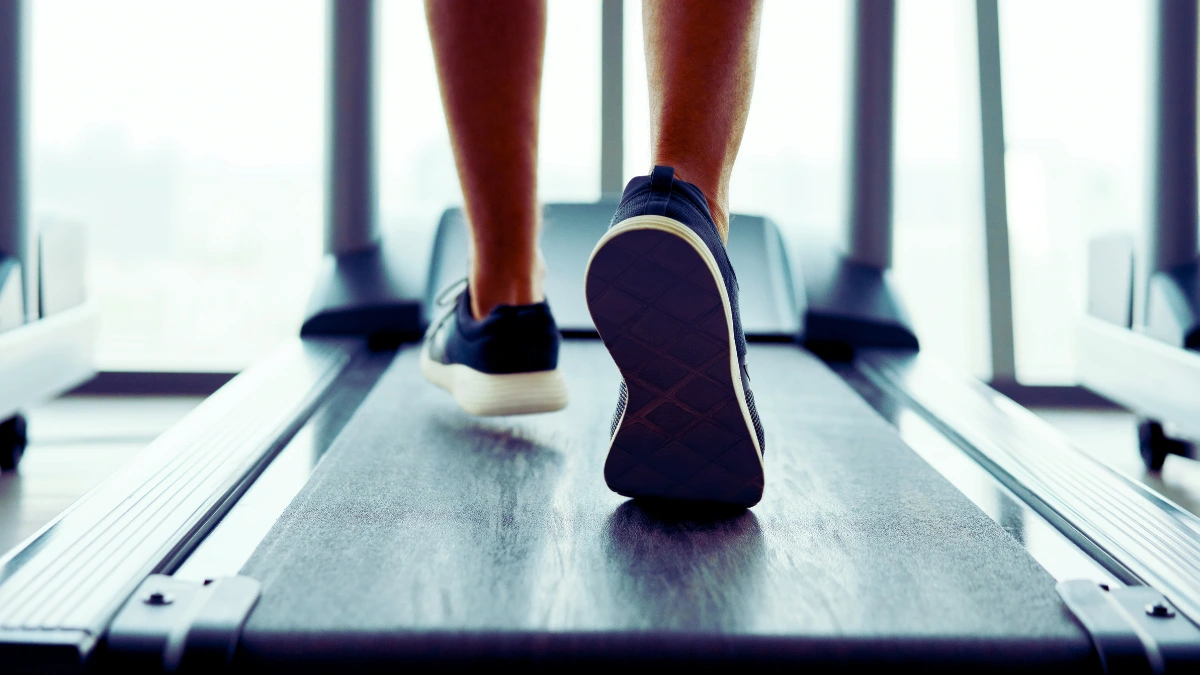
You think a flat treadmill simulates outdoor running.
It doesn’t.
A treadmill set to 0% incline is actually like running downhill. Your body moves differently than it does on flat ground outside.
Running downhill means your heel strikes the ground harder. Your quad muscles have to work harder to slow you down. And your knee takes more impact with each step.
Your hamstrings barely work at 0% incline. Hamstrings help stabilize your knee. When they don’t engage properly, your knee becomes less stable. Less stability means more stress on the joint itself.
Orthopedic surgeons recommend setting your treadmill to 1-3% incline. This matches outdoor running and protects your knees.
But people also make the opposite mistake. They crank the incline way up to make the workout harder. Running at an 8-10% incline for long periods creates different problems. It puts excessive stress on your Achilles tendon and can lead to “runner’s knee.”
Warning signs:
- The front of your knee hurts after treadmill runs
- Shin splints that won’t go away
- Your knees feel weak when going downstairs
What to do instead: Set your treadmill to 1-3% incline for most runs. Avoid sustained running at inclines above 6%. Vary your incline during the workout (walk at steeper inclines, run at moderate inclines). Add strength training for your hamstrings and glutes to support your knees.
8. American Kettlebell Swings (Overhead Swings)

Regular kettlebell swings are great for your hips and glutes.
American kettlebell swings? Not so much.
The difference: American swings go all the way overhead. You swing the kettlebell from between your legs to directly above your head.
This creates two problems.
First, you’re holding a heavy weight with both hands and swinging it overhead. Your wrists and shoulders aren’t designed for this awkward position. The weight placement puts unnecessary strain on your shoulder joints.
Second, what goes up must come down. The kettlebell reaches the top and then drops. Fast. You have to control this falling weight, which creates a roller coaster effect. Your shoulders take a pounding on the way down.
The original kettlebell swing was designed to build explosive hip power. You swing to chest or eye level, then let the bell drop back down. This keeps the work in your hips where it belongs.
American kettlebell swings take the focus away from your hips and put it on your shoulders. You get a worse workout and risk shoulder injury.
Warning signs:
- Shoulder pain during or after swings
- Your wrists hurt when you swing overhead
- You feel unstable when the weight is overhead
What to do instead: Stick to Russian kettlebell swings (swing to chest or eye level, not overhead). Focus on explosive hip drive. If you want overhead work, do proper kettlebell snatches (one arm at a time with better control) or overhead presses instead.
9. Plyometric Jump Squats with Poor Form
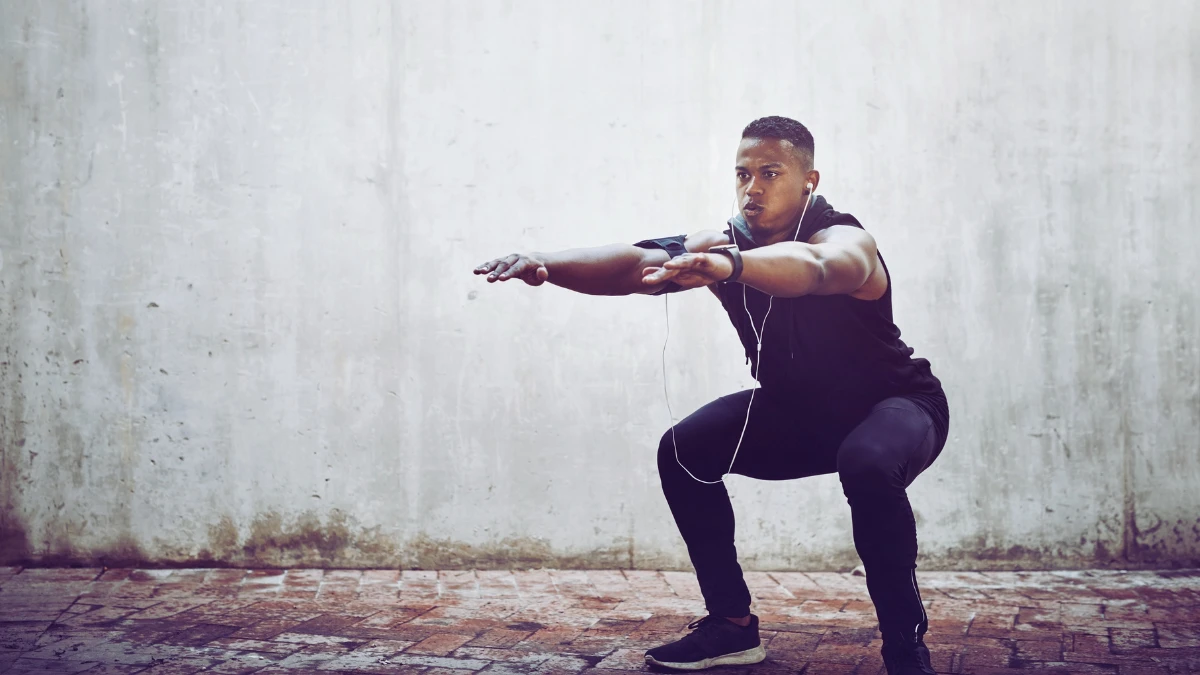
Jump squats build explosive power. Athletes use them to get faster and jump higher.
But plyometrics done wrong are one of the leading causes of knee injuries.
Here’s the issue: Jump squats are a maximum effort movement. They require explosive power from your legs. Your nervous system needs to be fresh for this.
Most people treat them like a conditioning exercise. They do 20-30 jump squats in a circuit, barely resting between sets. Their form breaks down. Their knees start caving inward. They land with straight legs.
Each of these mistakes loads your knee joint the wrong way. Your cartilage gets crushed instead of your muscles absorbing the impact.
Proper plyometric training uses low reps (1-5), long rest periods (2-3 minutes), and perfect form on every single rep. Most gym-goers do the opposite.
The landing is where most injuries happen. If you can’t land softly with bent knees and your knees tracking over your toes, you’re not ready for jump squats.
Warning signs:
- Sharp pain when you land
- Your knees feel unstable during jumps
- Swelling around your kneecap after workouts
What to do instead: Use medicine ball slams for explosive power (throw the ball down hard, no joint impact). Do box step-ups with a powerful drive at the top. If you must do jump squats, keep reps at 3-5 max, rest 2-3 minutes between sets, and film yourself to check your landing form.
10. Excessive Leg Extensions on Machines
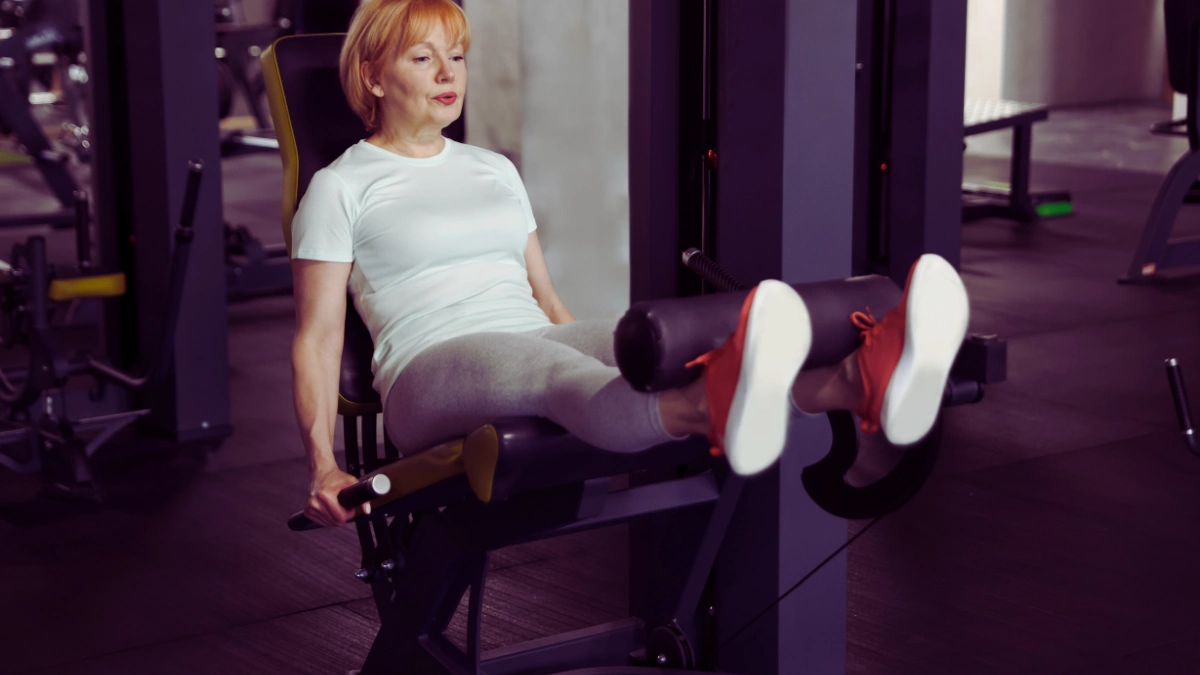
Walk into any gym and you’ll see people doing leg extensions. They sit on the machine, place their shins under the pad, and straighten their legs to lift the weight.
Seems harmless. It’s not.
Leg extensions create shear force on your knee. Shear force means the bones in your knee are sliding past each other instead of staying aligned.
Your knee is a hinge joint. It’s designed to bend and straighten when your whole leg moves together. The leg extension machine isolates your knee joint and makes it work alone.
This puts stress directly on your ACL (the ligament inside your knee) and your meniscus (the cartilage cushion). Do this repeatedly with heavy weight, and you’re asking for problems.
Leg extensions also create muscle imbalances. They work your quads but ignore your hamstrings completely. Strong quads with weak hamstrings increase your ACL injury risk.
Warning signs:
- Pain under your kneecap during the exercise
- Your knee feels unstable when you walk
- Clicking or popping sounds in your knee
What to do instead: Do compound exercises that work your whole leg: squats, lunges, step-ups, and leg presses. These keep your knee joint aligned properly and work all your leg muscles together. Your knees stay healthier, and you build more functional strength.
11. Deep Squats Without Proper Mobility

“Ass to grass” squats became popular in fitness circles. Go as deep as possible, they say. It’s better for building muscle.
But most people don’t have the mobility for safe deep squats.
Deep squats require flexible ankles, mobile hips, and a flexible mid-back. Without these, your body compensates. Your lower back rounds. Your knees cave inward. Your heels lift off the ground.
Each of these compensations stresses your joints the wrong way.
When your knees cave in (called valgus collapse), it tears at the ligaments inside your knee. The cartilage gets pinched on the inside and stretched on the outside.
When your lower back rounds at the bottom of a squat, you’re compressing the discs in your spine. Add weight to the bar, and you’re setting up for a disc injury.
The truth: Most people don’t need to squat super deep for fitness or muscle building. Parallel squats (thighs parallel to the floor) are perfectly fine.
Warning signs:
- Your heels lift when you squat deep
- Your knees cave inward during the squat
- Lower back pain after squatting
What to do instead: Squat to parallel or slightly below (90-degree knee bend). Work on mobility separately, not during heavy squats. Use box squats to control your depth. Watch your knee tracking—they should follow your toes, not cave in. Master form at parallel before going deeper.
12. High-Volume Running Without Strength Training

Running is great cardio. It burns calories and improves your heart health.
But running by itself isn’t enough to keep your joints healthy.
Your joints need strong muscles around them for support. Think of muscles as the scaffolding that holds your joints in place. Without strong scaffolding, the joint itself takes all the stress.
Weak glutes mean your knee has to stabilize itself during each stride. Weak quads mean your knee absorbs more impact. Weak hamstrings mean your knee is less stable front-to-back.
The research is clear: running-related injuries increase your risk of joint damage and arthritis. And most running injuries happen because the muscles aren’t strong enough to protect the joints.
Many runners follow the “just run more” approach. They increase their mileage week after week without doing any strength work. Eventually, something breaks down.
The 10% rule exists for a reason. Increase your weekly mileage by no more than 10% per week. This gives your body time to adapt. Jump from 15 miles per week to 30 miles per week, and your joints will rebel.
Warning signs:
- Pain that gets worse as your run continues
- Joint stiffness the day after long runs
- Frequent minor injuries that keep coming back
What to do instead: Add strength training 2-3 times per week. Focus on glutes (single-leg deadlifts, hip thrusts), quads (squats, lunges), hamstrings (deadlifts), and core. Follow the 10% rule for mileage increases. Take at least one complete rest day per week. Your joints need recovery time to repair.
13. Overhead Press with Poor Shoulder Mobility
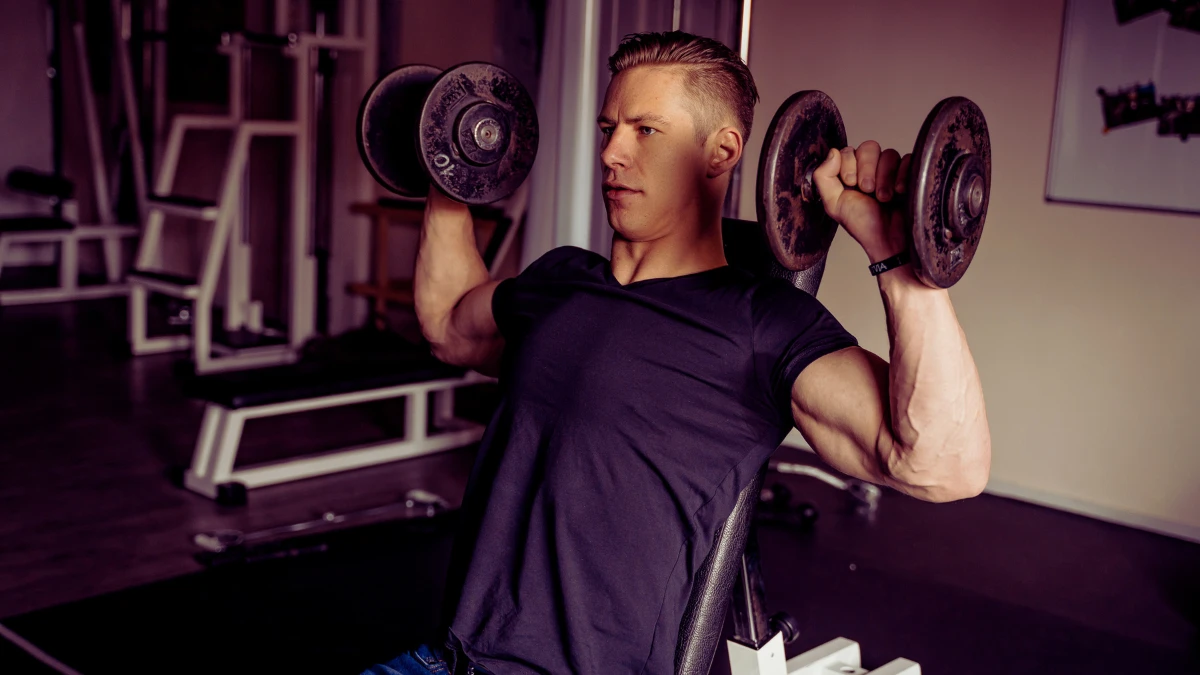
The overhead press builds strong shoulders. But it can also wreck them if you don’t have the mobility.
Try this test: Stand with your back against a wall. Raise both arms straight overhead while keeping your back flat against the wall.
Can’t do it without arching your lower back? You don’t have the shoulder mobility for safe overhead pressing.
When you press overhead without adequate mobility, your body compensates. Your lower back arches to create the range of motion your shoulders lack. This puts stress on your lower back and wears out your shoulder joint at the same time.
Your shoulder is a delicate joint. It’s designed for mobility, not heavy loading in extreme positions. Force it into positions it’s not ready for, and you get impingement, rotator cuff problems, and AC joint pain.
The issue often comes from a tight upper back (thoracic spine). When you raise your arm past about halfway, the rest of the movement should come from your upper back rotating. If your upper back is stiff, your lower back takes over.
Warning signs:
- You arch your lower back when pressing overhead
- Pain in the front of your shoulder
- Your shoulder clicks or pops during presses
What to do instead: Test your overhead mobility first. Work on thoracic spine mobility with foam rolling and extension exercises. Do landmine presses (weight presses at an angle, less shoulder stress). Use lighter weights with perfect form. Consider alternatives like dumbbell shoulder presses that allow your shoulders to move more naturally.
14. Competitive Pace in Every Workout

You walk into a group fitness class. The instructor turns up the music. Everyone around you is going hard.
You don’t want to look weak. So you push yourself to keep up.
This competitive mindset is destroying your joints.
Group classes create peer pressure. Nobody wants to be the person who goes slower or uses lighter weights. So people push beyond what their body can handle.
Your ego lifts the weight, but your joints pay the price.
Professional athletes understand something most gym-goers don’t: not every workout needs to be maximum effort. They use periodization—cycling between hard training weeks and easier recovery weeks.
The “no rest days” mentality used to be popular. Not anymore. Research shows that training without adequate recovery leads to injuries, not better results.
Your body needs different types of workouts: some hard, some moderate, and most easy. The 80/20 rule works: 80% of your workouts at moderate intensity, 20% at high intensity.
Warning signs:
- You feel sore and tired all the time
- Your performance is getting worse, not better
- You have nagging pains that won’t go away
What to do instead: Leave your ego at the door. Use the RPE scale (Rate of Perceived Exertion, 1-10). Most workouts should be a 5-7, not a 9-10. Include deload weeks every 4-6 weeks, where you reduce intensity by 40-50%. Listen to your body. Pain is a signal, not a challenge to push through.
15. Excessive Forward Lunges on Hard Surfaces
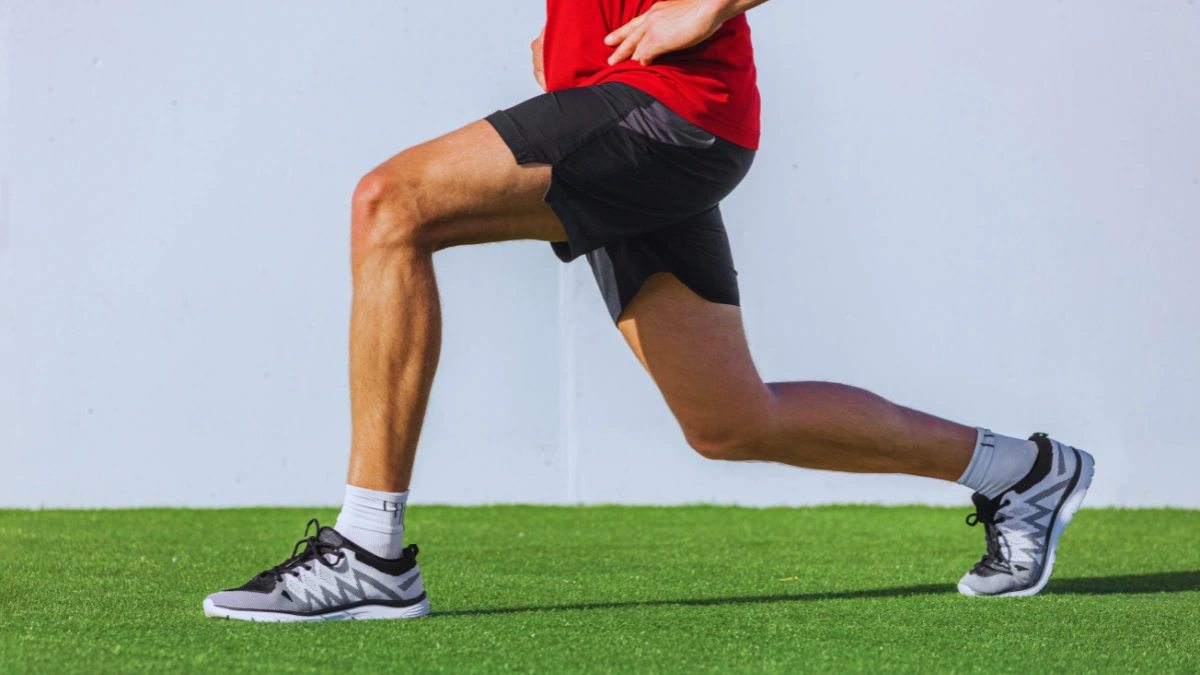
Lunges are a staple leg exercise. They work your quads, glutes, and hamstrings.
But forward lunges on hard floors create a lot of stress on your front knee.
Here’s what happens: You step forward and plant your foot. Your body weight moves forward. Your front leg has to decelerate all that momentum.
The force goes straight through your front knee. Your kneecap compresses against the bones behind it. Do high-rep lunges in a circuit workout, and you’re crushing that cartilage repeatedly.
Hard surfaces make it worse. Wood or concrete gym floors don’t absorb any impact. All the force goes into your joints.
Form mistakes compound the problem. Most people let their front knee track past their toes during lunges. This increases the shear force on the knee joint.
Lunges aren’t bad by themselves. But high-volume forward lunges on hard surfaces, especially with poor form, set you up for patellofemoral pain syndrome (runner’s knee).
Warning signs:
- Pain under or around your kneecap
- Your knee feels like it might give out
- Stairs become painful after lunging workouts
What to do instead: Do reverse lunges instead (step backward rather than forward). This reduces stress on the front knee. Use a controlled tempo—don’t rush. Lunge on softer surfaces when possible. Better yet, do split squats with your back foot elevated on a bench. This version is easier to control and puts less stress on your knees.
16. Following TikTok Workout Challenges Without Assessment

Your phone buzzes. A new fitness challenge is going viral. Do 100 burpees. Try this crazy core workout. Complete this extreme plank challenge.
It looks fun. Everyone’s doing it. You jump in without thinking.
This is how people get hurt.
Social media fitness challenges are designed to get views and likes, not keep you healthy. They prioritize entertainment over safety.
These challenges don’t consider your fitness level. They don’t ask if you have any injuries. They don’t provide proper warm-ups or progressions. They just tell you to do the hardest version possible.
The pressure to complete the challenge (and film it) makes you ignore warning signs. Your form breaks down. You feel pain, but keep going because you want to finish.
The fitness industry has moved away from the “no pain, no gain” mentality. Modern fitness focuses on sustainable training that you can maintain for years. Viral challenges do the opposite.
Fitness should make you feel empowered, not punished. It should build you up for the long term, not destroy your joints for a social media post.
Warning signs:
- You’re doing exercises you’ve never tried before
- You feel pressure to complete the challenge despite pain
- The workout leaves you unable to move for days
What to do instead: Before trying any viral challenge, ask: Do I have the strength and mobility for this? Can I do it with good form? Does it match my fitness level? If not, modify it or skip it. Consult a trainer for a movement assessment. Remember: the goal is to be able to work out for the next 20 years, not just today.