
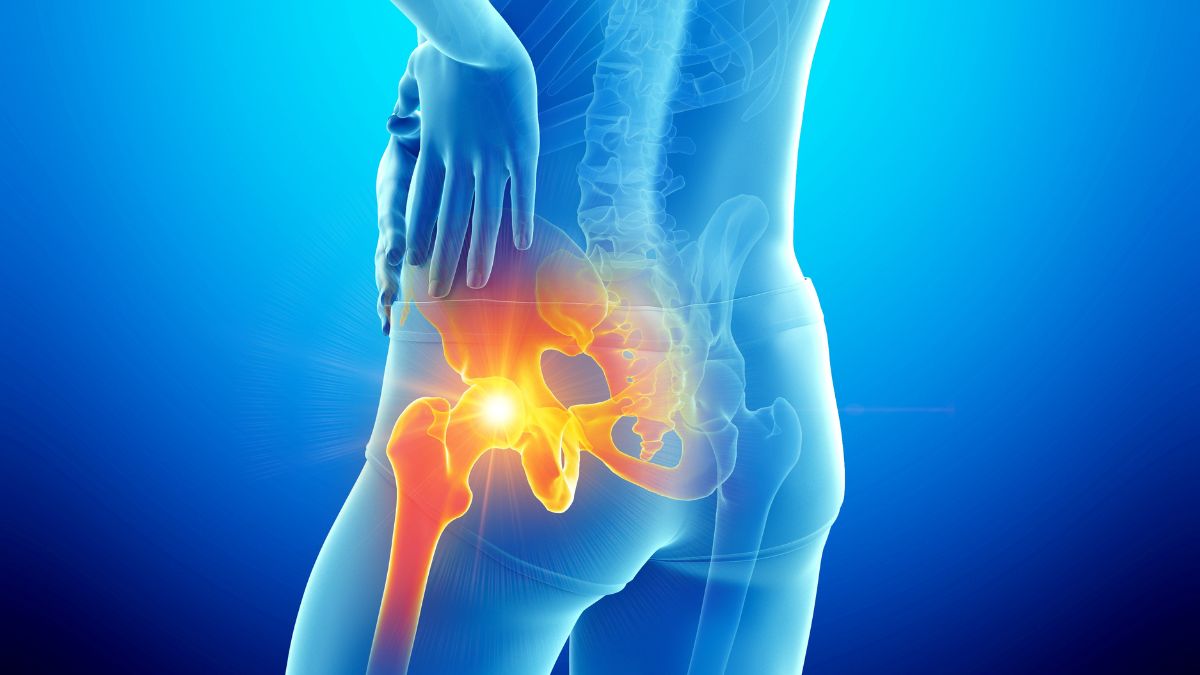
Sciatica after 60 can turn ordinary movements, such as getting out of bed or walking to the kitchen, into a trail of burning pain from the hip into the leg.
Ignoring it often creates another problem. Pain leads to less movement, less movement weakens the muscles supporting the spine, and weaker muscles can make everyday activity feel even harder.
Spine specialists generally do not recommend staying in bed and hoping the nerve settles. The safer starting point is usually gentle movement that calms irritation while rebuilding support around the lower back, hips, and abdomen
Sciatica After 60 Is Not Always The Same Problem
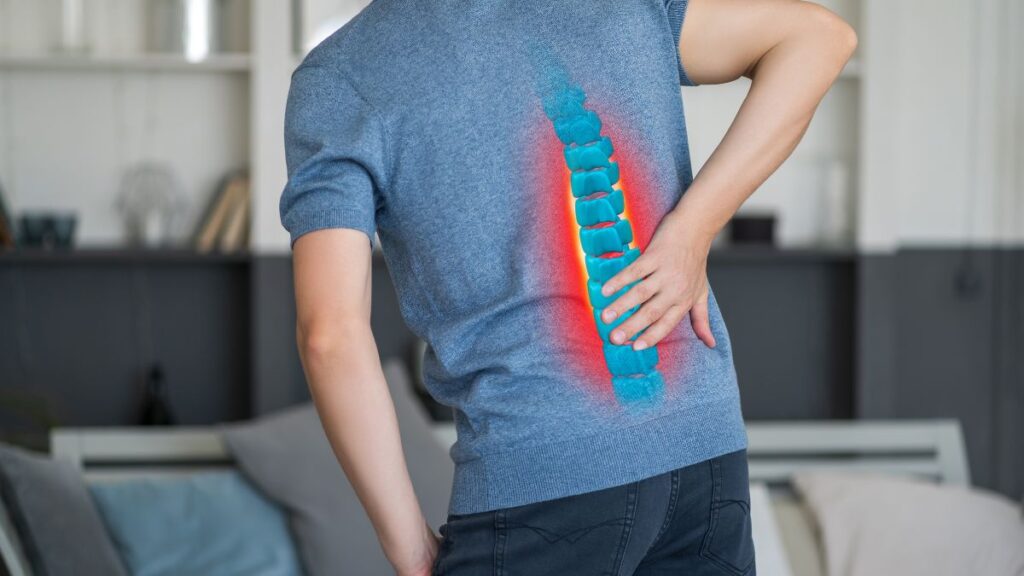
Sciatica describes pain caused by irritation or compression involving the sciatic nerve or the spinal nerve roots that form it. The discomfort may travel through the buttock, thigh, calf, or foot and can include tingling, numbness, or weakness.
A herniated disk can cause sciatica, but adults over 60 are also more likely to have narrowing around the spinal nerves from age related changes, arthritis, bone spurs, or lumbar spinal stenosis. People with spinal stenosis frequently feel worse while standing upright or walking and better when sitting or leaning slightly forward.
That difference matters. One exercise may reduce symptoms for one person but aggravate another person whose nerve is irritated for a different reason.
A spine surgeon would therefore look for a directional preference. This means identifying movements that draw symptoms out of the lower leg and closer to the hip or back.
Pain moving upward and becoming less intense is generally more encouraging than pain spreading farther toward the calf, ankle, or foot.
Quick Guide To Common Sciatica Patterns
| Symptom pattern | Possible explanation | Movement that may feel better | What requires evaluation |
|---|---|---|---|
| Leg pain after prolonged sitting or bending | Disk related nerve irritation may be involved | Gentle walking or carefully selected extension movement | Increasing weakness, numbness, or severe persistent pain |
| Pain with standing and walking | Lumbar spinal stenosis may be involved | Sitting, supported forward leaning, or stationary cycling | Rapidly declining walking ability |
| Deep buttock pain with hip tightness | Muscles around the hip may be contributing | Gentle gluteal and piriformis stretching | Severe pain after a fall or hip injury |
| Tingling that changes with leg position | The nerve may be mechanically sensitive | Gentle nerve gliding rather than forceful stretching | Constant numbness or worsening foot weakness |
| Pain in both legs with bladder or bowel changes | Serious nerve compression is possible | Do not exercise | Seek emergency medical care |
The goal of the following routine is not to force the nerve into a stretch. It is to restore comfortable movement, improve hip mobility, and strengthen the muscles that reduce unnecessary stress on the spine.
1. Start With A Gentle Five Minute Walk
Walking is often the simplest way to prevent stiffness without placing the spine under a heavy load. It moves the hips, activates the abdominal and gluteal muscles, and encourages normal circulation around irritated tissues.
Begin on a flat indoor surface or smooth outdoor path. Walk for two to five minutes at an easy pace, using a cane or walking poles when needed for balance.
Keep the steps shorter than usual. Long strides can pull more strongly through the hip and back of the leg.
If symptoms remain stable or ease, add one minute every few days. If pain travels farther down the leg, shorten the walk or stop and discuss the pattern with a clinician.
Orthopedic guidance encourages people with sciatica to remain as active as comfortably possible. Too much rest can increase stiffness and contribute to loss of conditioning.
2. Pelvic Tilts Wake Up The Deep Abdominal Muscles
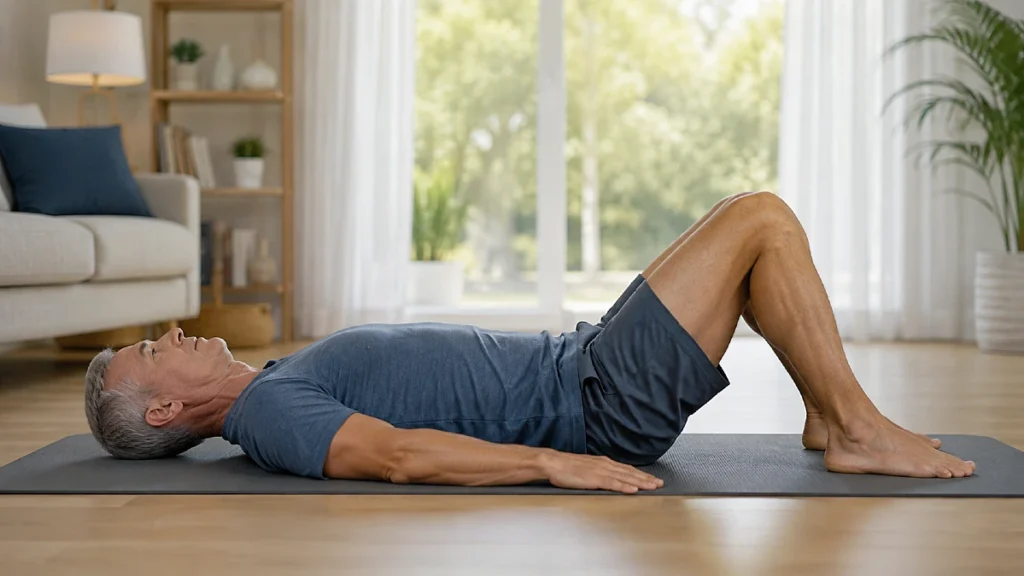
Pelvic tilts create a small, controlled movement in the lower back while teaching the abdominal muscles to support the spine.
Lie on your back with both knees bent and your feet resting on the bed or floor. Gently tighten the lower abdomen and flatten the small space beneath your lower back.
Hold for five seconds while breathing normally. Release completely.
Perform five to ten repetitions.
The movement should be subtle. Do not squeeze so forcefully that the hips lift from the surface.
Harvard Health includes gentle pelvic tilting among movements used to improve mobility in people with sciatica. The exercise can be particularly useful for adults who feel stiff after sleeping or prolonged sitting.
Older adult modification: Perform the exercise on a firm bed if getting down to the floor is difficult. Keep a pillow under the head, but avoid stacking several pillows that force the neck forward.
3. A Single Knee To Chest Stretch Can Ease Hip And Back Tightness
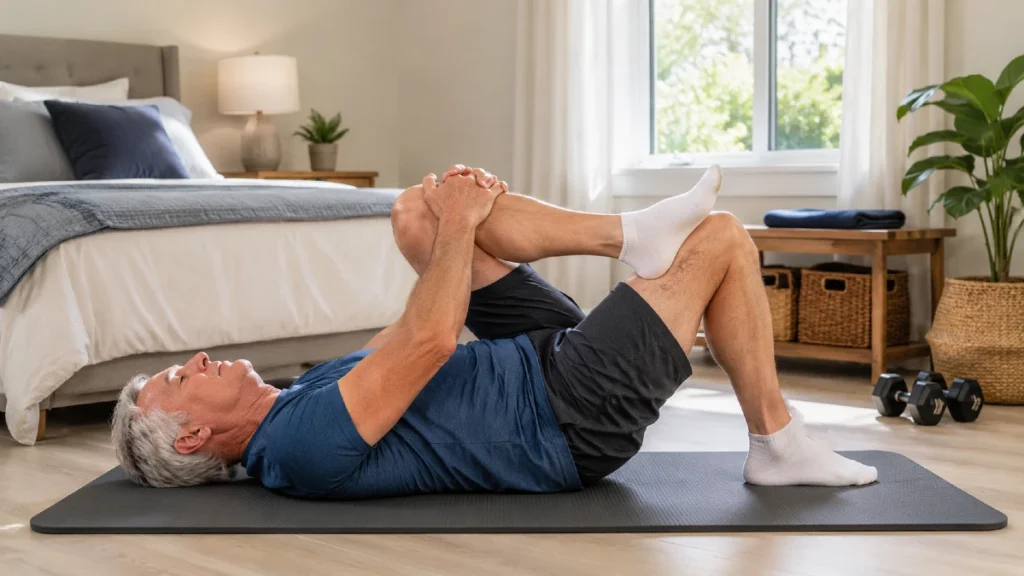
The single knee to chest movement gently stretches the lower back and buttock without requiring twisting.
Lie on your back with both knees bent. Place your hands behind one thigh and slowly bring that knee toward your chest.
Stop when you feel a comfortable stretch through the buttock or lower back. Hold for 10 to 20 seconds, then lower the foot.
Repeat two or three times on each side.
Do not force the knee against the chest. Adults with hip replacements should first ask their surgeon or physical therapist whether this degree of hip bending is safe.
Mayo Clinic and Cleveland Clinic both include knee to chest movements in their back and sciatica exercise guidance. Mayo Clinic advises moving without bouncing or jerking.
This exercise may feel especially comfortable for people whose symptoms improve when the lower back bends slightly forward. It may not suit everyone with disk related irritation, so watch what happens in the leg.
Everyone responds differently to spinal movement. Stop any exercise that causes pain, tingling, or numbness to spread farther down the leg, and ask a clinician to help identify the movement pattern that suits your condition.
4. The Chair Figure Four Stretch Targets The Buttock
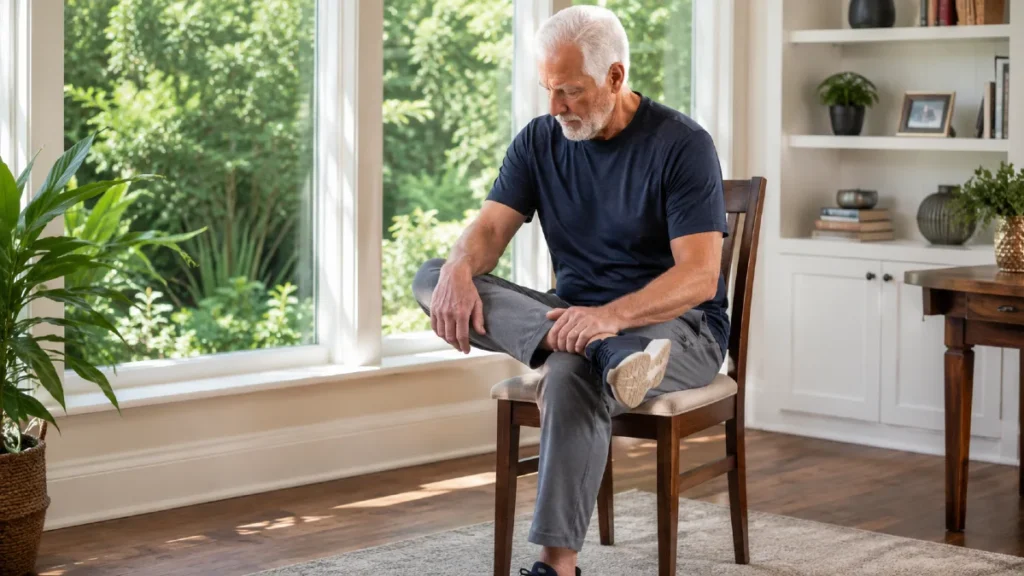
A tight piriformis and other deep hip muscles can add tension around the buttock and make sitting uncomfortable. A chair based figure four stretch offers a safer option for adults who have difficulty exercising on the floor.
Sit near the front of a sturdy chair with both feet flat. Place one ankle across the opposite thigh, staying above the knee.
Keep the spine long. Lean forward slightly from the hips until a gentle stretch appears in the crossed leg’s buttock.
Hold for 15 to 30 seconds. Repeat twice per side.
Do not press down hard on the raised knee. People with a hip replacement, severe hip arthritis, or groin pain should skip this movement until it has been cleared by a healthcare professional.
Piriformis and gluteal stretches are often included in clinical sciatica routines because improving hip mobility may reduce unnecessary tension around the pelvis. Cleveland Clinic advises gentle stretching and recommends focusing on movements that actually reduce symptoms.
5. Supported Cat And Cow Restores Comfortable Spinal Motion
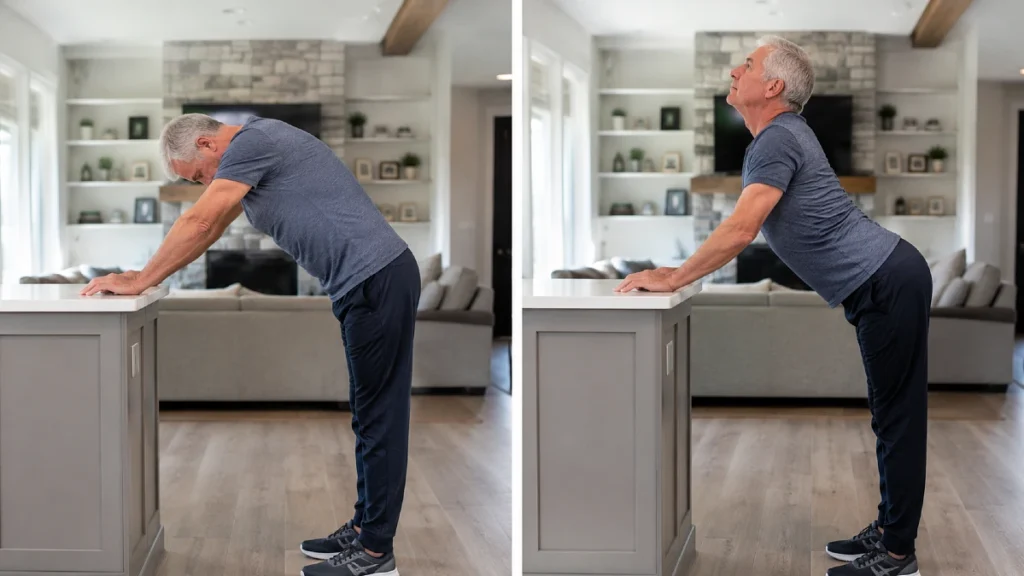
Cat and cow moves the spine through gentle rounding and arching. It can decrease stiffness while helping the person identify which direction feels more comfortable.
Stand facing a kitchen counter and place both hands on it. Step back slightly and soften the knees.
Gently round the lower and middle back while allowing the head to follow naturally. Then slowly return through neutral and let the chest lift slightly.
Move only within a comfortable range. Perform five to eight slow repetitions.
The counter version reduces the pressure placed on the wrists and knees during the traditional hands and knees position. It also makes the movement easier for someone with limited balance or difficulty getting onto the floor.
Cleveland Clinic includes cat and cow among movements that may help people with sciatica, but the motion should remain slow and controlled.
Exercise Reference For The First Five Movements
| Exercise | Starting amount | Main purpose | Stop when |
|---|---|---|---|
| Gentle walking | 2 to 5 minutes | Prevents stiffness and maintains conditioning | Leg pain spreads or walking becomes unsteady |
| Pelvic tilt | 5 to 10 repetitions | Activates abdominal support | Pain increases during flattening |
| Single knee to chest | 2 holds per side | Improves hip and lower back mobility | Symptoms travel farther down the leg |
| Chair figure four | 15 to 30 seconds per side | Stretches the buttock and deep hip muscles | Groin pain or sharp hip pain appears |
| Supported cat and cow | 5 to 8 repetitions | Restores controlled spinal movement | Tingling or numbness increases |
6. A Small Bridge Strengthens The Hips Without Heavy Equipment
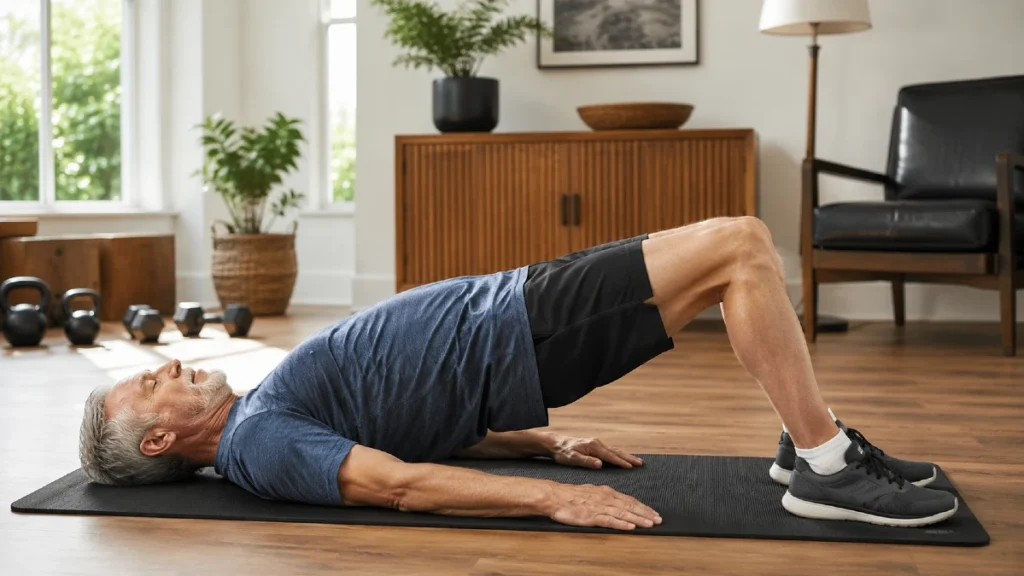
The gluteal muscles help control the pelvis when standing, walking, and climbing stairs. When they become weak, the lower back may absorb more force during daily movement.
Lie on your back with the knees bent and feet about hip width apart. Tighten the abdomen and gently squeeze the buttocks.
Lift the hips only a few inches. Hold for two or three seconds, then lower slowly.
Begin with five repetitions. Build toward two sets of eight only when the exercise remains comfortable.
A higher bridge is not necessarily better. The goal is smooth muscle activation without arching the lower back.
Cleveland Clinic includes bridging among its sciatica exercises, and orthopedic conditioning programs commonly use hip and trunk strengthening to improve spinal support.
Make it easier: Place the feet slightly closer to the hips and lift only enough to lighten the pelvis. Stop if the hamstrings cramp or the leg pain becomes stronger.
7. The Counter Bird Dog Builds Stability Without Floor Work
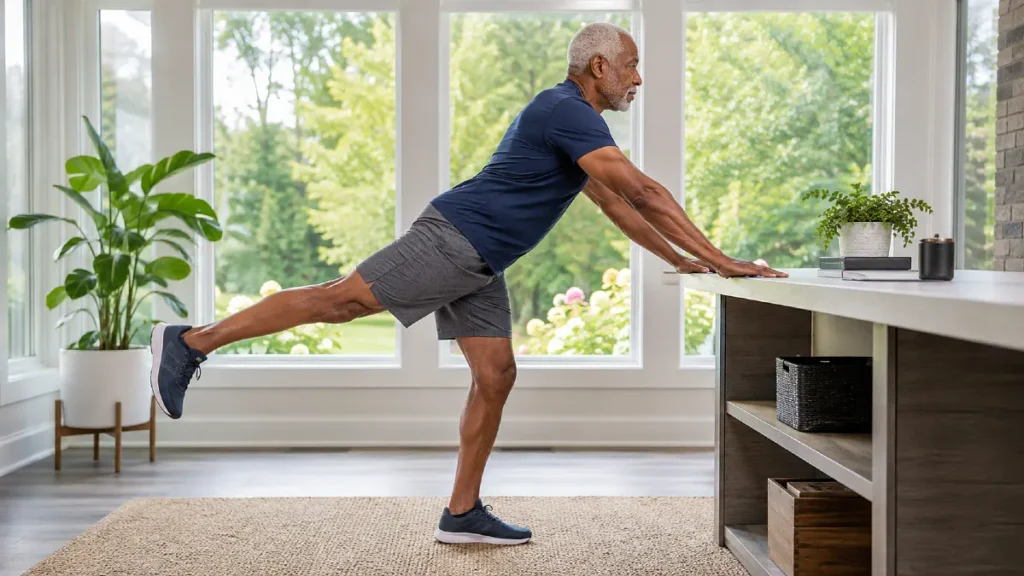
Traditional bird dog exercises begin on the hands and knees, which may be uncomfortable after 60. A counter version trains similar stabilizing muscles while reducing stress on the knees and wrists.
Stand facing a counter and place both hands on it. Step back until the torso leans forward slightly.
Brace the abdomen gently. Slide one foot backward along the floor, keeping the toes in contact with the ground.
Return the foot, then repeat with the opposite leg. Perform five repetitions per side.
As balance improves, lift the toes one inch from the floor for two seconds. Avoid twisting the pelvis or arching the lower back.
This exercise strengthens the muscles that control the spine and hips during walking. Physical therapy programs for sciatica often combine flexibility work with conditioning and core stability rather than relying on stretching alone.
8. A Seated Sciatic Nerve Glide Moves The Nerve Without Pulling It
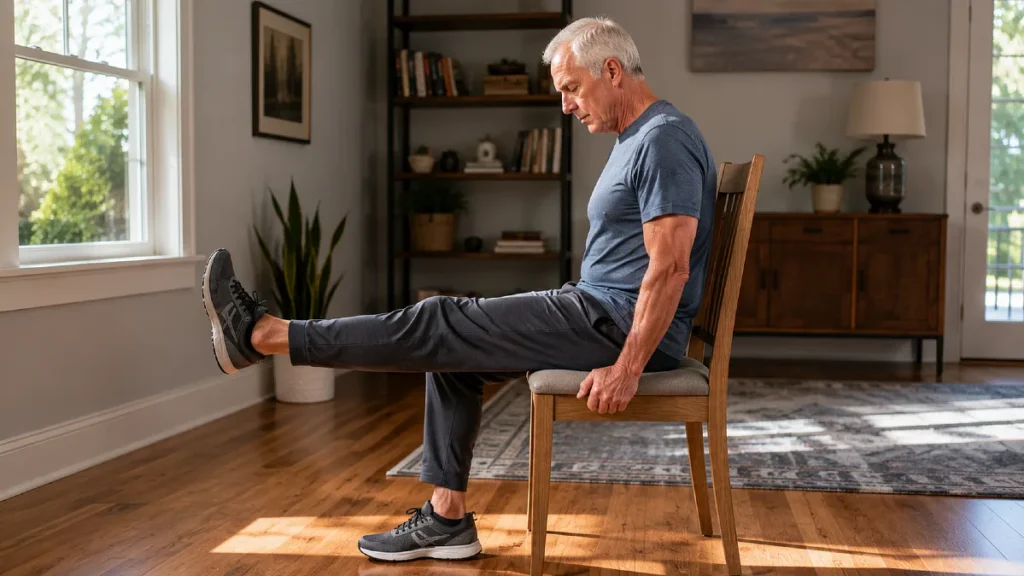
An irritated nerve is not always helped by a long, intense stretch. In some cases, repeatedly pulling the leg into a hamstring stretch can make tingling or burning worse.
A nerve glide uses two coordinated movements so the nerve slides gently through surrounding tissue without remaining under maximum tension.
Sit upright near the front of a sturdy chair. Begin with the affected knee bent and the foot on the floor.
Slowly straighten the knee while lifting the head and looking slightly upward. Then bend the knee again while bringing the chin gently toward the chest.
Perform five slow repetitions. The motion should feel easy and rhythmic.
Do not hold the leg straight. Do not point the toes aggressively toward the face.
Nerve gliding is used to improve neural mobility and reduce sensitivity, but it should not reproduce strong pain. Spine and rehabilitation sources emphasize that sciatica exercises should be selected according to the person’s symptoms rather than performed forcefully.
9. Supported Sit To Stand Rebuilds Everyday Leg Strength
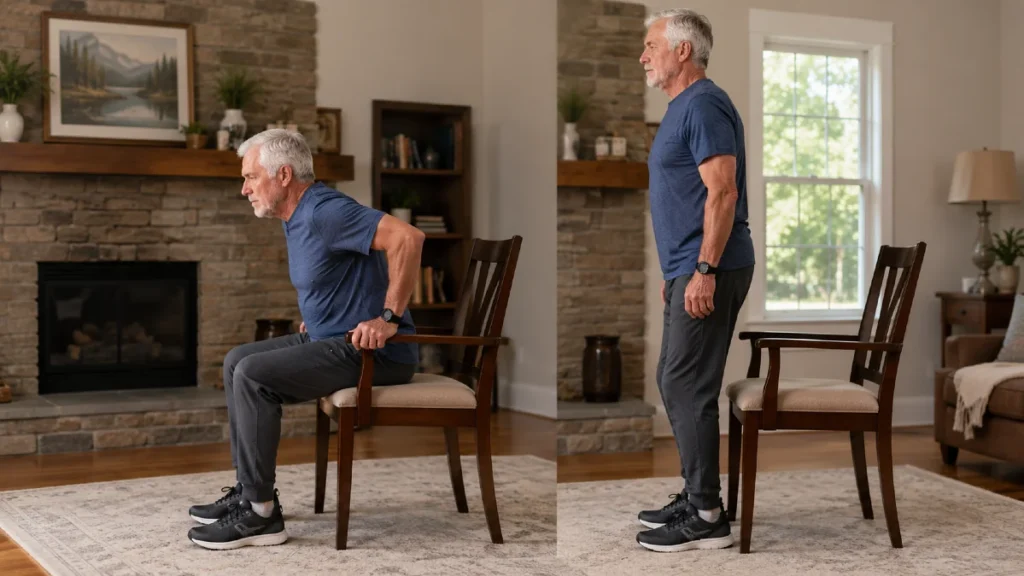
Sciatica often causes people to avoid loading the painful leg. Over time, this can weaken the thighs and hips, making chairs, stairs, and walking more difficult.
Sit in a firm chair with armrests. Place the feet slightly behind the knees and lean the chest forward.
Press through both feet and use the armrests as needed to stand. Pause, then push the hips backward and lower slowly.
Begin with three to five repetitions. Rest before repeating.
Use a higher chair if the movement feels difficult. A folded firm cushion can reduce the depth, but it must not slide.
Keep the knees pointing in the same direction as the toes. Do not allow the painful leg to drift far forward while the other leg performs all the work.
This exercise does not directly stretch the sciatic nerve. Instead, it restores the leg and hip strength needed to remain active, which is a central part of conservative care for many causes of sciatica.
The Daily Routine That Actually Works
Try This Today
- Walk gently for two to five minutes to warm up.
- Choose one mobility exercise, such as pelvic tilts or supported cat and cow.
- Add one hip exercise, such as a small bridge or chair figure four stretch.
- Finish with three to five supported sit to stands.
- Record whether symptoms moved upward, stayed the same, or traveled farther down the leg.
Do not begin all nine exercises at full volume on the same day. Start with three or four movements that feel comfortable, then add another exercise after several symptom stable sessions.
The AAOS recommends warming up with five to ten minutes of low impact movement before spine conditioning exercises. For someone experiencing active sciatica, even a shorter gentle walk may be a practical beginning if tolerated.
A Gradual Four Week Progression
| Time period | Suggested focus | Reasonable starting target | What progress may look like |
|---|---|---|---|
| Days 1 to 7 | Gentle movement and symptom observation | 3 or 4 exercises, once daily | Less stiffness after sitting or sleeping |
| Week 2 | Add light hip and abdominal strengthening | 5 to 8 controlled repetitions | Easier transitions from sitting to standing |
| Week 3 | Increase walking gradually | Add 1 minute every few days | Longer activity before symptoms appear |
| Week 4 | Build consistency rather than intensity | Short routine on most days | Better confidence during ordinary movement |
This timeline is not a promise that nerve pain will disappear within four weeks. Improvement depends on the cause, severity, duration, and whether weakness or spinal narrowing is present.