
At 2:47 AM, I grabbed my phone for the third time that night.
I opened my banking app. Again. I calculated my rent payment. Again. My heart was racing. My chest felt tight. And I knew I’d be exhausted tomorrow.
Sound familiar?
If you’re reading this at 3 AM because you can’t stop thinking about money, I get it. I spent eight months barely sleeping because financial stress took over my brain. Every night was the same nightmare of mental math and panic.
But I fixed it. Not with sleeping pills or meditation apps or “just stop worrying” advice.
I built a system that attacked both problems at once: the money anxiety and the sleep destruction.
Here’s what actually worked.
The Night I Hit Rock Bottom

Let me tell you about my worst night.
I’d been awake since 1 AM. My mind was spinning through every bill, every expense, every “what if” scenario. What if my car breaks down? What if I lose my job? What if the rent goes up?
I checked my bank account seven times between 1 and 4 AM.
By morning, I was a wreck. I snapped at my partner over breakfast. I made a stupid mistake at work that cost me a client. I was too tired to think straight, which meant I made even worse decisions about money.
That’s when I realized something. My money problems were making me lose sleep. But losing sleep was making my money problems worse.
I was trapped in a cycle. And I needed to break it.
Why Money Stress Destroys Your Sleep (The Science Part)

Here’s what I learned that changed everything.
A team of researchers in Geneva, Switzerland, studied 4,388 people to see how financial stress affects sleep. They published their findings in the journal Sleep Health in January 2025.
People with financial hardship had 111% higher risk of insomnia compared to people without money stress. That’s more than double the risk.
But here’s the part that blew my mind: 40% of that connection happened because of psychological distress. Your brain gets stuck in worry mode. It can’t shut off.
The numbers back this up:
- 70% of Gen Z adults can’t sleep because of money worries
- 49% of all Americans lose sleep over financial stress
- 87% have lost sleep worrying about money at some point
Women struggle more than men. Young people struggle more than older folks. But here’s the kicker: even people earning $70,000 to $80,000 per year lose sleep over money. 84% of them, to be exact.
Having more money doesn’t fix the anxiety. You need a different solution.
What Doesn’t Work (And Why I Wasted Six Months)

Before I found the system that worked, I tried everything that didn’t.
I tried sleeping pills. They knocked me out, but I woke up groggy and still anxious about money. Plus, I didn’t want to depend on pills forever.
I tried “just not thinking about it.” That’s like trying not to think about a pink elephant. It made the anxiety worse.
I tried avoiding my bank account completely. Bad idea. Not knowing made the fear bigger in my head.
I tried meditation apps. They helped a little, but 10 minutes of deep breathing at bedtime couldn’t fix the fact that I had no control over my finances.
The problem was simple: I was treating the sleep issue OR the money issue. Never both at the same time.
That’s what needed to change.
The Four-Step System That Fixed Both Problems
After months of research and trial and error, I built a system with four parts. Each part matters. Skip one, and the whole thing falls apart.
Here’s how it works.
Step 1: Build Your Money Dashboard (Takes 30 Minutes)

The first thing I did felt wrong. I made my money completely visible.
All of it. Every account. Every bill. Every dollar coming in and going out.
Why? Because not knowing was killing me. Every time I wondered, “Do I have enough?” my brain would spiral into panic mode. At 2 AM, every fear feels bigger than it is.
But when you know exactly where you stand? The panic loses its power.
Here’s what I did:
I picked one budgeting app. Just one. Too many apps means you won’t use any of them.
I tested five apps before finding mine. Here’s what worked in 2025:
YNAB (You Need A Budget) costs $109 per year. You give every dollar a job before you spend it. It syncs across six devices. I picked this one because it made me think before I spent money.
Monarch Money costs $99.99 per year. It’s great if you want to share finances with a partner. The AI features help spot patterns in your spending.
PocketGuard costs $74.99 per year (or use the free version). It shows you how much “pocket money” you have after bills and savings. Super simple.
Credit Karma is completely free. The budgeting is basic, but free is good when you’re stressed about money.
I picked YNAB. You pick whatever you’ll actually use.
Then I did the hard part: I linked every account. Checking. Savings. Credit cards. Everything.
It took 30 minutes. It felt scary. But here’s what happened:
My anxiety dropped by half. Immediately.
Knowing was better than not knowing. Even when the numbers weren’t great, I could see the full picture. I could make a plan. I wasn’t guessing anymore.
Step 2: Contain Your Worries (This Changed Everything)

This technique saved my sleep. It’s called scheduled worry time.
It sounds weird. It works anyway.
Here’s how it goes: You pick a time every day to worry about money. Same time. Every day. Mine was 6:30 PM.
When a money worry pops into your head at 2 PM (or 2 AM), you write it down. Then you tell yourself: “I’ll think about this at 6:30 PM.”
That’s it. You postpone the worry.
During your scheduled worry time, you pull out your list. You look at each worry. You decide if it’s something you can control or not.
Can you control it? Write down one action step. Just one.
Can’t control it? Cross it off. Worrying about it won’t help.
Here’s why this works:
Your brain needs permission to let go. When you know there’s a specific time for worries, it’s easier to push them aside during the day. Or at night.
I set a 30-minute timer. When it went off, worry time was over. I’d move on to something relaxing—usually a hot shower or reading.
The first week felt strange. I kept wanting to worry outside of worry time. But by day 10, my brain got used to it.
Research backs this up. Multiple studies show that worry postponement reduces anxiety and even physical symptoms like headaches and stomach problems.
But here’s the key: You have to actually do it at the same time every day. Miss a day, and your brain won’t trust the system.
Step 3: Create Hard Boundaries Before Bed

This is where I messed up for weeks before I got it right.
I had my budgeting app. I had my worry time. But I kept breaking one rule: I checked my bank account before bed.
“Just a quick look,” I’d tell myself. “Just to make sure everything’s okay.”
Every time I did this, I’d find something to stress about. A charge I didn’t recognize. A balance lower than I expected. Something.
Then I’d be awake for two hours.
So I made hard rules:
No bank accounts after 8 PM. Not even one quick check.
No financial news after dinner. Those headlines are designed to scare you. They’ll keep you up.
No money discussions in the bedroom. My bedroom became a money-free zone. If my partner wanted to talk about bills, we did it in the kitchen.
Phone stays out of the bedroom. This was the hardest one. I used my phone as an alarm, which meant I could “accidentally” check my bank app at 3 AM. I bought a $12 alarm clock instead.
To enforce these rules, I used app blockers. On iPhone, I used Screen Time to block banking apps after 8 PM. Android has Digital Wellbeing that does the same thing.
The first few nights, I felt phantom phone vibrations. I’d reach for it and remember it wasn’t there. This lasted about five days before I stopped thinking about it.
What did I do instead?
I read fiction books. Nothing about money or business. Just stories that took me somewhere else.
I took warm baths with Epsom salts. The temperature drop afterward makes you sleepy.
I did simple stretches on the floor. Nothing intense. Just gentle movement to release tension.
I listened to sleep stories on apps like Calm or Insight Timer. The free versions work fine.
These activities replaced the banking app. And unlike checking my balance, they actually helped me sleep.
Step 4: Fix Your Actual Sleep

Everything I’d done so far had managed my anxiety. This step fixed my sleep.
I learned about CBT-I. That stands for Cognitive Behavioral Therapy for Insomnia. It’s the first treatment doctors recommend for sleep problems. It works as well as sleeping pills but without side effects.
You don’t need a therapist to start using CBT-I techniques. Here’s what I did:
I used my bed only for sleep. No watching TV in bed. No working on my laptop in bed. No scrolling on my phone in bed. My brain needed to link “bed” with “sleep” only.
I kept the same sleep schedule every day. I picked 11 PM as bedtime and 6:30 AM as wake-up time. I stuck to this even on weekends. It felt strict at first, but my body adapted fast.
I tried the 4-7-8 breathing technique. Breathe in for 4 counts. Hold for 7 counts. Breathe out for 8 counts. Do this four times. It slows your heart rate and calms your nervous system.
I did progressive muscle relaxation. Start with your toes. Tense them for 5 seconds, then release. Move to your calves. Then thighs. Work your way up your whole body. By the time you reach your head, you’re usually drowsy.
I made my room dark and cool. I hung blackout curtains. I set the thermostat to 67°F at night. These two changes made a bigger difference than I expected.
I cut off caffeine by 2 PM. Caffeine stays in your system for 6-8 hours. That afternoon, coffee at 4 PM? It’s still affecting you at midnight.
For people who want more structure, there are apps. Sleepio is a CBT-I app that costs about $20 per month. CBT-I Coach is free from the VA. Both walk you through the full program.
I didn’t use the apps. I just implemented the basics I listed above.
What Happened in the First 30 Days

Night 1: I fell asleep around 11:45 PM. I woke up at 2:30 AM in a panic about a credit card bill. But I didn’t check my phone. I did the 4-7-8 breathing instead. Fell back asleep by 3:15 AM.
Progress, not perfection.
Week 1: I averaged 5.5 hours of sleep per night. Better than my previous 4.5 hours. I woke up 2-3 times per night, but I was actually using the techniques instead of checking my bank account.
Week 2: My first breakthrough happened on day 11. I slept from 11 PM to 5:30 AM without waking up once. Six and a half hours straight. I almost cried.
I noticed something else: My worry time sessions got shorter. Some days, I’d sit down at 6:30 PM and realize half my worries from that day didn’t bother me anymore.
Week 3: I averaged 6.5 hours per night. I was making better decisions at work because my brain wasn’t foggy. I had the energy to meal prep instead of ordering expensive takeout. Which saved money. Which reduced my anxiety.
The cycle was reversing.
Week 4: I hit my first full 7-hour night. Then another. Then three in a row.
My anxiety rating (I tracked it on a scale of 1-10) dropped from a 9 to a 3. Money still stressed me out sometimes. But it wasn’t consuming my life anymore.
The system worked.
What to Do When It Gets Hard

You’ll want to break the rules. I did. Here’s how to handle it:
“What if I have a real emergency?”
Real emergencies are rare. Most things that feel urgent at 10 PM can wait until morning. But if it’s truly urgent (like your card got stolen), deal with it quickly and then use the breathing technique to calm down after.
“What if 30 minutes of worry time isn’t enough?”
Add a second session. I sometimes did 15 minutes in the morning and 15 minutes in the evening. But never right before bed.
“What if I can’t afford the paid apps?”
Use Credit Karma for free. Or use a simple spreadsheet. The tool matters less than actually tracking your money.
“What if my partner won’t follow these rules?”
Set your own boundaries. You can’t control what they do, but you can control your phone, your bedroom, and your own worry time.
“When should I see a professional?”
If you’re still losing sleep after six weeks of trying this system, talk to your doctor. You might have a sleep disorder that needs treatment. Or anxiety that needs therapy.
Free resources exist:
- Text CONNECT to 741741 for Crisis Text Line if financial stress feels overwhelming
- Visit NFCC.org for free financial counseling
- Check AASM.org to find sleep centers near you
The Tools I Actually Used
Here’s my complete list:
Money tracking: YNAB ($109/year) – You can start with the 34-day free trial
Worry time: A $3 notebook from Target and my phone timer
Phone blocker: Screen Time (built into iPhone) – Free
Alarm clock: Basic digital clock from Amazon – $12
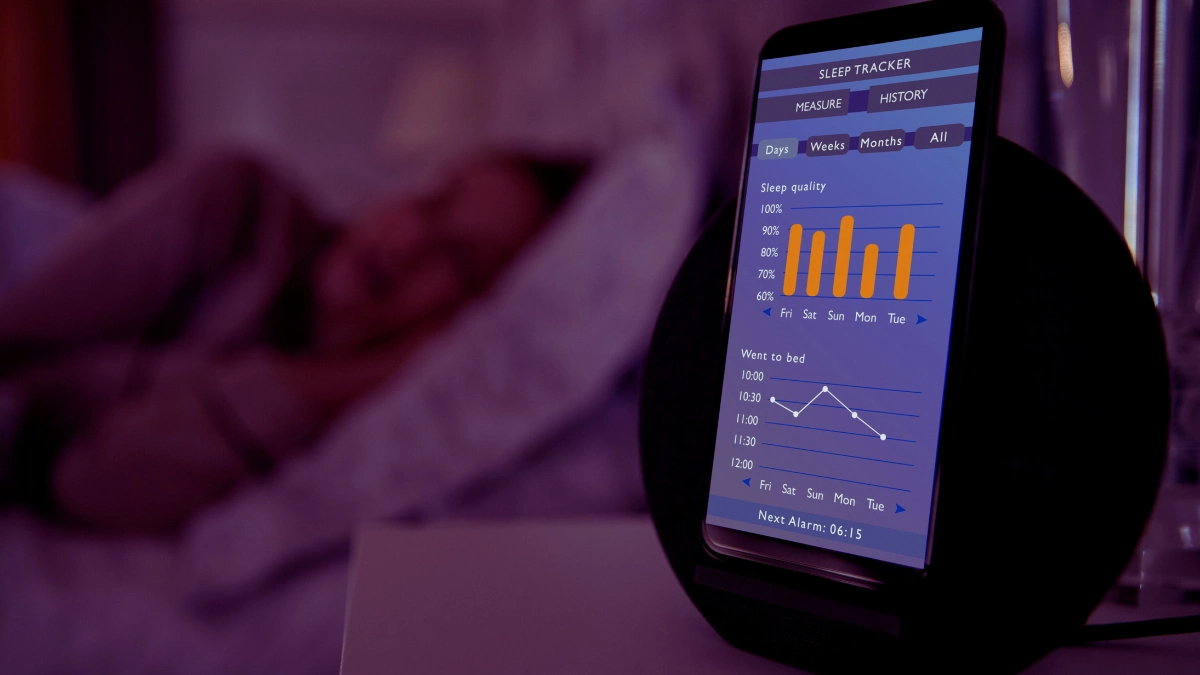
Sleep tracking: Sleep Cycle app – Free version works fine
Breathing guide: Insight Timer app – Free
Books that helped:
- “Why We Sleep” by Matthew Walker (to understand sleep science)
- “You Need A Budget” by Jesse Mecham (to understand the budgeting method)
Communities:
- r/personalfinance on Reddit
- r/sleep on Reddit
- YNAB’s free workshops (even if you don’t buy the app)
Total cost to start: $0 to $12 if you use free apps and buy an alarm clock.
The Truth About This System

It’s not magic. It’s work.
You have to track your money every week. You have to show up for worry time even when you don’t feel like it. You have to enforce your boundaries even when you want to break them.
Some nights still suck. I had a bad night two weeks ago when an unexpected bill hit. I lost three hours of sleep.
But bad nights are now the exception, not the rule.
Before this system, I was getting 4-5 hours of broken sleep every night. I was anxious all day. I was making terrible financial decisions because I was too tired to think clearly.
Now I sleep 7-8 hours most nights. I still worry about money sometimes. But it doesn’t control me.
The system works because it fixes both problems at once. You can’t sleep when you’re anxious about money. And you can’t manage money when you’re exhausted from no sleep.
Fix one, and the other stays broken. Fix both together, and the cycle breaks.