

It’s 2:47 AM. You’re staring at the ceiling again. Your brain won’t shut off.
Can I pay rent next month? What if my car breaks down? That credit card bill is due Friday.
You’re not alone. A 2022 study by the American Academy of Sleep Medicine found that 87% of Americans lose sleep over money worries. One in five people lose sleep “almost always” because of financial stress.
Poor sleep makes you exhausted. Exhaustion can lead to poor financial decisions. Bad decisions create more money problems. More problems steal more sleep.
It’s a terrible cycle. But you can break it.
This guide shows you nine proven ways to sleep better when money stress keeps you awake. These aren’t theories. They’re practical steps that work in 2025.
Let’s fix this tonight.
1. Understand Why Money Anxiety Hijacks Your Sleep Differently

Money worries mess with your sleep worse than other problems.
The Sleep Foundation found that 77% of people lose sleep over financial worries.
Why does money hit different?
Your brain sees money problems as solvable puzzles. So it tries to solve them. All night long. It won’t stop calculating and planning.
Other worries feel fuzzy. Money worries feel concrete. If I think harder, I can figure this out. That’s what your brain tells itself at 3 AM.
Here’s what happens in your body:
Your heart rate goes up. Your body temperature rises. Stress hormones flood your system. You enter “fight or flight” mode. This is the opposite of sleep mode.
Dr. Alex Dimitriu is a psychiatrist who specializes in sleep medicine. He explains it simply: “When we’re anxious, we’re in a very awake state. It’s hard to rest.”
The cycle gets worse. Bad sleep makes it harder to control your impulses. You might buy things to feel better. That creates more debt. More debt means more anxiety. More anxiety steals more sleep.
This isn’t your fault. Your body is responding normally to stress. But normal doesn’t mean you’re stuck with it.
Understanding why this happens is step one. Now you know you’re fighting biology, not just “being weak.” And biology can be managed.
2. Start a Financial Worry Journal (15 Minutes Before Bed)

Here’s a simple trick that stops your brain from spinning all night.
Get a notebook. Not your phone. A real notebook.
Set a timer for 15 minutes before bed. Write down every money worry in your head. Every single one. Big or small.
Next to each worry, ask yourself: “Can I solve this tonight?”
The answer is almost always no.
For each “no,” write down when you’ll deal with it tomorrow. Be specific. “Wednesday at 2 PM – review budget.” “Thursday morning – call three repair shops.”
This works because your brain just needs to know you won’t forget. Once it’s written down, your mind can let go.
Here’s what a real entry looks like:
My Worries – Tuesday Night:
- Credit card bill due Friday – $450 – Can’t solve tonight – Will review budget Wednesday, 2 PM
- Need new tires, car unsafe – $600 – Can’t solve tonight – Will get three quotes Thursday, 9 AM
- Worried about layoffs at work – Can’t solve tonight – Will update resume Saturday, 10 AM
After writing, close the notebook. Put it in a drawer. Not on your nightstand where you can see it.
Tell yourself out loud: “I wrote it down. I’ll handle it tomorrow when I’m rested.”
This gives your brain permission to stop problem-solving. You acknowledged the worries. You made a plan. Now you can sleep.
Johns Hopkins sleep expert Dr. Luis F. Buenaver recommends planned relaxation activities like this. His research shows they work better than just watching TV to wind down.
Try this tonight. You’ll be surprised how much lighter you feel.
3. Use the 4-7-8 Breathing Method to Calm Financial Panic

Your body can’t stay in panic mode if you breathe a certain way. Science proves this.
The 4-7-8 method stops the “fight or flight” response. It takes two minutes. You can do it in bed with the lights off.
Here’s how:
- Get comfortable. Put your tongue behind your front teeth.
- Exhale completely through your mouth. Make a whooshing sound.
- Close your mouth. Breathe in quietly through your nose for 4 seconds.
- Hold your breath for 7 seconds.
- Exhale completely through your mouth for 8 seconds. Whooshing sound again.
That’s one cycle. Do four cycles minimum.
Your mind will wander to money worries. That’s normal. Just bring your focus back to counting.
What to expect:
Cycles 1-2: Your brain still races with money thoughts. Keep going.
Cycles 3-4: Your heart rate slows down. Your body relaxes.
After a week of practice, you might fall asleep during the exercise. That’s success.
The U.S. military uses breathing techniques like this for rapid stress reduction. It works even when your money situation hasn’t changed one bit.
You’re not fixing your finances with this method. You’re fixing your body’s response to financial stress. That’s what lets you sleep.
This technique is free. It takes two minutes. And it works tonight.
4. Face Your Finances With a 48-Hour Reality Check

This sounds scary. But knowing is better than not knowing.
Even when the truth is bad, it’s less scary than what you imagine in the dark at 3 AM.
Research shows that simply gathering your financial information reduces stress by 30%. The unknown is what tortures you at night.
You need two hours total. Not all at once if you can’t handle it.
Hour 1: Gather Everything
Get these documents together:
- All bank statements
- All credit card statements
- Loan papers (mortgage, car, student loans, personal loans)
- Bills (utilities, phone, subscriptions, insurance)
- Pay stubs or income proof
Hour 2: Write It Down
Use simple paper or a spreadsheet. Answer these questions:
- Monthly income (after taxes): $_____
- Essential expenses (rent, food, transport, utilities): $_____
- Debt payments: $_____
- Other expenses: $_____
- Total debt you owe: $_____
- Emergency savings: $_____
Now do the math: Income minus all expenses = $_____
This number tells you everything.
If it’s positive: You have surplus money. Your anxiety might be worse than your reality.
If it’s a small negative: You can fix this with small changes.
If it’s a big negative: You have a serious problem. But now you can make a real plan instead of just worrying.
Real example: Maria avoided looking at her money for six months. When she finally did this check, she found $340 left over each month. Her anxiety was about imagined problems, not real ones. She slept better that same night.
You might find your situation is better than you feared. Or worse than you hoped. Or exactly what you suspected.
All three are okay. Because now you have facts instead of fears.
Facts can be fixed. Fears just steal your sleep.
5. Create a Simple Budget That Actually Reduces Anxiety

A budget isn’t about restricting yourself. It’s about removing the “did I overspend?” question that haunts you at night.
People with budgets report 40% less financial anxiety. Why? Because decisions are already made. You already decided where your money goes.
You need to pick a method that fits you. There’s no one right way.
Method 1: Zero-Based Budgeting
Every dollar gets a job. Income minus all assignments equals zero.
Best for: People who like control and details.
Apps: YNAB ($109/year), EveryDollar (free version available)
Method 2: The 50/30/20 Rule
- 50% goes to needs (housing, food, transport)
- 30% goes to wants (fun stuff, eating out)
- 20% goes to savings and debt payoff
Best for: People who want something simple.
Apps: Any budget app works, even a spreadsheet
Method 3: Envelope System
You set aside money for each spending category. When the envelope is empty, spending stops.
Best for: Visual people who tend to overspend.
Apps: Goodbudget (free version or $80/year)
Best Budget Apps for 2025:
Free Options:
- Goodbudget basic (limited envelopes)
- EveryDollar basic
- Google Sheets templates
Paid Options:
- YNAB: $109/year (most detailed, steep learning curve)
- PocketGuard: $74.99/year (shows “spendable money” after bills)
- Monarch Money: $99/year (good for couples, uses AI)
- Quicken Simplifi: $35.88/year (adjusts in real-time)
How to Start:
- Pick a method based on your personality. Not what’s “best.”
- Download an app or make a spreadsheet.
- Put in your numbers from the reality check.
- Track everything for one week. Don’t judge yourself. Just watch.
- Adjust based on reality. Not based on wishes.
- Check it weekly for the first month. Then monthly.
Real story: James used YNAB for three months. He said, “I went from waking up at 3 AM worried about money to sleeping through the night. Having a plan for every dollar stopped the ‘did I mess up?’ anxiety.”
The best budget is the one you’ll actually use. Start simple. Stay consistent.
Even a basic budget beats no budget when it comes to sleeping better.
6. Build a Micro Emergency Fund (Even $500 Helps You Sleep)
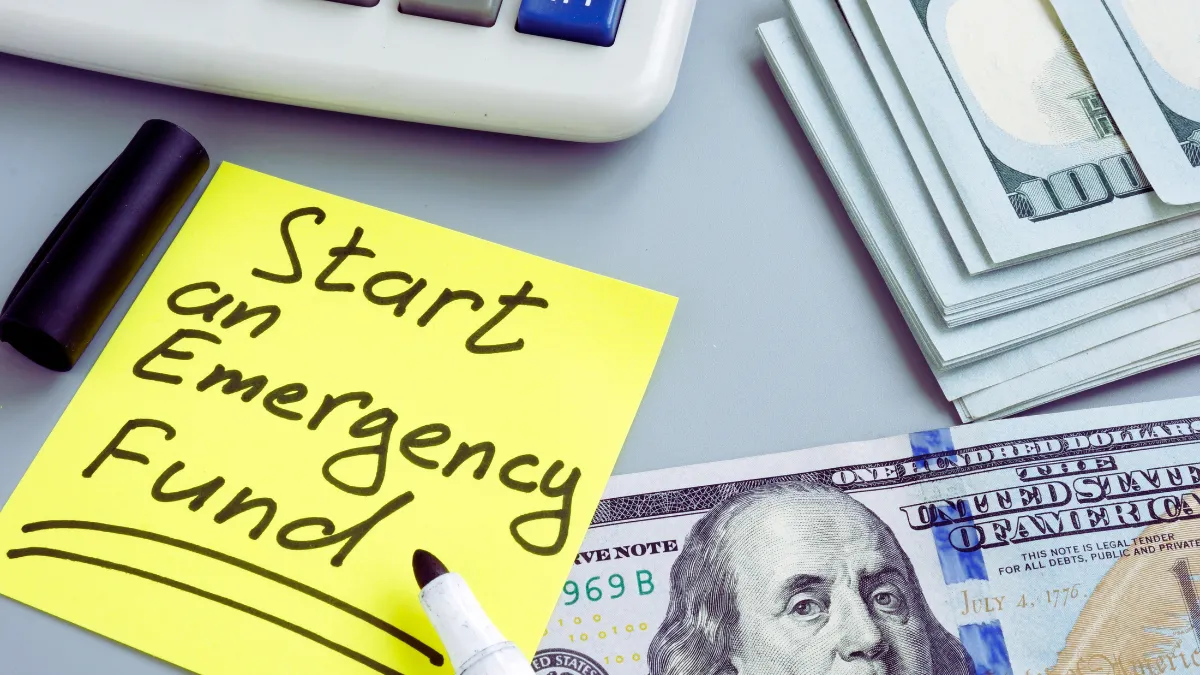
You don’t need six months of savings to sleep better. You need to start somewhere.
Research shows that even small emergency funds dramatically reduce financial anxiety. Why? Because surprises stop being crises.
$500 to $1,000 covers most common emergencies:
- Car repair
- Medical copay
- Broken appliance
- Unexpected bill
Having ANY cushion breaks the cycle of living crisis-to-crisis. That cycle is what keeps you awake.
The 6-Month Plan to $500:
Month 1: Save $50 (cut one takeout meal per week) Month 2: Save $75 (sell stuff you don’t use) Month 3: Save $100 (one side gig or overtime shift) Month 4: Save $100 (redirect money from paid-off debt) Month 5: Save $100 (part of tax refund or bonus) Month 6: Save $75 (consistent small saves)
Total: $500
The Easier Way:
$42 per paycheck (if paid every two weeks) = $1,092 per year
That’s less than $10 per week.
Small Ways to Find the Money:
- Cancel one subscription. Put that money in savings.
- Save all $5 bills you get.
- Round up purchases (apps like Acorns do this automatically).
- Do a 30-day spending freeze. Save everything extra.
- Automatic transfer on payday ($25 minimum).
Where to Put It:
High-yield savings account. These pay 4-5% interest right now.
Keep it separate from your checking account. This reduces the temptation to spend it.
Good options: Marcus, Ally Bank, Capital One 360 (no minimums, FDIC insured)
Don’t put it in stocks or investments. You need to access it immediately if something breaks.
The Federal Reserve found in 2024 that 45% of Americans couldn’t cover a $400 emergency from savings. If you can, you’re ahead of half the country. That fact alone helps you sleep.
You don’t need six months saved to feel better. You need that first $100. That first $100 proves you CAN save. It breaks the psychological cycle of helplessness.
Start today. Even $10 in a savings account is progress.
7. Optimize Your Bedroom to Block Financial Worry

Your bedroom needs to signal “safety and rest,” not “problems and stress.”
Physical boundaries help your brain shift out of worry mode. Consistent sleep environments regulate stress hormones better.
Most of these changes cost nothing.
The Digital Boundary (Most Important Change)
Your phone is killing your sleep. Here’s why:
Checking bank accounts after 8 PM increases stress hormones. Blue light from screens suppresses melatonin for 2-3 hours. Financial news feeds anxiety. Social media triggers comparison and worry.
What to do:
Remove your phone from your bedroom completely. Or put it on airplane mode after 9 PM.
Buy a $15 alarm clock. Yes, an old-fashioned one.
Set a rule: No checking financial accounts after 8 PM. Use app blockers if needed.
Exception: If you need white noise, use an old phone in airplane mode across the room.
The Consistent Schedule
Your body releases stress hormones on a schedule. Irregular sleep times mess with this schedule and make financial stress hit harder.
The CDC recommends 7+ hours of sleep for adults. You need this for good decision-making.
What to do:
Pick a bedtime that allows 7.5 to 8 hours before you need to wake up.
Stick to this time every night. Even weekends. You can vary by 30 minutes maximum.
Set a “bedtime alarm” one hour before sleep time. This starts your wind-down routine.
The Sleep Sanctuary
Your bedroom environment matters.
Temperature: Keep it 60-67°F. Cooler temperatures lower stress hormones. Use a fan for cooling plus white noise (double benefit).
Light: Get blackout curtains or a sleep mask. Remove electronics with standby lights. If you need a nightlight, use red (doesn’t affect melatonin like blue does).
Sound: White noise masks sudden sounds that might trigger anxiety. Free options: Noisli app, myNoise website, YouTube white noise videos. Physical machines cost $20-50.
The Bed Rule
Use your bed only for sleep and intimacy. That’s it.
Don’t pay bills in bed. Don’t plan budgets in bed. Don’t check your bank balance in bed.
If you’re awake and worrying for more than 20 minutes, get out of bed. Go to another room. Read a boring book. Come back only when you feel drowsy.
This trains your brain: Bed equals sleep. Not bed equals worrying about money.
Budget-Friendly Improvements:
Free:
- Consistent schedule (costs nothing)
- Remove the phone from the bedroom
- Free white noise apps
- Library books instead of phone scrolling
Under $50:
- Basic alarm clock: $10-20
- Sleep mask: $15-35
- White noise machine: $20-40
- Blackout curtains: $25-50
Your bedroom should feel like a place where money problems can’t reach you. Even if just for eight hours. That’s the goal.
8. Try Cognitive Behavioral Therapy for Insomnia (CBT-I)

CBT-I is the gold standard treatment for chronic insomnia. Doctors recommend it before sleeping pills.
It targets the root causes of insomnia. Not just the symptoms. And it creates lasting change.
Here’s the best part: App-based CBT-I works as well as seeing a therapist in person. But it’s way more accessible and usually costs less or is even free.
What is CBT-I?
It’s a structured program that changes the thoughts and behaviors, keeping you awake. It specifically targets the worry patterns that spin in your head at night.
Success rate: 50-70% of people see major improvement within 4-6 sessions.
Core Techniques:
Sleep Restriction: You limit time in bed to build up sleep drive. If you’re only sleeping 5 hours, you stay in bed only 5.5 hours at first. Gradually increase as you sleep better. This forces your brain to prioritize sleep over worrying.
Stimulus Control: Use your bed only for sleep and intimacy. Leave the bedroom if you’re awake for 20+ minutes. Return only when drowsy. This breaks the link between your bed and financial anxiety.
Cognitive Restructuring: Challenge catastrophic thoughts. “If I don’t sleep, I’ll lose my job” vs. what will really happen. Develop realistic expectations about sleep.
Relaxation Training: Progressive muscle relaxation, breathing exercises, meditation. These reduce the physical tension from financial stress.
Sleep Hygiene: Optimize your environment and behaviors. Foundation for everything else.
Best CBT-I Apps for 2025:
Free Options:
Insomnia Coach (VA Mobile App)
- Cost: FREE
- Works on: iPhone and Android
- Program length: 5 weeks
- What you get: Sleep diary, lessons, relaxation exercises
- Evidence: Based on clinical protocols proven to work
- User rating: 4.7 stars
- Best for: Anyone who wants professional-level help for free
Real user review: “After 20 years of sleep problems, I went from 3-4 hours of interrupted sleep to 7-8 solid hours. This app works.”
CBT-I Coach (VA)
- Cost: FREE
- Best for: People already working with a therapist
- Use alongside professional treatment
Paid Options:
Sleepio
- Cost: Around $300/year (sometimes covered by insurance)
- Evidence: Multiple peer-reviewed studies prove it works
- What you get: AI-powered personalized treatment, an animated therapist
- Best for: People wanting a comprehensive program with strong research backing
Chorus Sleep
- Cost: Subscription (check current pricing)
- What you get: CBT-I programs, optional sleep coaching, audio library
- Best for: People who want coaching support with their app
What to Expect:
Week 1-2: You might feel more tired. Sleep restriction is hard. Old patterns fight back. This is normal. Don’t quit.
Week 3-4: Sleep efficiency improves noticeably. You fall asleep faster. You wake up less with money worries.
Week 5-6+: New patterns become automatic. Sleep quality is consistent. Financial worries don’t trigger insomnia as easily.
Studies show app-based CBT-I has similar success rates to face-to-face therapy. Around 50-70% of people who complete the program see major improvement.
When to Get Professional Help:
See a doctor if:
- Insomnia lasts 3+ months despite trying self-help
- You think you might have sleep apnea or restless legs
- You have thoughts of suicide related to financial stress
- Sleep problems severely impact your daily life
About 70 million Americans have sleep disorders. Some need a medical evaluation.
CBT-I apps bring clinical treatment to your phone. They address both the anxiety and the insomnia. That’s exactly what you need when money stress is the trigger.
Download the free Insomnia Coach app tonight. Start the program. Give it six weeks.
9. Follow a 30-Day Action Plan to Break the Cycle

You’ve learned nine strategies. Now let’s put them together into a plan you can actually follow.
This is progressive. You don’t do everything at once. You build week by week.
Week 1: Foundation
Financial Actions:
- Day 1-2: Do the 48-hour financial reality check
- Day 3-4: Pick a budgeting method and download an app
- Day 5-7: Track your spending without judgment (just observe)
Sleep Actions:
- Start: Same bedtime every night
- Start: Journal about financial worries for 15 minutes before bedtime.
- Start: Phone out of bedroom or airplane mode after 9 PM
- Start: 4-7-8 breathing when you get in bed (4 cycles)
Track This: Rate your sleep quality each night (1-10 scale). Note what time you fell asleep and woke up.
What to Expect: First few nights might still be rough. That’s normal. You’re building foundations. You might get some immediate relief from the worry journal.
Week 2: Build Systems
Financial Actions:
- Create your full budget in your chosen app
- Set up one automatic debt payment (even $25 extra helps)
- Start micro-emergency fund (save $25-50 this week)
- Find one expense to reduce
Sleep Actions:
- Continue: All Week 1 habits (don’t skip these)
- Add: Progressive muscle relaxation before bed (20 minutes, try 3 times this week)
- Add: Set bedroom temperature to 60-67°F
- Add: Get blackout curtains or a sleep mask if needed
Track This: Keep rating sleep quality. Note which techniques help most. Write down financial wins (even tiny ones).
What to Expect: Sleep quality will jump around day to day. That’s normal. Budget reality might stress you temporarily. That’s okay. Small wins start showing up.
Week 3: Advanced Integration
Financial Actions:
- Review your budget: What’s working? What’s not?
- Adjust money allocations based on reality (not wishes)
- Research one way to earn extra income (even $50/month helps)
- Celebrate any progress you’ve made
Sleep Actions:
- Continue: Core habits (schedule, journal, breathing, phone boundary)
- Add: Download Insomnia Coach app (free)
- Begin: Follow the CBT-I program in the app
- Start: Stimulus control (leave room if awake 20+ minutes)
Track This: Calculate sleep efficiency: (Time asleep ÷ Time in bed) × 100. Aim for 85%+. Compare Week 3 spending to Week 1 spending.
What to Expect: Noticeable sleep improvements start. CBT-I might feel challenging at first. Financial clarity reduces nighttime anxiety.
Week 4: Optimize and Plan Long-Term
Financial Actions:
- Set three specific 3-month financial goals
- Check emergency fund: How much have you saved?
- Plan for upcoming expenses (prevent surprises)
- Decide which habits you’ll keep doing
Sleep Actions:
- Continue: CBT-I program (this week is critical for consistency)
- Refine: Evening routine based on what works best for you
- Master: Your most effective relaxation technique
- Plan: How will you maintain this progress?
Ask Yourself:
- Which sleep techniques work best for me?
- Which financial actions reduced my anxiety the most?
- What will I keep doing? What can I drop?
- What challenges are left?
What to Expect: Sleep quality should be noticeably better than Week 1. Financial stress is less likely to keep you awake. New patterns feel more natural. Confidence is building.
Beyond 30 Days: Keep Going
Don’t Stop:
- Consistent sleep schedule (this is non-negotiable)
- Worry journal when you need it
- Monthly budget reviews
- Your favorite relaxation technique
- Phone boundaries
You Can Stop:
- Techniques that didn’t help you specifically
- Being perfect (some bad nights will happen)
For Setbacks: Return to Week 1 basics. Start simple again.
For a Major Crisis: Get professional help while keeping your sleep habits.
For Ongoing Insomnia: Consider seeing a CBT-I therapist in person.
Progress Markers:
After 30 days, you should notice:
- Falling asleep 20-30 minutes faster
- Fewer middle-of-the-night money-worry wake-ups
- Financial stress feels more manageable
- Sleep quality rating improved by 2-3 points
After 60 days:
- Sleep habits are automatic
- Financial plan is working
- Stress doesn’t hit as hard
- One bad night doesn’t wreck everything
Be realistic: Progress isn’t a straight line. You’ll have setbacks. One bad night doesn’t erase all your progress.
What matters is getting back to your plan the next day.
Most people see a big improvement in 30 days. Lasting change takes 6-8 weeks.
Start tonight. Pick one thing from Week 1. Do it. Then add more tomorrow.