

A simple handshake might tell a doctor more about your future health than a blood pressure cuff.
Most people ignore hand strength. We think it only matters for opening stubborn pickle jars or carrying groceries. But new medical data suggests your grip is a powerful “biomarker.” It reveals how fast you are aging on the inside.
If your grip is weak, your heart might be at risk.
This article gives you the tools to check your status. We will cover the “30-Second Grip Test” that cardiologists use to predict longevity.
By the end, you’ll know exactly how strong you are compared to your age group and the 3 exercises you need to start today.
The Science: Why Grip Strength Predicts Mortality
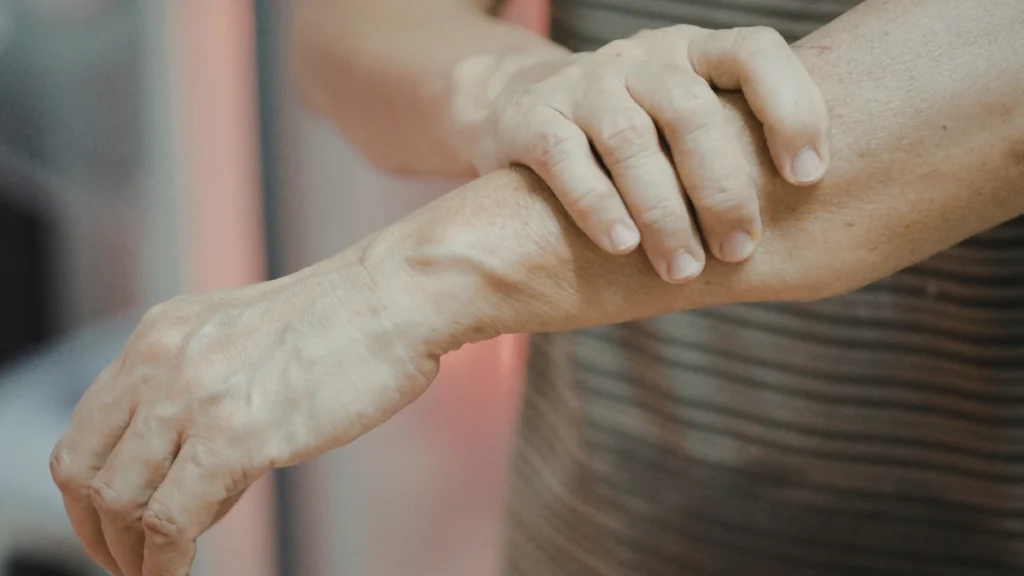
It sounds like a parlor trick, but the data is undeniable.
Your hands are a window into your overall system. Grip strength is not just about your fingers. It is a reliable proxy for your total neuromuscular health and muscle mass.
As Dr. Peter Attia, a leading longevity physician, often notes: “Grip strength is a proxy for overall robustness. If your grip is weak, your body is likely fragile.”
The Massive Study That Changed Everything

The PURE study (Prospective Urban Rural Epidemiology) published in The Lancet analyzed over 140,000 people. The results were shocking.
Researchers found that grip strength predicts all-cause mortality better than systolic blood pressure.
Here is the scary statistic: For every 5kg (11 lbs) decrease in grip strength, there is a 16% increase in the risk of dying from any cause.
Why Muscles Matter?
This isn’t just about looking fit. It is about avoiding sarcopenia (muscle loss). Weak hands are often the first sign that your body is losing muscle mass.
This leads to falls, broken bones, and a loss of independence as you age. Strong muscles protect your organs and keep your metabolism healthy.
The 30-Second Test: How to Measure Yours

You don’t need a doctor to get a baseline. You can test this at home in under a minute.
The Gold Standard: Handheld Dynamometer
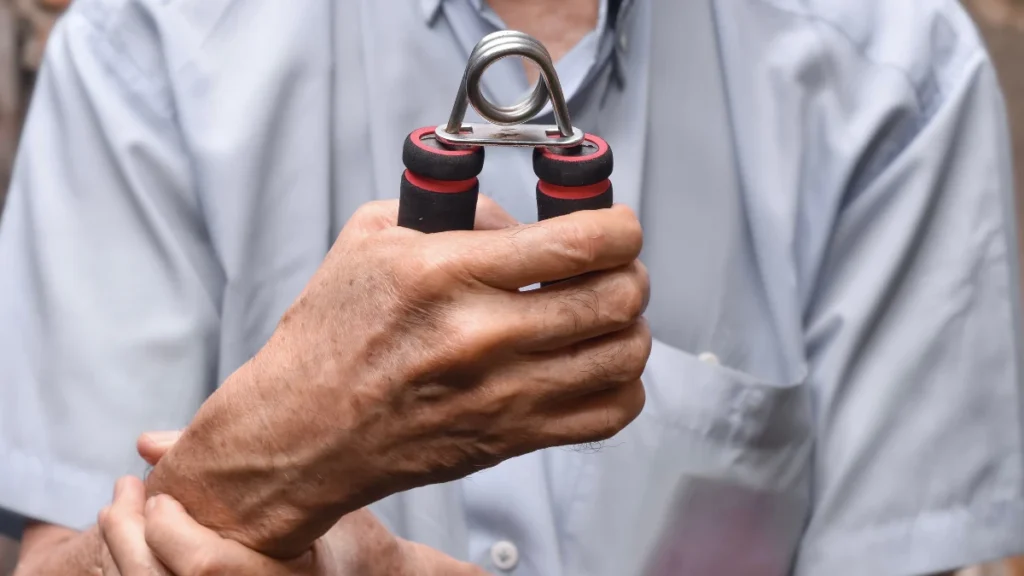
This is the clinical method. You can buy a digital hand dynamometer online for about $20. It is the most accurate way to track your biological age.
- How to do it: Stand comfortably with your arm at your side. Bend your elbow to 90 degrees. Squeeze the device as hard as you can for 5 seconds. Repeat 3 times and take the average.
The At-Home Proxies
If you don’t have the tool yet, try these friendly tests:
- The Bathroom Scale Hack: This is harder to measure but works in a pinch. Hold a bathroom scale with both hands on the edges. Squeeze the sides as if trying to make your hands touch. Check the number on the dial.
- The Dead Hang (Pass/Fail): Find a pull-up bar. Grab it and hang with your feet off the ground.
- Pass: You can hold on for 30+ seconds comfortably.
- Fail: You slip off in under 30 seconds. This is a clear sign your grip needs work.
PASS: Hold comfortably for 30s+.
Action Step: For the best data, order a dynamometer today. It removes the guesswork.
Grip Strength Norms: Where Do You Rank?
Don’t guess. Look at the data.
The chart below shows the approximate “healthy” ranges for adults aged 40–50. These numbers represent the combined grip force (in Kilograms).
| Category | Men (40-50 yrs) | Women (40-50 yrs) |
| Danger Zone | < 26 kg | < 16 kg |
| Weak | < 35 kg | < 20 kg |
| Normal | 46 kg | 29 kg |
| Strong | > 55 kg | > 35 kg |
How to read this:
If you are in the “Normal” or “Strong” range, keep doing what you are doing. If you are in the “Weak” or “Danger Zone,” read the next section carefully. Falling into the bottom tier significantly increases your medical risk.
3 Ways to Improve Grip Strength (That Aren’t Squeezing Stress Balls)
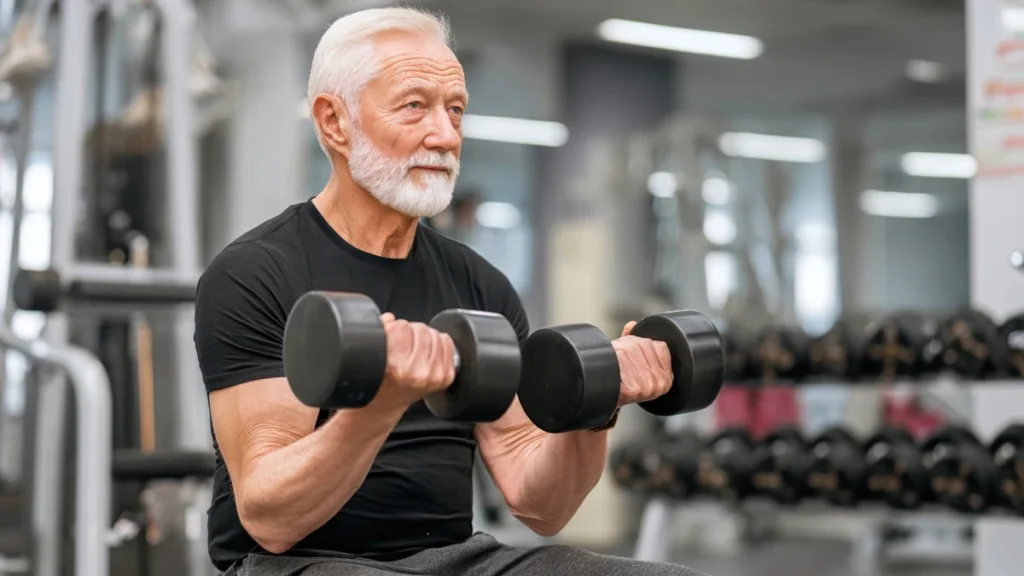
The good news: Grip strength improves fast.
But you have to train correctly. Squeezing a foam stress ball won’t help you live longer. That builds almost no real strength. To change your longevity markers, you need heavy resistance.
Here are the 3 most effective moves:
1. Farmer’s Carries
This is the single best exercise for grip and core stability.
- How: Pick up two heavy dumbbells, kettlebells, or even heavy grocery bags. Stand tall. Walk for distance or time.
- Why: It builds “endurance grip.” It teaches your hands to hold on while your body moves.
2. Dead Hangs
We used this as a test, but it is also a workout.
- How: Hang from a pull-up bar with straight arms. Relax your shoulders but keep your grip tight. Aim for 1 minute total (broken into sets if needed).
- Why: It builds crushing grip strength and decompresses your spine at the same time.
3. Heavy Lifting (Raw Grip)
Stop using wrist straps for every lift.
- How: When you do rows or deadlifts, use your bare hands (or chalk).
- Why: It forces your hands to handle the full weight of the load. This triggers muscle growth in the forearms and hands.
Conclusion
Strong hands equal a strong heart.
Think of your grip strength as the “engine light” for your body. If the light comes on, don’t ignore it. It is telling you that your system is getting weaker.
You have the power to turn that light off.
Your Plan for This Week
Test your grip. Use a dynamometer or the dead hang method. If you are in the “weak” zone, add Farmer’s Carries to your next workout. Carry something heavy for a few minutes. Your future self will thank you for it.