

Your spine sustains 60 pounds of pressure for every inch your head tilts forward, creating a silent cascade of damage in your cervical discs.
You know the feeling all too well when you try to stand up after an hour and your lower back locks into a painful, stiff arch that takes ten steps to loosen.
It is not just aging, it is a cumulative injury caused by unconscious micro movements you make dozens of times a day. You can reverse this compression not by buying new furniture, but by activating specific muscle groups to neutralize the strain.
Physiotherapists confirm that correcting these subtle misalignments reduces chronic back pain symptoms by significantly lowering the load on your lumbar vertebrae.
1. The Head Hanger

When you drop your chin to your chest to check a notification, you turn your head into a heavy anchor that pulls on your delicate neck muscles.
This posture forces the spine to bear weight it was never designed to hold for long periods, leading to premature wear and tear on the discs. Over time, the muscles at the back of your neck become overstretched and weak, while the muscles in the front tighten aggressively.
- Raises effective head weight to sixty pounds
- Causes chronic tension headaches
- Accelerates arthritis in neck vertebrae
2. The Screen Crane

You likely lean forward unconsciously when focusing intently on a screen or trying to read small text without your glasses. This jutting motion compresses the vertebrae at the top of your neck and restricts proper blood flow to the nerves that travel down your arms.
It creates a domino effect where your shoulders round forward to compensate for the shift in your center of gravity.
- Shortens muscles at the base of the skull
- Triggers burning pain between shoulder blades
- Often caused by incorrect prescription glasses
3. The Monitor Offset

Placing your monitor or television slightly to one side forces your neck to maintain a low level rotation that slowly grinds down spinal structures.
Your brain ignores this twist because it seems minor, but your muscles remain in a state of constant, uneven contraction to hold the position. This asymmetry creates a muscular imbalance where one side of your neck becomes chronically tight and prone to painful spasms.
- Creates constant torque on cervical discs
- Leads to pinched nerves on one side
- Fix by centering your nose with the screen
4. Wallet Neuritis

Keeping a thick wallet in your back pocket while sitting acts as a wedge that forces your pelvis into an unlevel tilt. This misalignment forces your spine to curve sideways to compensate, putting immense pressure on the discs and muscles of the lower back.
The pressure is often directly applied to the sciatic nerve, triggering sharp pain that shoots down the back of your leg.
- Clinically known as Wallet Neuritis
- Directly compresses the sciatic nerve
- Forces the spine into a C shape
5. The Leg Crosser
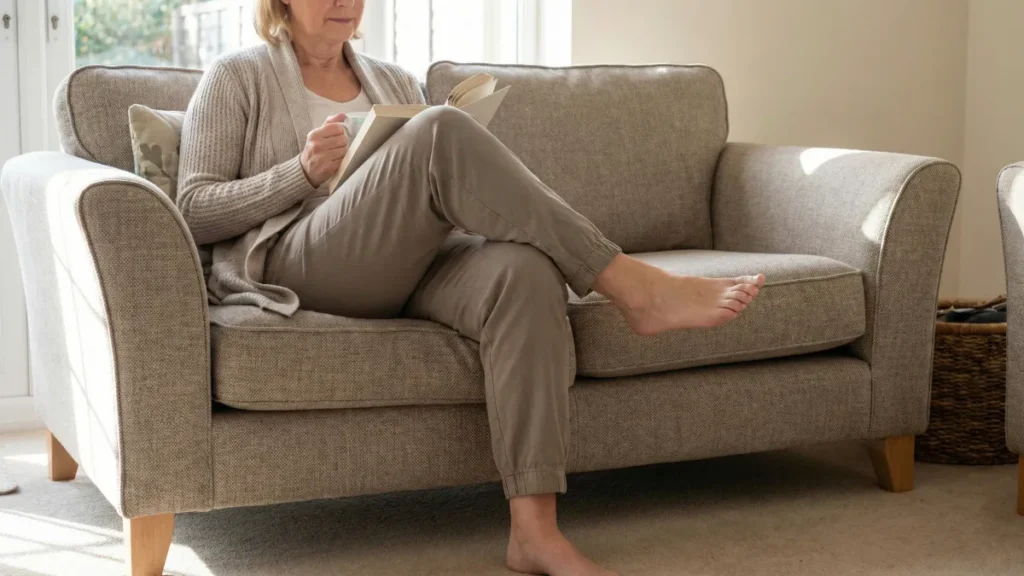
Crossing one leg over the other might feel relaxed, but it locks your pelvis into a rotated position that strains the lower back ligaments. This habit prevents your sit bones from bearing weight evenly, forcing the lower spine to twist to keep your body upright.
The compression can also restrict blood flow in the legs, increasing the risk of vascular issues like spider veins.
- Rotates the pelvis unnaturally
- Increases blood pressure temporarily
- Strains the hip joints
6. The Percher

Perching on the front edge of your chair engages your back muscles in a marathon of tension because they have no support to lean against. This posture forces your lumbar muscles to work overtime to keep you upright, leading to rapid fatigue and painful spasms by the afternoon.
Without the tactile feedback of a backrest, your spine eventually collapses into a slouch as the muscles give up.
- Deprives spine of lumbar support
- Causes rapid lower back fatigue
- Triggers protective muscle spasms
7. The Soft Sitter

Sinking into a plush couch or working from bed allows your heavy hips to sink lower than your knees, reversing the natural curve of your spine. This hammocking effect puts the lumbar discs in a vulnerable, flexed position that pushes the jelly like center of the disc backward toward the nerves.
It feels comfortable initially because the muscles are relaxed, but the structural damage accumulates silently.
- Reverses natural lumbar curve
- Increases risk of bulging discs
- Encourages a rounded shoulder posture
8. Gluteal Amnesia

Sitting for extended periods puts constant pressure on your gluteal muscles, restricting blood flow and causing the neurological connection to weaken.
Your brain literally forgets how to activate these muscles properly, forcing your lower back to take over the job of lifting and stabilizing your torso. This compensation pattern is a primary driver of lower back pain because the back muscles are not designed to do the heavy lifting of the glutes.
- Occurs after 45 minutes of stillness
- Forces lower back to overcompensate
- Leads to hip bursitis and pain
9. The Shoulder Shrugger

When your working surface is too high, you unconsciously lift your shoulders toward your ears to get your hands on the keyboard. This keeps your upper trapezius muscles in a state of permanent contraction, creating hard knots and restricting neck mobility.
The tension travels up into the base of the skull, becoming a leading cause of tension headaches that start in the afternoon.
- Caused by keyboard or mouse being too high
- Creates chronic knots in shoulders
- Restricts blood flow to the head
10. The Feet Dangler

If your chair is too high and your feet cannot rest flat on the floor, gravity pulls heavily on your legs and tilts your pelvis forward. This drag creates tension in the hip flexors and places sheer stress on the lower back while cutting off circulation under the thighs.
A stable foot position is the foundation of a neutral spine, and without it, your upper body cannot relax.
- Destabilizes the pelvic foundation
- Cuts circulation under the thighs
- Causes swelling in ankles
11. The Leg Tucker

Tucking one foot under your buttocks is a common habit for flexible adults, but it torques the knee joint and unlevels the hips simultaneously.
This position places extreme stress on the meniscus of the knee while forcing the spine to curve sideways to keep the head level. It is a double impact habit that accelerates wear and tear on both the knee and hip joints.
- Stresses the knee meniscus
- Creates artificial leg length discrepancy
- Twists the lower spine
12. The Armrest Leaner

Consistently leaning your weight onto one armrest creates a lateral curve in your thoracic spine that mimics the structure of scoliosis.
This habit compresses the rib cage on one side while overstretching the muscles on the opposite side, leading to breathing restrictions and rib pain. Over years, this can lead to a semi permanent tilt that makes standing up straight feel unnatural and difficult.
- Mimics symptoms of scoliosis
- Compresses rib cage on one side
- Weakens core stabilizers
13. The Steering Wheel Hunch

Driving with your seat positioned too far back forces you to detach your shoulder blades from the backrest to reach the steering wheel.
This reaching motion rounds the upper back and locks the chest muscles in a short, tight position that pulls the shoulders forward permanently. This driver’s posture is a major contributor to chronic upper back pain and reduced lung capacity.
- Rounds the upper back significantly
- Tightens pectoral muscles
- Causes driver’s back pain