

It is 2:00 a.m. The house is dead silent. You are physically exhausted, heavy, and begging for rest but your brain is wide awake, running a marathon of worries and old memories.
Many believe this is just a normal part of aging, or that seniors simply need less sleep. That is a myth. The reality is frustration: your biological “sleep switch” is rusty.
As we age, melatonin drops while stress chemicals like cortisol stay active too long, leaving you fighting a losing battle against your own biology.
You are not broken, and you don’t need heavy sleeping pills. You can retrain that switch. By learning to speak the language of your nervous system, you can hack your biology and fall asleep fast. Here is how.
1. Reset Your “Drifting” Circadian Rhythm

Your internal clock isn’t broken. It has just shifted forward. Doctors call this “Phase Advance.” This is why you might get sleepy at 7:00 p.m. but wake up wide awake at 3:00 a.m.
You need to anchor your clock. The best way to do this is the “Light Sandwich” technique.
The Morning Slice: Get bright sunlight in your eyes within 30 minutes of waking up. This signals your brain that the day has started. It builds up a “sleep hunger” for later that night.
The Evening Slice: Dim your lights two hours before bed. If you have smart bulbs, turn them to a warm red color. Blue light from TVs and phones tells your brain it is still noon. Red light tells your brain it is time to rest.
2. The “Worry Dump” (Clearing Your Mental RAM)

Computer experts talk about RAM. This is the memory used to keep windows open. When a computer has too many windows open, it slows down.
Your brain is the same. If you go to bed with all your tabs open, your brain tries to keep them active so you don’t forget them. You need to close the tabs before you lie down.
Left Side = Open Loops (The brain spinning on “What if?”).
Right Side = Closed Loops (The brain relaxing because a Next Step is defined).
Try this 30 minutes before bed:
- Get a notebook and pen.
- Draw a line down the middle of the page.
- On the left, write What I am worried about.
- On the right, write The very next step.
For example:
- Worry: I need to see the dentist.
- Next Step: Call Dr. Smith at 9:00 a.m.
Once you write the next step, you give your brain permission to let go. You are telling your mind that you have a plan. The office is closed for the night.
3. Temperature Regulation: The Warm Bath Trick

Seniors often struggle with body temperature regulation. To fall asleep, your core body temperature needs to drop by about two degrees.
You can hack this system with a warm bath or shower about an hour before bed.
It sounds backward, but it works. The warm water brings blood to your skin. When you step out of the bath into a cooler room, your body heat escapes rapidly. This quick drop in temperature is a biological signal. It tells your brain to release melatonin immediately.
Keep your bedroom cool. The ideal temperature is between 65°F and 68°F (18°C to 20°C).
4. The 4-7-8 Breathing Technique

This is a natural tranquilizer for your nervous system. It was developed by Dr. Andrew Weil. It works because you cannot force yourself to sleep with willpower. But you can force your body to relax by changing how you breathe.
This connects the energy circuit.
Here is exactly how to do it:
- Place the tip of your tongue against the ridge just behind your upper front teeth. Keep it there.
- Exhale completely through your mouth with a whoosh sound.
- Close your mouth and inhale through your nose for 4 seconds.
- Hold your breath for 7 seconds.
- Exhale through your mouth for 8 seconds.
Do this for four cycles. By the fourth exhale, your heart rate will slow down. It physically flips a switch in your brain that says, “We are safe.”
5. Progressive Muscle Relaxation (PMR)
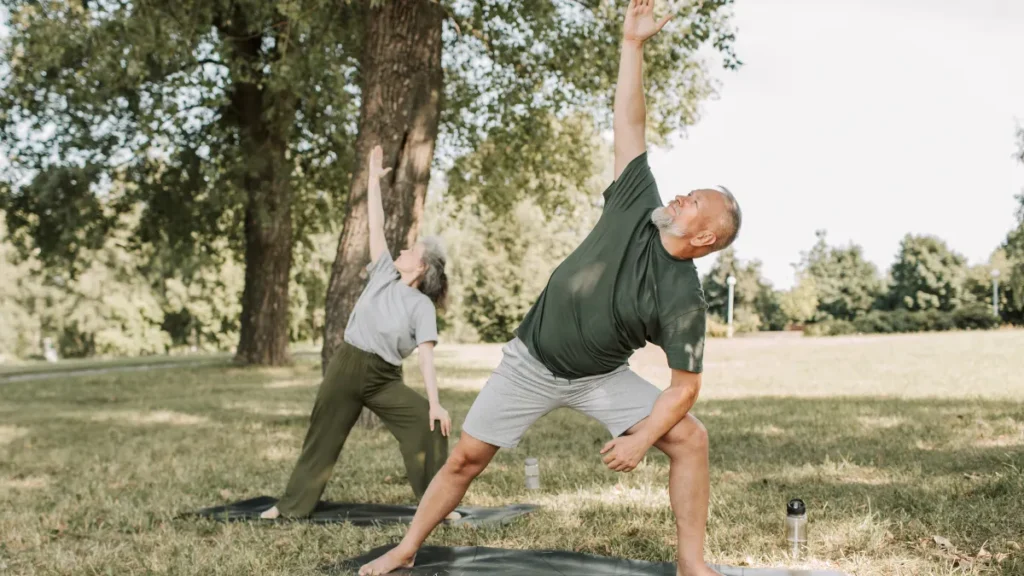
Do you ever feel restless? The pillow is too hot or your legs feel twitchy. This happens because you are holding tension in your muscles without realizing it.
You cannot relax a muscle if you don’t know it is tense. PMR solves this by making you squeeze your muscles first.
How to do it: Start at your toes. Curl them down hard. Squeeze them for a few seconds. Then release. Feel the tension leave.
Move to your calves. Squeeze. Release. Move to your thighs. Then your hands. Make fists. Then your shoulders. Pull them up to your ears. Then drop them.
Finally, squeeze your face. Clench your jaw and shut your eyes tight. Then let go. Let your jaw hang loose.
By the time you reach your head, your body will feel heavy and warm. It is almost impossible to stay stressed when your muscles are this loose.
6. Cognitive Shuffling (The Brain Scramble)

This is for when your mind won’t shut up. You lie down and your brain starts playing a “Greatest Hits” album of your worries.
You cannot just tell your brain to stop thinking. That never works. Instead, you need to confuse it. This technique is called Cognitive Shuffling.
Pick a simple word like BEDTIME.
- Start with B. Visualize a Bear. See it eating honey.
- Visualize a Ball. See it bouncing.
- Visualize a Baby.
- When you run out of B words, move to E. Elephant. Egg.
This works because your logic center cannot focus on these random images. You are simulating the random thoughts we have right before we dream. You are tricking your brain into thinking you are already asleep.
7. The Military Method

This is the big one. This method was used by the US Navy Pre-Flight School. It was designed to help pilots fall asleep in 2 minutes or less, even with loud noises and high stress.
If it works for a pilot in a cockpit, it can work for you in a comfortable bed. It has a reported 96% success rate after 6 weeks of practice.
Relax Tongue (roof to floor).
Smooth Forehead.
Let hands fall heavy.
Exhale chest tension.
Imagine them sinking into the mattress.
Visualize the scene:
The Steps:
- Relax your face. This is crucial. Close your eyes. Relax your forehead. Unclench your jaw. Relax your tongue.
- Drop your shoulders. Let them sink into the mattress. Let your hands drop to your sides.
- Exhale. Relax your chest.
- Relax your legs. Start at your thighs and let the feeling flow down to your feet.
- Clear your mind. For 10 seconds, imagine a calm scene. You are lying in a canoe on a still lake with a blue sky above you.
If your mind wanders to a worry, repeat these words: “Don’t think. Don’t think. Don’t think.”
Say it over and over for 10 seconds. This blocks other thoughts from entering.
Conclusion
Sleep is not a switch you can just flip. It is a skill. And like any skill, it takes a little practice.
You might not master the Military Method tonight. That is okay. Start with the “Worry Dump” to clear your mind. Then try the 4-7-8 breathing when you get into bed.
Your body wants to sleep. You just need to show it the way.