

You sit down to watch television and realize getting back up takes a groan and a firm push off the armrests. That stiffness is not just normal aging.
It is a loud warning sign that your cartilage is thinning and your major joints are deteriorating faster than your biological age.
Rheumatologists use one simple 30 second test to measure exactly how fast your joints are aging, and you can do it right now in your living room.
Before making any changes based on this article, talk to your doctor, especially if you are currently taking medication or have a diagnosed condition.
The Standard Living Room Assessment
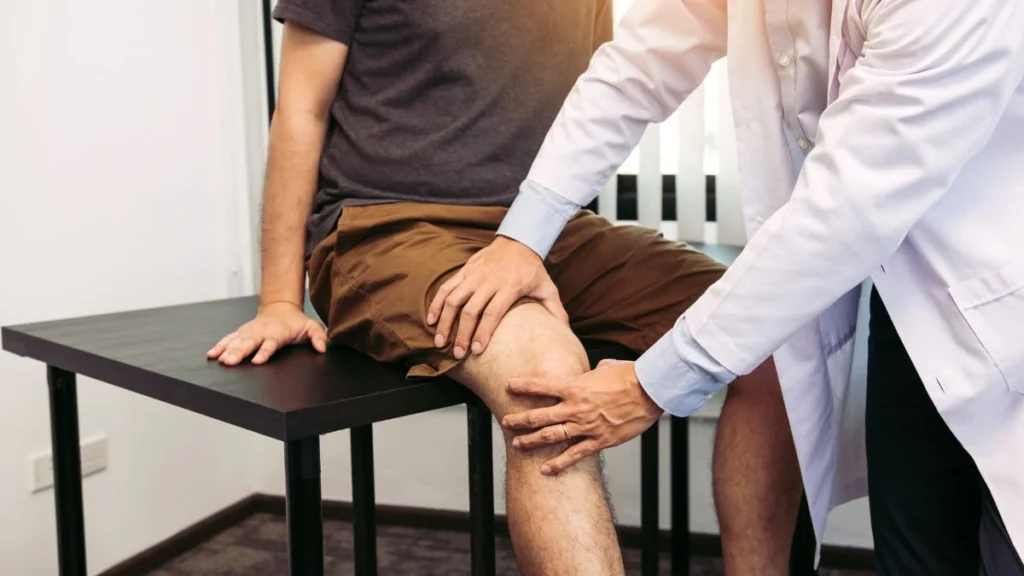
Doctors do not always need an MRI to tell if your knees and hips are in trouble. A physical assessment often reveals joint decay long before severe pain sets in. The 30 second chair stand test is a gold standard diagnostic tool used by physical therapists and rheumatologists worldwide.
It measures lower body strength, endurance, and joint stability. If you fail this test, it means your muscles are no longer supporting your skeletal structure. When muscles fail to carry the load, your cartilage takes the impact directly.
You only need a hard straight back chair without armrests and a stopwatch. Place the chair against a wall so it will not slip. Sit in the middle of the seat with your feet flat on the floor shoulder width apart.
Cross your arms flat against your chest. Start the timer for 30 seconds. Stand up to a completely full and straight position, then sit completely back down.
Repeat this motion as many times as you can before the 30 seconds run out. You must come to a full stand and a full sit for the repetition to count.
What Your Score Actually Means
Your age and gender dictate how many full repetitions you should be able to complete safely. Falling below these numbers indicates a high risk for falls, osteoarthritis progression, and accelerated joint degradation.
| Age Group | Men Expected Repetitions | Women Expected Repetitions | What A Lower Score Means |
| 60 to 64 | 14 or more | 12 or more | Mild sarcopenia, early joint stress. |
| 65 to 69 | 12 or more | 11 or more | Moderate muscle loss, knee cartilage compression. |
| 70 to 74 | 12 or more | 10 or more | High fall risk, active joint space narrowing. |
| 75 to 79 | 11 or more | 10 or more | Severe mobility restriction, advanced aging. |
| 80 to 84 | 10 or more | 9 or more | Critical joint instability, urgent physical therapy needed. |
If you had to use your hands to push off your legs or the chair, your score is effectively zero. This indicates a severe lack of functional strength. Your knees and hips are absorbing dangerous amounts of shock with every step you take.
The Silent Shock Absorbers Failing You
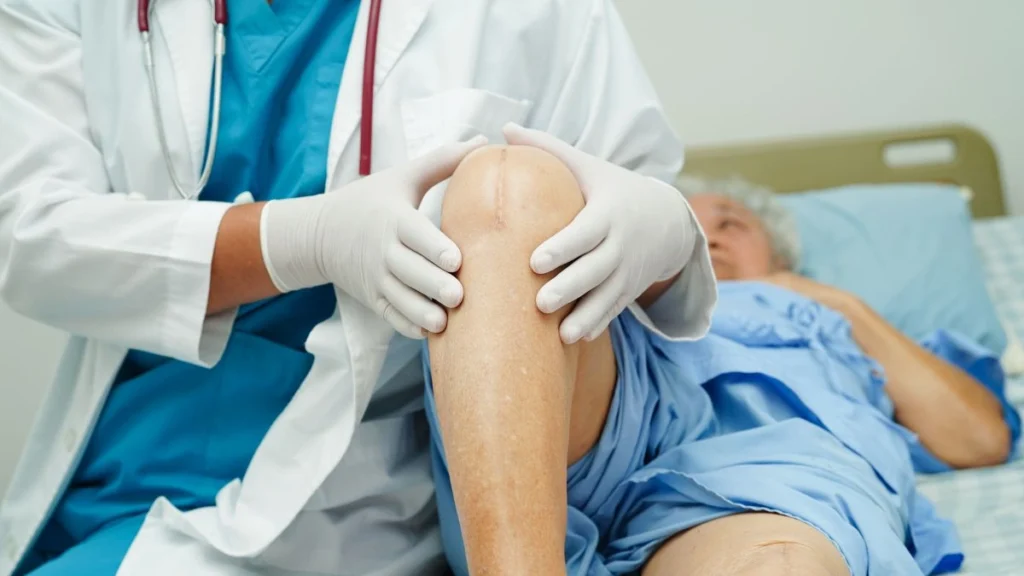
To understand why this test matters, you have to look at how a joint actually works. Your knee is not just a hinge made of bone. It is a complex system protected by thick cartilage and surrounded by a shock absorbing capsule of synovial fluid.
The quadriceps muscles in your thighs act like the suspension system of a car. When you walk down a flight of stairs or stand up from a chair, your quadriceps contract to absorb the gravitational force. If your thigh muscles are weak, that force bypasses the muscle and slams directly into the knee joint.
Over time, this repeated bone on bone impact grinds away the protective cartilage. Medical researchers call this process mechanical degradation. It is a primary driver of osteoarthritis.
You might feel perfectly healthy overall. You might even walk on a treadmill every day. But if you lack the explosive fast twitch muscle fiber required to stand up from a chair without using your hands, your joints are taking severe daily damage.
Everyone’s body responds differently, so check with your doctor before trying this if you have an existing condition or take medication.
Decoding Your Daily Discomfort
Not all joint pain means your cartilage is permanently gone. Sometimes the pain originates from inflamed tendons or a lack of joint lubrication. Identifying the type of pain you feel helps determine if the damage is reversible.
| Symptom | Probable Cause | Reversible Status | When To See A Doctor |
| Morning stiffness lasting under 30 minutes. | Mild inflammation or lack of synovial fluid motion. | Highly reversible with movement and diet. | Mention at your next annual physical. |
| Morning stiffness lasting over 1 hour. | Rheumatoid arthritis or severe osteoarthritis. | Requires medical management. | Schedule an appointment soon. |
| Sharp pain when walking down stairs. | Patellofemoral syndrome or meniscus wear. | Often reversible with targeted physical therapy. | If pain persists for more than two weeks. |
| Dull ache deep in the groin or hip. | Hip joint degeneration. | Manageable but requires structural assessment. | If it causes a severe limp. |
Red Flags That Demand Immediate Attention
Stop reading and call a doctor if you experience any of these warning signs. Joint aging happens slowly, but specific symptoms indicate acute injuries or dangerous infections.
- Sudden Heat and Swelling: A joint that turns red, hot to the touch, and visibly swollen overnight could indicate gout or a dangerous bacterial infection.
- The Joint Gives Way: If your knee suddenly buckles or locks completely into place, you may have a torn meniscus or a loose piece of cartilage floating in the joint space.
- Night Sweats and Weight Loss: Joint pain accompanied by unexplained weight loss or fever requires immediate rheumatological evaluation.
- Numbness or Tingling: Pain radiating down your leg with a loss of sensation suggests nerve compression rather than a simple joint issue.
Reversing The Clock On Joint Decay
If you failed the 30 second chair test, you can rebuild the lost strength and protect your remaining cartilage. Cartilage itself does not have a direct blood supply. It gets its nutrients through movement, like a sponge soaking up water.
When you perform low impact resistance exercises, you compress and release the joint. This action forces nutrient rich synovial fluid deep into the cartilage tissue. Sitting for prolonged periods starves the cartilage of this vital lubrication.
You must incorporate strength training that targets the stabilizing muscles. Walking alone is not enough to rebuild lost quadriceps muscle. You need focused resistance.
Isometric exercises are the safest starting point for aging joints. These involve contracting a muscle without actually moving the joint itself. Wall sits are a perfect example.
Stand with your back flat against a wall and slide down until your knees are slightly bent. Hold that position for 10 to 15 seconds. This builds immense strength in the quadriceps without grinding the knee cap against the femur.
Nutritional Support For Synovial Fluid

You cannot out train a highly inflammatory diet. What you eat directly dictates the quality of the synovial fluid lubricating your knees and hips. High blood sugar creates compounds called advanced glycation end products.
These compounds physically cross link with the collagen in your joints. This makes the cartilage stiff, brittle, and highly prone to tearing under pressure. A diet high in refined sugar accelerates joint aging faster than almost any other lifestyle factor.
You need to flood your system with specific nutrients that reduce systemic inflammation. Omega 3 fatty acids found in wild caught salmon, sardines, and chia seeds directly suppress the inflammatory enzymes that eat away at cartilage.
Studies show that patients consuming at least 2 grams of EPA and DHA daily experience less morning stiffness. You should also prioritize colorful vegetables rich in polyphenols. Extra virgin olive oil contains a compound called oleocanthal, which works along the same chemical pathways as over the counter ibuprofen.
The Daily Habit That Actually Works
- Do three wall sits daily: Hold each one for 10 to 15 seconds to rebuild quadriceps strength without straining the joint.
- Drink a glass of water before morning coffee: Dehydration severely impacts the viscosity of your synovial fluid.
- Stand up every 45 minutes: Set a timer and simply stand up and sit back down five times to pump fresh fluid into your hip joints.
- Swap vegetable oil for extra virgin olive oil: This simple swap reduces your daily intake of highly inflammatory Omega 6 fats.
Daily Choices That Save Your Knees
The smallest habits dictate how long your joints will last. Your daily routine either feeds the cartilage or slowly grinds it into dust.
| Habit Type | Action | Why It Matters |
| Helps | Swimming or water aerobics. | The buoyancy of the water unloads the joint while providing smooth 360 degree resistance. |
| Hurts | Sitting cross legged for hours. | Places unnatural torque on the knee ligaments and starves the hip capsule of blood flow. |
| Helps | Eating one cup of berries daily. | Anthocyanins in dark berries actively reduce inflammatory markers in the bloodstream. |
| Hurts | Wearing flat unsupportive slippers indoors. | Forces your foot to pronate excessively, which throws the knee and hip out of optimal alignment. |
| Helps | Sleeping with a pillow between your knees. | Keeps the hips neutrally aligned at night and takes pressure off the lower lumbar spine. |
Improving your chair test score takes consistency and patience. You are rebuilding tissue and retraining your central nervous system. Try the test again after four weeks of daily isometric exercises and anti inflammatory eating.
You will likely find that standing up feels lighter and smoother. That extra ease of movement is the exact feeling of your joints regaining their youth. Protect your stabilizing muscles, and your cartilage will protect you for decades to come.