

High blood pressure can keep damaging arteries even when you feel completely normal.
That is what makes it so easy to ignore. The first obvious warning may arrive only after the heart, brain, kidneys, or eyes have already been affected.
One surprisingly short wall exercise may improve resting blood pressure more efficiently than many traditional workouts. But the viral claim that it works 100 times faster than walking seriously overstates what the research found.
Before adding this exercise, speak with your doctor if you have diagnosed hypertension, heart disease, an aneurysm, balance problems, significant knee pain, or a recent surgery. Never stop blood pressure medication because an exercise appears to improve your readings.
The Wall Exercise Researchers Actually Studied
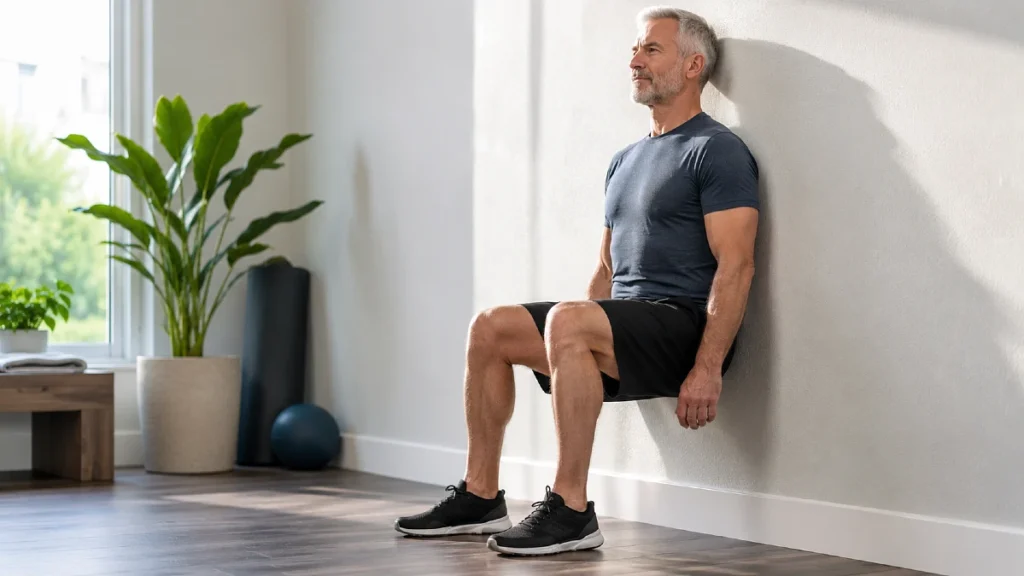
The exercise is an isometric wall squat, often called a wall sit.
You place your back against a stable wall, slide downward into a partial seated position, and hold still while the muscles in your thighs remain contracted. Unlike a normal squat, your joints do not repeatedly bend and straighten.
That static contraction is what makes the exercise isometric.
A major 2023 analysis published in the British Journal of Sports Medicine reviewed 270 randomized controlled trials involving 15,827 participants. Researchers compared aerobic exercise, resistance training, combined training, interval training, and isometric exercise.
Every major exercise category lowered resting blood pressure.
However, isometric exercise produced the largest average reductions. Wall squats ranked as the most effective individual exercise for lowering systolic pressure, which is the top number in a blood pressure reading.
Does a Wall Sit Really Work 100 Times Faster Than Walking?
No reliable clinical trial has shown that wall sits lower blood pressure 100 times faster than walking.
The number circulating online may come from the wall squat’s 90.4 percent SUCRA score in the 2023 analysis. SUCRA is a statistical ranking tool that estimates how likely one treatment is to rank highly among the treatments being compared.
It does not mean wall squats lowered blood pressure by 90.4 percent. It also does not mean they worked 90 or 100 times better than walking.
The actual average results were much less dramatic, although still clinically meaningful.
| Exercise category | Average systolic reduction | Average diastolic reduction | Typical role |
|---|---|---|---|
| Isometric exercise | About 8.2 mm Hg | About 4.0 mm Hg | Short static muscle holds |
| Combined training | About 6.0 mm Hg | About 2.5 mm Hg | Aerobic plus resistance exercise |
| Dynamic resistance training | About 4.6 mm Hg | About 3.0 mm Hg | Weights or repeated body movements |
| Aerobic exercise | About 4.5 mm Hg | About 2.5 mm Hg | Walking, cycling, or running |
| Interval training | About 4.1 mm Hg | About 2.5 mm Hg | Alternating hard and easier effort |
These figures are pooled averages, not promises for an individual person. The studies also differed in participant health, exercise intensity, program length, and blood pressure measurement methods.
The more accurate takeaway is simple: wall squats may lower resting blood pressure more efficiently than walking alone, but they are not a miracle replacement for walking.
Why Holding Still Can Change Blood Pressure
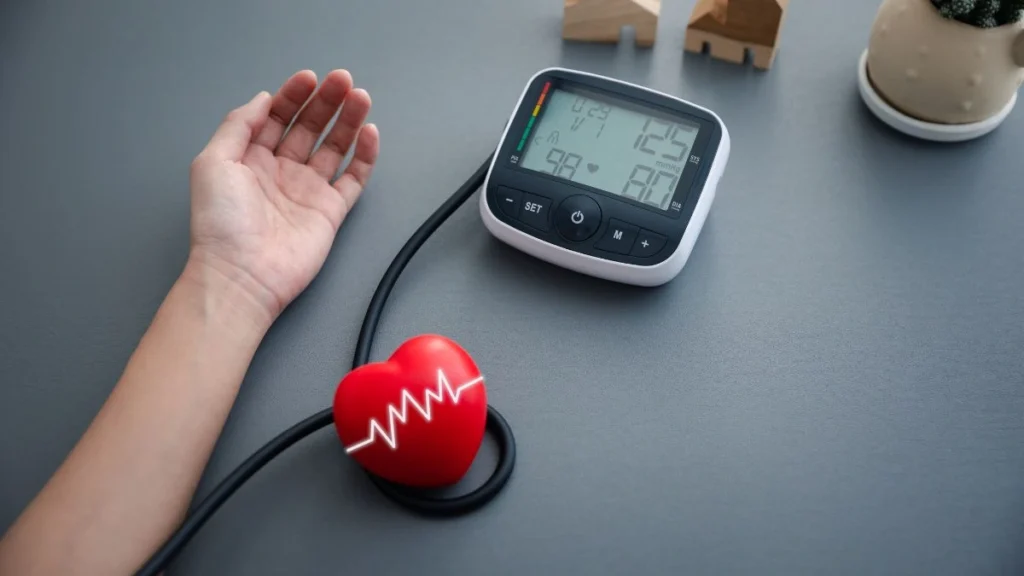
A wall sit looks almost too simple to affect the cardiovascular system.
Inside the thigh muscles, however, the sustained contraction temporarily compresses small blood vessels. Blood flow becomes partially restricted while the muscles remain tense.
When you stand back up and relax, blood rushes into the tissue again.
Researchers believe this repeated compression and release may train blood vessels to dilate more effectively. It may also improve endothelial function, which describes how well the inner lining of blood vessels responds to changes in blood flow.
The increased flow after each hold can create shear stress along the artery walls. This physical signal may encourage the endothelium to release more nitric oxide, a molecule that helps blood vessels relax.
Over time, better vessel relaxation can reduce systemic vascular resistance. That means the heart does not need to push against as much resistance when sending blood through the body.
Isometric training may also improve nervous system control of blood pressure. Some studies suggest it can reduce excessive sympathetic activity, the part of the nervous system involved in the body’s stress response.
These changes develop through repeated training. One wall sit may produce temporary blood pressure changes, but lasting reductions generally require several weeks of consistent practice.
Wall Sits Versus Walking
Wall sits and walking should not be treated as competing prescriptions.
They stress the body differently and provide different benefits.
| Wall squats | Brisk walking |
| Use a sustained static muscle contraction | Use continuous rhythmic movement |
| Can be completed in a small indoor space | Usually requires more time and space |
| May produce larger average resting pressure reductions | Builds aerobic endurance and cardiovascular capacity |
| Strengthen the thighs and improve muscular endurance | Supports mobility, weight management, and blood sugar control |
| Can temporarily raise pressure during the hold | Usually produces a more gradual cardiovascular response |
| May be unsuitable for some knee or balance conditions | Often easier to modify for beginners |
The American Heart Association continues to recommend at least 150 minutes of moderate aerobic activity per week, or 75 minutes of vigorous activity. It also recommends resistance exercise and less sitting.
Walking remains one of the most practical ways to meet those aerobic targets.
It strengthens the heart, supports circulation, helps with weight control, and can reduce stress. Regular exercise may lower systolic pressure by roughly 4 to 10 mm Hg, although individual responses vary.
A wall squat can be added to that foundation. It should not erase the rest of your movement routine.
How to Perform a Blood Pressure Wall Squat
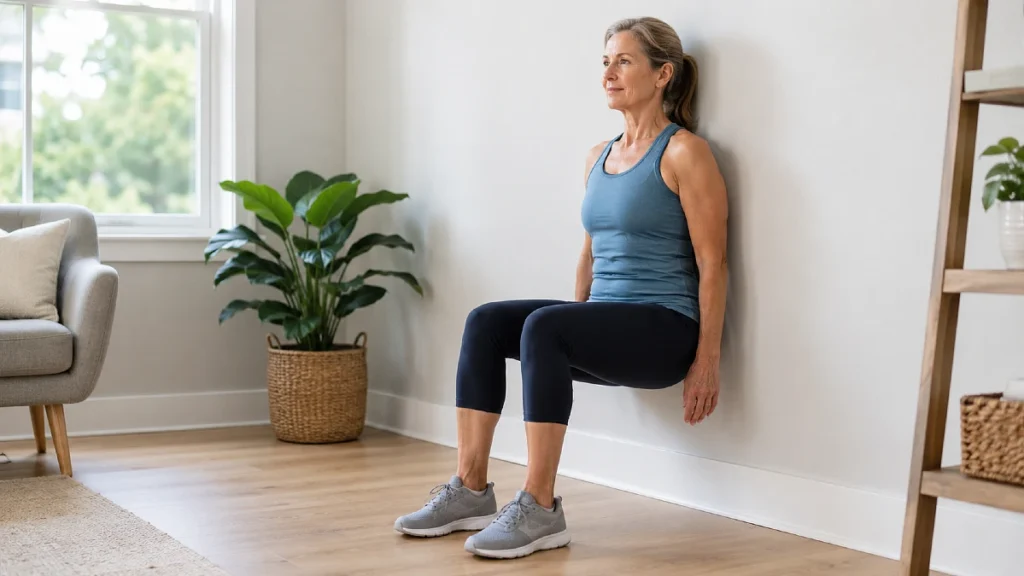
Start with a clear section of wall and shoes that will not slide.
Place your feet approximately one and a half to two foot lengths away from the wall. Lean your back against it, keeping your head and shoulders relaxed.
Slowly slide down until your knees are comfortably bent.
You do not need to reach a perfect 90 degree angle on your first attempt. A higher position reduces the demand on your thighs and knees.
Keep your knees pointing in the same direction as your toes. Your feet should remain flat on the floor.
Hold the position while breathing continuously. Do not clamp your mouth shut, strain, or hold your breath.
The American Heart Association warns that breath holding during exercise can raise blood pressure.
Push through your feet and slowly slide upward when the hold is finished. Walk gently for a minute or two before sitting down.
The Research Based Wall Squat Routine
Many isometric blood pressure studies use a structured protocol rather than one exhausting wall sit.
A commonly studied session includes four holds of approximately two minutes, with about two minutes of rest between holds. Sessions are often performed three times per week.
That full protocol is demanding and should not be the starting point for an untrained person.
| Training level | Hold time | Sets | Rest between sets | Weekly frequency |
| New beginner | 15 to 20 seconds | 2 | 60 to 90 seconds | 2 days |
| Comfortable beginner | 20 to 30 seconds | 3 | 90 seconds | 2 or 3 days |
| Intermediate | 30 to 60 seconds | 4 | 90 to 120 seconds | 3 days |
| Research style target | Up to 2 minutes | 4 | About 2 minutes | 3 days |
Move to the next level only when you can complete every hold with steady breathing, controlled form, and no dizziness or unusual pain.
You can also raise your body higher on the wall instead of forcing a deeper squat. The goal is controlled tension, not proving how low you can sit.
Blood pressure can rise substantially during an isometric hold, especially when the effort is intense or breathing is restricted. People with uncontrolled hypertension, cardiovascular disease, aneurysm risk, or major medical conditions should obtain individualized guidance before attempting long holds.
What the Exercise Should Feel Like
Your thighs should feel steadily challenged.
By the end of a set, you may notice burning or shaking in the quadriceps. Mild muscular fatigue is expected.
Sharp knee pain is not.
You should also be able to breathe throughout the hold. If you are grunting, bearing down, or turning red from strain, the position is probably too difficult.
Raise your hips several inches and shorten the hold.
Using the exercise as an all out endurance contest can increase pressure during the contraction without necessarily improving long term results. Consistency matters more than a single maximal attempt.
The Daily Habit That Actually Works
Try this practical routine:
- Walk for 20 to 30 minutes at a comfortable, purposeful pace on most days.
- Add two or three wall squat sessions each week.
- Begin with a knee angle that feels challenging but controlled.
- Breathe slowly throughout every hold.
- Record home blood pressure readings rather than judging progress by sensation.
This combination addresses both sides of the exercise equation.
Walking develops aerobic capacity and supports overall metabolic health. Wall squats provide a concentrated isometric stimulus in only a few minutes.
How Soon Could Your Readings Change?
Exercise is not an instant cure for hypertension.
Mayo Clinic notes that regular exercise may take approximately one to three months to produce a clear effect on resting blood pressure. The benefit also depends on continuing the activity.
Some isometric training trials have reported measurable changes after several weeks, but the timeline varies.
| Time period | What may be happening | What to track |
| First week | Learning form and tolerating muscle tension | Breathing, knee comfort, hold time |
| Weeks 2 to 4 | Muscles adapt and sessions feel more controlled | Consistency and exercise symptoms |
| Weeks 4 to 8 | Resting pressure may begin trending downward | Weekly home reading averages |
| Weeks 8 to 12 | A more reliable training effect may appear | Average systolic and diastolic change |
Do not compare one isolated reading taken before the program with another taken weeks later.
Blood pressure changes with stress, sleep, caffeine, medication timing, temperature, recent activity, and measurement technique. A series of properly taken readings gives a more useful picture.
How to Check Whether It Is Working
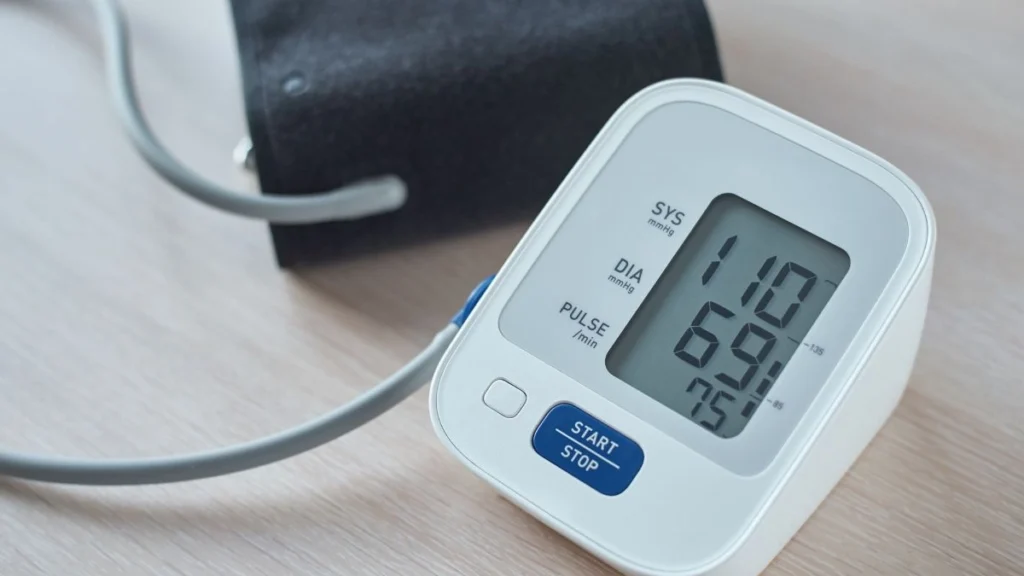
Use a validated upper arm blood pressure monitor.
Avoid caffeine, smoking, and exercise for at least 30 minutes before measuring. Empty your bladder, sit quietly for about five minutes, and support your arm at heart level.
Keep both feet flat on the floor. Do not talk during the reading.
Take two readings about one minute apart and record both. Measuring at a similar time each day makes your results easier to compare.
Do not take a reading immediately after a wall sit and expect it to represent your resting pressure. Give your body time to return to a calm resting state.
Your doctor may recommend checking at different times depending on your medications and diagnosis.
Mistakes That Can Make Wall Sits Riskier
Holding your breath
This is the most important mistake to avoid.
Breath holding creates a Valsalva like strain that can sharply increase pressure inside the chest and blood vessels. Exhale slowly instead of bearing down.
Dropping too low too soon
A deep position greatly increases the load on the thighs and knees.
Start higher. You can gradually slide lower as strength and control improve.
Turning each session into a maximum test
Longer is not automatically better.
The research protocols use controlled sets and planned rest periods. They do not require collapsing from exhaustion.
Replacing all aerobic movement
The wall sit does not train every part of fitness.
It cannot fully replace walking, cycling, swimming, or other sustained movement that strengthens the heart and lungs.
Using exercise to replace medication
Lifestyle changes may improve blood pressure enough for a clinician to reconsider medication in some cases.
That decision requires medical supervision. Suddenly stopping medicine can cause blood pressure to rebound or rise dangerously.
When to Stop and Get Medical Help
Stop exercising and seek urgent medical care if you develop:
- Chest pressure or pain
- Pain spreading into the jaw, neck, back, or arm
- Fainting or severe dizziness
- Severe shortness of breath
- A new irregular or racing heartbeat
- Sudden weakness, facial drooping, confusion, or difficulty speaking
Mayo Clinic specifically advises stopping exercise and seeking immediate care for chest, jaw, neck, or arm discomfort, severe breathlessness, dizziness, faintness, or an irregular heartbeat.
Do not try to exercise through these symptoms.