

Tired of throwing money at expensive collagen pills that promise the world but deliver little? The beauty industry sells us supplements claiming to erase wrinkles, but your body can’t use them efficiently.
Most collagen pills break down during digestion, never reaching your skin intact. What works better? Real food. Nature offers genuine solutions that stimulate your body’s collagen production from within.
These seven everyday foods contain the exact nutrients your skin needs to build collagen naturally. They cost less than supplements and benefit your whole body, not just your skin. Ready to trade those useless pills for real results?
1. Bone Broth

Simmering animal bones and connective tissues creates a nutrient-rich liquid full of collagen-building amino acids like glycine and proline.
These amino acids serve as building blocks that help your body produce collagen naturally. Your skin can benefit greatly from regular consumption of bone broth.
The easily absorbed proteins support elasticity and firmness, addressing fine lines at their source. Many people notice improvements in joint comfort too, as these same compounds help maintain cartilage strength.
Making bone broth at home allows you to control quality and ingredients. Simply collect bones from previous meals, cover with water, add a splash of apple cider vinegar to help extract nutrients, and simmer for 12-24 hours. Store in glass containers and enjoy daily for best results.
2. Citrus Fruits and Berries

Vitamin C plays a crucial role in collagen synthesis, acting as a catalyst for the entire production process. Without adequate vitamin C, your body simply cannot create stable collagen structures, regardless of other nutrients present.
Oranges, lemons, strawberries, and blueberries pack this essential vitamin along with antioxidants that protect existing collagen from damage.
The bright colors signal high antioxidant content that fights free radicals known to break down skin proteins. Fresh berries also contain anthocyanins that reduce inflammation and support skin repair.
Eating these fruits raw preserves their vitamin content best. Try adding berries to your breakfast, squeezing fresh lemon into water, or enjoying an orange as a mid-day snack.
Consistent intake works better than occasional large doses since your body uses vitamin C daily for collagen maintenance.
3. Egg Whites

Proline makes up about 15% of collagen’s amino acid structure, making it essential for skin integrity. Egg whites contain this amino acid in abundance, offering an easily digestible form your body can use efficiently.
The protein in egg whites also contains glycine and lysine, two other amino acids vital for collagen formation. Your skin uses these components to build the supportive matrix that maintains firmness and elasticity.
Regular consumption supports continual collagen renewal, which slows dramatically with age. Adding egg whites to your diet doesn’t require much effort.
Scrambled egg whites make a quick breakfast, while hard-boiled eggs provide portable protein. Some people blend raw egg whites into smoothies, though cooking slightly reduces allergic reaction risks. Aim for several servings weekly to support ongoing collagen production.
4. Leafy Green Vegetables

Spinach, kale, and collard greens contain chlorophyll that research links directly to increased collagen production in skin cells. The deep green color signals high nutrient density that benefits overall skin health.
A 2022 systematic review published in Dermatology Practical & Conceptual found compelling evidence that nutrients abundant in leafy greens significantly improve skin hydration and elasticity.
The researchers noted that antioxidants and vitamin C in these vegetables protect collagen fibers from oxidative stress while supporting new collagen synthesis. Their conclusion emphasized daily consumption for cumulative benefits.
Cooking these greens lightly preserves more nutrients than overcooking. Try mixing raw spinach into smoothies, lightly sautéing kale with garlic, or adding chopped greens to soups and stews.
The variety of preparations keeps meals interesting while consistently delivering collagen-supporting nutrients to your skin.
5. Fatty Fish With Skin and Scales

Salmon, mackerel, and sardines deliver a powerful combination of omega-3 fatty acids and actual collagen protein from their skin and scales.
This dual-action approach both protects existing collagen and provides raw materials for new production. The omega-3s work primarily by reducing inflammation throughout the body, creating conditions where collagen can thrive rather than break down.
Fish skin contains type I collagen—the same type found predominantly in human skin. Eating fish with the skin on twice weekly can visibly improve skin texture within months.
Wild-caught options typically contain fewer contaminants and more nutrients than farmed varieties. Baking or broiling fish with the skin intact preserves both the omega-3s and collagen proteins.
Small fish like sardines can be eaten whole, providing additional calcium from their edible bones along with collagen benefits.
6. Chicken or Turkey With Skin

Poultry skin contains significant amounts of collagen and glycosaminoglycans like chondroitin sulfate. These compounds support not just skin elasticity but also joint function through similar tissue-strengthening mechanisms.
The collagen in poultry skin becomes more bioavailable through slow-cooking methods that break down tough connective tissues.
Your digestive system can then extract and absorb more of the beneficial compounds. Collagen peptides derived from the chicken have a particular affinity for supporting human skin moisture levels.
Keeping the skin on when making chicken soup or stock creates a gelatin-rich liquid full of collagen precursors.
Roasting poultry with the skin on, then consuming at least some of that crispy exterior, provides both flavor and functional benefits. Even saving chicken skin to add to homemade bone broth increases its collagen content substantially.
7. Nuts and Seeds
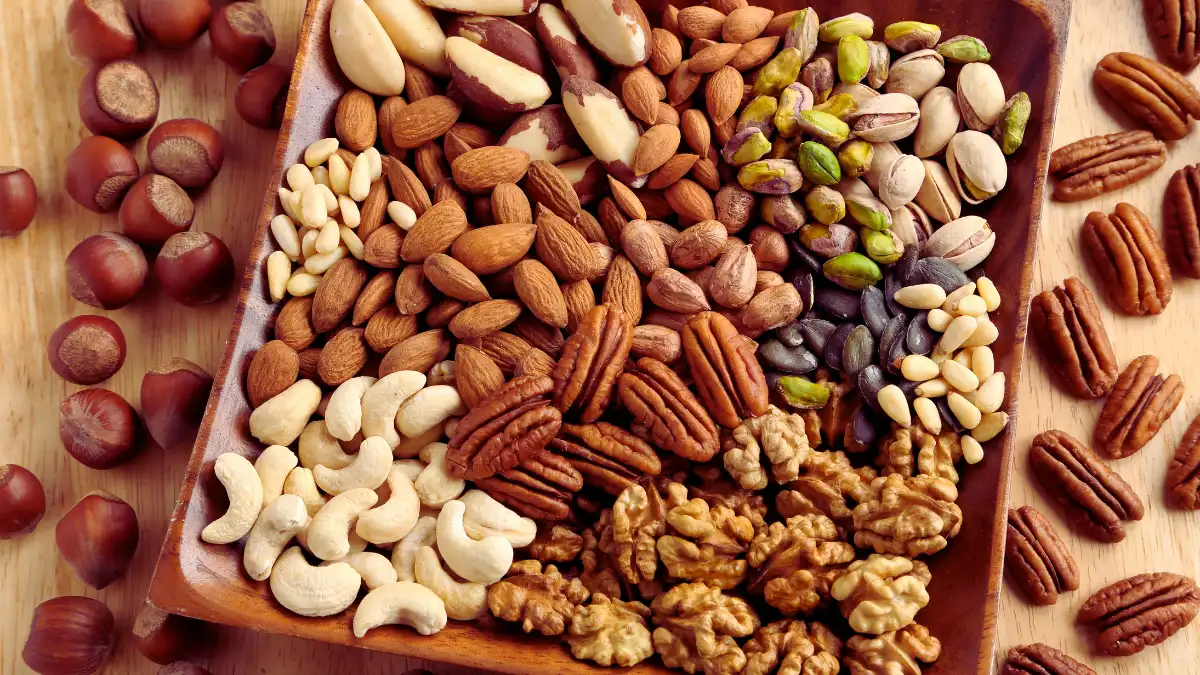
Zinc and copper serve as essential cofactors for collagen synthesis enzymes. Without adequate amounts of these minerals, collagen production stalls regardless of other nutrients present.
Almonds, cashews, pumpkin seeds, and sunflower seeds provide these minerals in bioavailable forms. The healthy fats in nuts and seeds also help maintain cell membrane integrity, allowing better nutrient delivery to skin cells.
This improved cellular function creates optimal conditions for collagen production. Many varieties also contain vitamin E, which protects collagen fibers from oxidative damage caused by sun exposure and pollution.
Small daily servings work better than occasional large amounts since these minerals work continuously in collagen maintenance. Mixing different varieties ensures a broader nutrient profile.
Try adding a tablespoon of mixed seeds to salads or yogurt, or grab a small handful of almonds for a skin-supporting snack that also satisfies hunger between meals.