

Your brain fires millions of signals daily to control minute muscle movements often years before a tremor ever appears or a diagnosis is made.
It feels confusing and scary when your hand simply stops cooperating, turning a quick signature on a receipt into a slow, cramped struggle that barely resembles your name.
This is not just normal aging or arthritis but a specific neurological short circuit known as Micrographia that acts as a quiet alarm bell.
Research from the Parkinson’s Foundation confirms that for half of all patients this subtle shift in penmanship is one of the very first red flags to appear.
#1 The Shrinking Handwriting Phenomenon

Micrographia is the medical term for handwriting that becomes abnormally small or cramped as a result of nervous system changes.
You might notice that your letters are not just smaller than they used to be but that they lack the sweeping loops and clear spacing that defined your personal style for decades.
It happens because the brain is sending a weaker signal to the hand muscles regarding the scale of movement required. This results in a disconnect between what you intend to write and what actually appears on the page.
- Letters appear small and cramped relative to previous years
- Words are difficult to read for yourself and others
- The physical act of writing feels slower or more labored
Below 12 are the also the related signs:
2. Progressive Crowding on the Page

Many people start writing a sentence at a normal size but lose control of the scale as they continue across the page. By the time you reach the end of a line or paragraph the letters have shrunk significantly and the words are huddled together.
This is distinct from consistent small writing because it shows a fatiguing of the neural pathways that sustain motor control over time. It is often most visible on unlined paper where you lack a visual guide to keep your letters consistent.
- Sentences start normal but end in tiny script
- Words slant upward or crowd together tightly
- Control diminishes the longer you write without a break
3. Loss of Sense of Smell

A reduced ability to smell certain foods is actually one of the earliest predictors of brain health issues and often predates motor symptoms by years.
You might find that you can no longer detect the scent of bananas, dill pickles, or licorice even though your nose is not congested.
This occurs because the olfactory bulb in the brain is one of the first areas affected by the clumps of protein associated with the condition. It is easy to dismiss this as an allergy or age related change but it is a critical sensory clue.
- Inability to smell strong foods like bananas or pickles
- Foods taste bland or unappetizing suddenly
- No congestion or cold is present to explain the loss
4. Thrashing During Sleep

Acting out dreams physically is a condition known as REM Sleep Behavior Disorder and it is strongly linked to future neurological changes. While healthy muscles are temporarily paralyzed during deep sleep to keep you safe, this safety switch malfunctions here.
You might punch, kick, or yell while asleep because you are physically enacting the vivid dreams occurring in your brain. This can be dangerous for bed partners and results in poor rest that leaves you exhausted the next day.
- Physically kicking or punching while asleep
- Yelling or talking loudly during dreams
- Falling out of bed due to sudden movements
5. A Soft or Low Voice

Friends and family might start asking you to repeat yourself constantly because your volume has dropped without you realizing it.
This condition is called hypophonia and it creates a perception that you are whispering even when you think you are speaking at a normal conversational level.
The mechanism is similar to small handwriting in that the brain misjudges the amount of effort needed to project your voice. It can lead to social withdrawal because communicating becomes a frustrating and tiring effort.
- People constantly ask you to speak up
- Voice sounds breathy or hoarse
- You feel like you are shouting but are barely heard
6. The Masked Face

You might be told that you look serious, depressed, or upset even when you are feeling perfectly content and happy. This symptom is caused by the loss of automatic motor control in the small muscles of the face that handle spontaneous expression.
It results in a fixed stare and a reduction in blinking that can make social interactions feel awkward or misunderstood. The emotional connection remains the same internally but the external broadcast of those feelings is dampened.
DETECTED: 2/min
- Face looks serious or blank despite happy mood
- Significant reduction in the frequency of blinking
- Others misinterpret your mood as angry or distant
7. Constipation and Bowel Issues

The nervous system controls your digestion and when it slows down it can cause persistent constipation that defies diet or hydration changes. This is often one of the very first signs to appear and can plague people for years before any stiffness or shaking begins.
The autonomic nervous system which manages these involuntary body functions loses its efficiency in moving food through the digestive tract. It is a non motor symptom that is frequently overlooked or treated as a separate gastrointestinal problem.
- Feeling full quickly after eating small amounts
- Chronic constipation despite high fiber intake
- Nausea or general digestive discomfort
8. Stiffness or Rigidity in Limbs

You might feel a tightness in your arms or legs that does not go away after you stretch or move around. This rigidity prevents your muscles from relaxing normally and can cause aches or pain that mimic orthopedic injuries.
A common sign is that one arm stops swinging naturally while you walk and instead stays stiffly at your side. This stiffness can affect any part of the body and contributes to the feeling of being slowed down in your daily activities.
- Arms do not swing naturally when walking
- Muscles feel tight and do not relax with stretching
- Pain in shoulders or hips that mimics arthritis
9. Dizziness or Fainting

Feeling lightheaded when you stand up from a chair is caused by a sudden drop in blood pressure known as orthostatic hypotension. The body usually regulates blood pressure automatically during position changes but this system can lag in response.
It creates a dizzy sensation or even vision blackouts that force you to sit back down immediately. This instability can increase the risk of falls and makes simple transitions like getting out of bed feel hazardous.
- Dizziness immediately upon standing up
- Vision goes dark or blurry for a few seconds
- Feeling faint or lightheaded throughout the day
10. Stooped or Hunching Posture
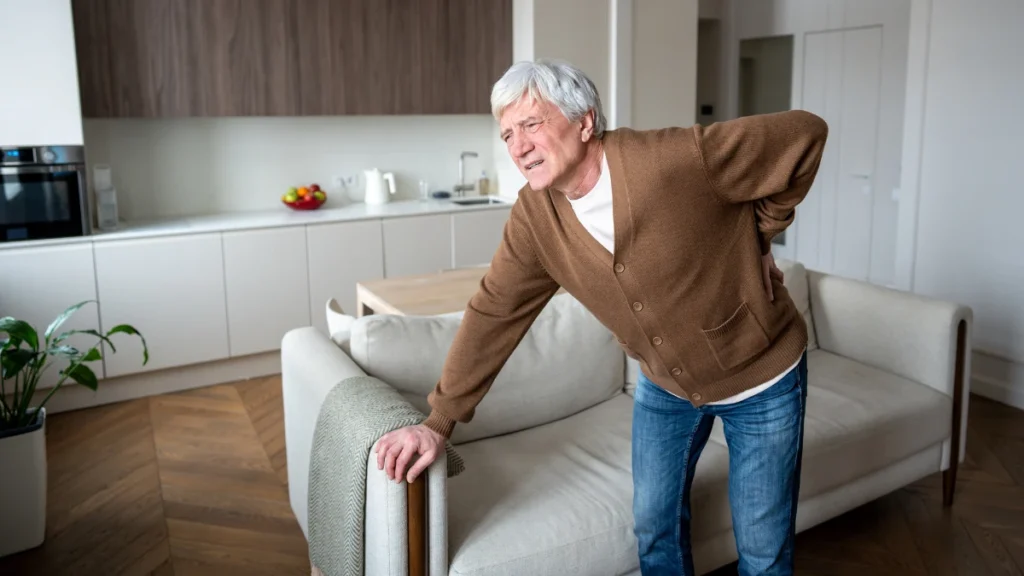
Your family might comment that you are slouching or leaning forward even when you are trying to stand up straight. This change in posture happens because the brain loses some of the automatic reflexes that maintain an upright position against gravity.
It often results in a forward lean that can make you look like you are rushing or about to fall. Correcting it requires conscious and constant effort because the natural default has shifted to a hunched position.
- Unintentional leaning forward while standing
- Slouching or rounding of the shoulders
- Difficulty maintaining an upright spine without effort
11. Trouble with Walking

Changes in how you walk can be subtle at first and might just feel like your feet are slightly stuck to the floor. You might take shorter steps or shuffle your feet instead of lifting them fully with each stride.
This can sometimes lead to freezing of gait where your feet feel temporarily glued to the ground when you try to turn or step through a doorway. It is a balance and coordination issue that makes walking feel less automatic and more like a manual task.
- Shuffling feet instead of lifting them
- Feeling like feet are glued to the floor
- Short rapid steps rather than long strides
12. Apathy and Mood Changes
A lack of motivation or interest in hobbies you once loved can be a chemical result of dopamine changes rather than just sadness. This apathy is distinct from depression because it is not necessarily accompanied by feelings of worthlessness but rather a lack of drive.
You might feel emotionally flat and struggle to initiate activities that used to bring you joy. It is important to recognize this as a physiological symptom of the condition rather than a character flaw or laziness.
- Loss of interest in hobbies or social activities
- Difficulty starting new tasks or projects
- Emotional flatness or lack of enthusiasm
13. The Resting Tremor

While this is the most famous sign it often appears after the other subtle symptoms listed above have been present for some time. This specific type of shaking occurs when your hand or limb is completely at rest and relaxed.
You might notice a rhythmic movement of the thumb and forefinger often described as a pill rolling motion. It is different from other tremors because it typically stops or improves when you actively use your hand to do something.
- Often starts on just one side of the body
- Rhythmic shaking in hand or foot while relaxed
- Motion stops when you move to grab an object