

You wake up exhausted even after a full night of sleep. That heavy fog follows you all day. Caffeine barely touches the fatigue and you spend every afternoon fighting the urge to nap.
It feels like you are watching your life pass by while you are too drained to participate. I realized my daily habits were the enemy.
By cutting out these six specific things I regained my full energy in just over two weeks.
A Quick but Important Note on Your Health
Before we dive in, let’s be very clear: this is not medical advice. Persistent fatigue can be a symptom of serious underlying medical conditions.
If you are struggling with chronic fatigue, it is essential that you speak with a doctor to rule out conditions like thyroid disorders, anemia, vitamin deficiencies, sleep apnea, or Myalgic Encephalomyelitis/Chronic Fatigue Syndrome (ME/CFS).

The tips in this article are powerful lifestyle adjustments that can work alongside professional medical care, not replace it.
1. The Blood Sugar Rollercoaster: Quitting Ultra-Processed Foods & Sugar

For a long time, I reached for a granola bar or a sweet snack when my energy dipped, thinking it was a quick fix. And it was. But it was a fix that came with a heavy price just an hour later.
Why It Drains You
Think of sugar and refined carbs as an energy credit card with a ridiculously high interest rate. When you eat them, your blood sugar spikes, giving you a rush of immediate energy.
Your body then releases a large amount of insulin to manage this sugar rush, which causes your blood sugar to crash a short while later.
This crash leaves you feeling more tired, irritable, and foggy than you were before. You could say it’s a vicious cycle that repeats all day long.
According to research highlighted by clinicians like Dr. Mark Hyman, this pattern, repeated over time, contributes to insulin resistance and chronic inflammation—two major drivers of persistent fatigue.
Furthermore, these processed foods are often stripped of the very nutrients your body’s cellular powerhouses—the mitochondria—need to produce real, sustainable energy.
What to Do Instead
Read the labels: You’d be shocked where sugar hides. Look out for it in pasta sauces, salad dressings, and even bread.
Swap your drink: One of the biggest offenders is sugary drinks. Swap that soda or sweetened iced tea for sparkling water with a squeeze of lemon.
Focus on whole foods: Center your meals around protein, healthy fats, and fiber (from vegetables). These stabilize your blood sugar and provide a steady stream of energy.
Your First Step: For one week, eliminate sugary drinks. That’s it. See what a difference it makes.
2. The False Friend: Quitting the Afternoon Caffeine Fix

I thought coffee was the solution to my fatigue. That 3 PM cup was a non-negotiable ritual. It turns out, it was one of the biggest hidden causes of my energy problem.
Why It Drains You
Here’s the thing about caffeine: it doesn’t actually give you energy. Throughout the day, a chemical called adenosine builds up in your brain, making you feel sleepy. Caffeine works by blocking the adenosine receptors, essentially tricking your brain into thinking it isn’t tired.
But the adenosine is still there, waiting. Once the caffeine wears off, all that accumulated sleep pressure hits you at once, leading to a massive energy crash. Matthew Walker, the neuroscientist and author of “Why We Sleep,” explains that caffeine has a half-life of about 5 to 6 hours.
This means that your 3 PM coffee can still be disrupting the quality of your deep sleep at 10 or 11 PM, even if you don’t have trouble falling asleep. You wake up less refreshed, reach for more coffee, and the cycle continues.
What to Do Instead
Set a caffeine curfew: Try to have your last caffeinated beverage no later than 2 PM.
Hydrate first: When you feel that afternoon slump, drink a large glass of cold water before reaching for anything else. Mild dehydration is often mistaken for fatigue.
Move your body: Instead of coffee, take a brisk 5-10 minute walk outside. The sunlight and movement are a far more effective and sustainable energy boost.
3. The Sleep Thief: Quitting Evening Alcohol

A glass of wine at the end of the day felt like the perfect way to unwind and relax. I thought it was helping me sleep, but the data shows the opposite is true.
Why It Drains You
While alcohol is a sedative and can make you feel sleepy initially, it severely damages the quality and structure of your sleep. According to the National Sleep Foundation, alcohol suppresses REM sleep, which is critical for emotional regulation, learning, and memory.
Here’s what I mean: you might fall asleep quickly, but as your body metabolizes the alcohol during the night, your sleep becomes much more fragmented.
Your system is essentially “rebounding” from the sedative effect, leading to more frequent awakenings in the second half of the night.
You might not even remember them, but they prevent you from getting the deep, restorative sleep needed to feel energized the next day. You wake up feeling dehydrated and groggy, not rested.
What to Do Instead
Create a new wind-down ritual: Explore non-alcoholic ways to relax, such as drinking a cup of chamomile or peppermint tea, taking a warm bath, listening to calming music, or reading a book.
Set a time limit: If you do choose to drink, try to have your last drink at least 3-4 hours before you plan to go to sleep to give your body time to process it.
Mindful Mocktails: Experiment with creating enjoyable, sophisticated non-alcoholic drinks. A little sparkling water, muddled mint, and a splash of lime can feel just as ritualistic and relaxing.
4. The Mental Drain: Quitting Endless Scrolling

My body would be on the couch, but my brain was running a marathon. I was physically still but mentally exhausted from jumping between emails, news alerts, and social media feeds. Sound familiar? This constant digital noise was a huge, invisible drain on my energy.
Why It Drains You
We often think of fatigue as purely physical, but mental fatigue is just as debilitating. Our brains aren’t built for the constant stream of information that smartphones deliver. Every notification, every new post, and every email is a “context switch” that depletes your cognitive resources.
Here’s what I mean:
- Decision Fatigue: The endless stream of opinions, updates, and advertisements on social media forces your brain to make thousands of tiny, unconscious judgments, which wears it down.
- Blue Light Disruption: As experts like Cal Newport, author of Digital Minimalism, point out, the blue light emitted from screens in the evening can suppress the production of melatonin, the hormone that tells your body it’s time to sleep. You might fall asleep, but the quality of that sleep is compromised.
- Dopamine Depletion: Social media apps are designed to give you small hits of dopamine, a feel-good chemical. Over time, this can dysregulate your brain’s reward system, making it harder to find motivation and focus for real-world tasks, leading to a feeling of apathy and exhaustion.
What to Do Instead
- Set App Timers: Use the built-in “Screen Time” or “Digital Wellbeing” features on your phone to set daily limits for your most-used apps.
- Create a “Digital Sunset”: Designate a time—say, 90 minutes before bed—when all screens go off. No exceptions. This allows your brain to unwind and your melatonin levels to rise naturally.
- Prune Your Notifications: Go into your settings and turn off all non-essential notifications. Do you really need to know instantly when someone liked your photo? This puts you back in control of when you engage with your phone.
Your First Step: Tonight, charge your phone in a different room from where you sleep. This single change can dramatically improve your sleep quality.
5. The Paradox of Inactivity: Quitting the Sedentary Mindset
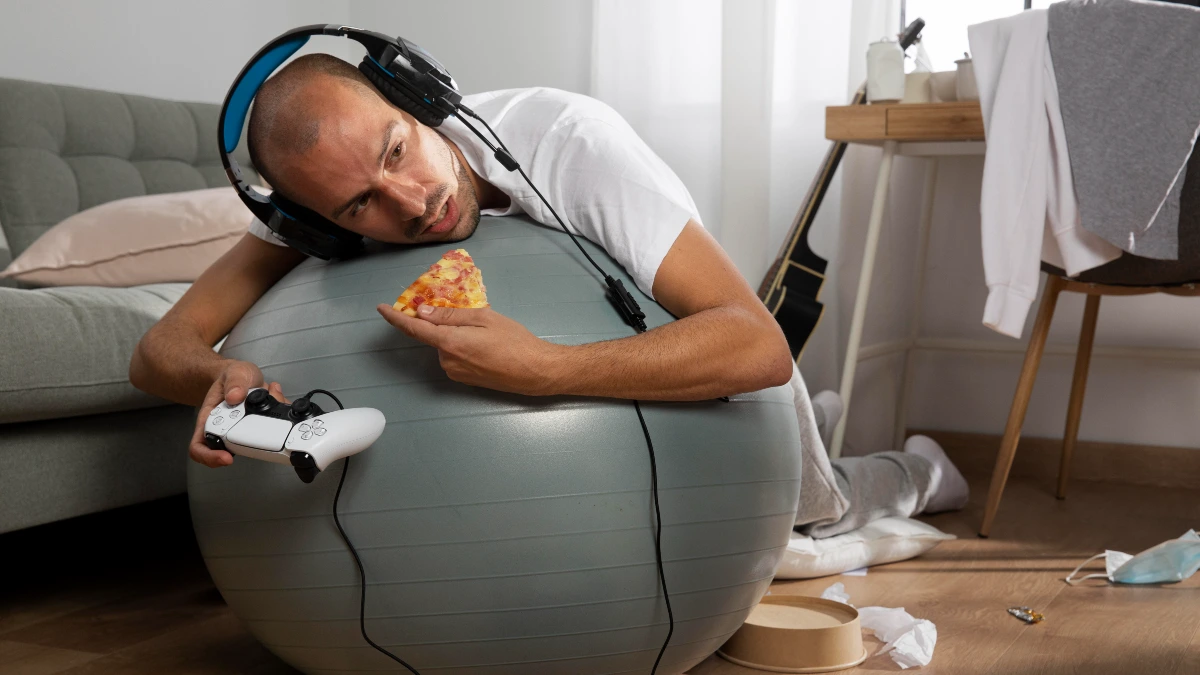
When you’re bone-tired, the absolute last thing you feel like doing is exercising. For years, I listened to that feeling. I thought I was preserving my energy, when in reality, I was trapping myself in a low-energy state.
Why It Drains You
It’s a strange paradox: you have to expend energy to create more energy. When you are sedentary for long periods, your body gets a signal that high energy levels aren’t required.
Your mitochondria—the tiny power plants inside your cells—actually become less efficient and decrease in number.
Movement, on the other hand, does the opposite:
- It Boosts Circulation: Just a short walk increases blood flow, delivering more oxygen and nutrients to your brain and muscles, providing an immediate lift.
- It Creates More Mitochondria: Consistent physical activity signals your body to create more mitochondria to meet the demand. More mitochondria mean a higher capacity for energy production.
- It Releases Endorphins: Exercise releases endorphins, which are natural mood-boosters that combat feelings of lethargy and fatigue.
The goal isn’t to go from zero to a marathon. The goal is simply to quit being still for so long. It’s about embracing small, consistent movements throughout the day, a concept scientists call NEAT (Non-Exercise Activity Thermogenesis).
What to Do Instead
- Embrace “Movement Snacks”: Don’t think in terms of “workouts.” Think in 5-10 minute “movement snacks.” A quick walk after lunch, stretching while your tea brews, or doing a few squats while on a phone call.
- Take the Long Way: Intentionally park farther from the entrance, take the stairs instead of the elevator, or walk to a colleague’s desk instead of sending an email.
- Stand Up: Aim to stand up and move around for at least 2-3 minutes every hour. Set a timer if you have to.
Your First Step: Tomorrow, after you finish a meal, just put on your shoes and walk for 10 minutes. That’s it. You’ll be surprised by the effect.
6. The Energy Vampire: Quitting the Habit of Saying “Yes”

I tracked my food, my sleep, and my exercise, but I never tracked my commitments. I never realized that my inability to say “no” was leaving my energy tank completely empty by the end of each week.
Why It Drains You
Every time you say “yes” to something you don’t have the time, desire, or energy for, you are making an energy withdrawal. People-pleasing, over-committing, and a lack of boundaries keep your nervous system in a low-grade state of “fight or flight.”
This chronic stress constantly pumps cortisol through your system, which is incredibly draining and leads directly to burnout and physical exhaustion.
You could say your energy is like a bank account. You only have so much to spend each day. When you give it away to obligations that don’t align with your priorities, you go into an energy deficit.
Saying “no” isn’t selfish; it’s responsible energy management. It’s about protecting your most valuable resource so you can invest it where it truly matters.
What to Do Instead:
Use a Buffer Phrase: Instead of an immediate “yes,” buy yourself time. A simple, “Let me check my calendar and get back to you,” is a powerful tool. It gives you space to genuinely consider the request without pressure.
Practice the Polite Decline: You don’t need a long excuse. A clear, kind “no” is enough. Try one of these:”Thank you so much for thinking of me, but I don’t have the capacity to take that on right now.”
“That sounds like a wonderful opportunity, but I’m going to have to pass this time.”
Know Your Priorities: Get clear on what’s most important to you. When you know your priorities, it’s much easier to say “no” to things that don’t align with them.
Your First Step: The very next time someone asks you for a favor or commitment that isn’t a “hell yes!” for you, use the buffer phrase: “Let me check and get back to you.” Feel the power of not committing on the spot.
Conclusion
Overcoming chronic fatigue wasn’t about finding a single magic pill. For me, it was about systematically removing the things that were quietly stealing my energy.
By quitting processed sugar, the afternoon caffeine fix, evening alcohol, endless screen time, a sedentary mindset, and the habit of saying “yes” to everything, I rebuilt my energy from the ground up.
Don’t let this list overwhelm you. You don’t have to tackle all six at once. The most powerful changes start small.
Pick just one. Choose the one thing on this list that resonated with you the most and commit to quitting it for the next 15 days. Just one.
See how you feel. You have far more control over your energy than you think, and reclaiming it might be simpler than you ever imagined.