
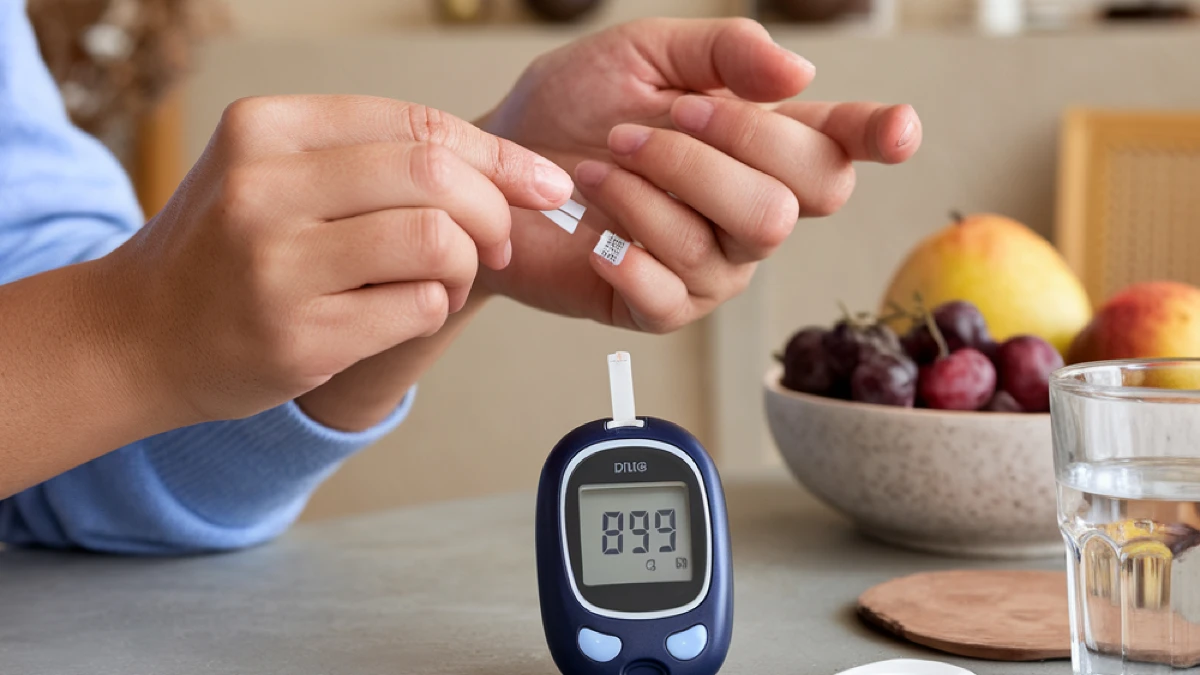
In a personal experiment, the author used a Continuous Glucose Monitor (CGM) for two weeks to understand how different foods and lifestyle choices impacted their blood sugar. Despite following a healthy routine with exercise and sleep, the author experienced consistent afternoon crashes, often accompanied by sugar cravings.
Alex discovered that many “healthy” foods, like oatmeal, smoothies, and sushi, led to surprising glucose spikes, challenging the conventional idea of what’s considered healthy. The experiment revealed how food preparation, such as blending fruits or eating processed carbs, could trigger significant glucose surges.
The author also found that simple lifestyle changes, like adjusting the order of meals or taking short walks after eating, could help stabilize blood sugar levels.
The Metabolic Mirror — Why I Put a Glucose Monitor on My Arm
The 3 PM Crash That Started It All
It was a Tuesday afternoon, and the brain fog hit Alex like a wall. He was staring at his computer, but the words were blurry. His “healthy” lunch—a big salad and a whole-wheat wrap—was long gone. But he was so tired that all he wanted was a nap or a candy bar. This happened every day.
He’d have a good morning, but after lunch, he would crash. He could set his watch to it. He was doing all the right things. He exercised, ate well, and slept enough. But his energy was a rollercoaster, and he felt like he had no control.
Alex felt like it was his fault that he was always tired and craving sugar. But he was about to learn that his problem was a sign of a bigger health issue that many people don’t see.
The Bigger Picture: A Hidden Problem
Alex’s afternoon crash is a small part of a huge health problem happening all over the world. Our bodies are struggling with the way we live and eat. We are failing to meet global goals to stop the rise of obesity and diabetes by 2025. This isn’t a problem for the future. It’s happening right now, and it’s affecting people at younger ages.
New studies show a scary trend. One 2025 study looked at teens from age 17 to 24. It found that the number of them with prediabetes went up by almost five times in just seven years. The study also showed that high blood sugar in this age group led to a three times higher risk of early heart damage.
Another report found that since 2018, the number of teens with newly found prediabetes has jumped by 75% for girls and 84% for boys. Our kids are on a path to long-term sickness, and they often don’t even look sick. This gap between feeling healthy and being healthy is why Alex started his experiment.
Doctors usually only test you for blood sugar problems after you’ve had them for months. But what if you could see what your choices do to your body in real time? What if you could look inside your own metabolism?
My Experiment: Hacking My Own Body
This question led Alex to do a two-week experiment on himself. He used a Continuous Glucose Monitor, or CGM. This device used to be just for people with diabetes. Now, new over-the-counter sensors let anyone who is curious about their health use them. Alex saw the CGM as a “metabolic mirror.”
It was like a black box for his body that would show him how his blood sugar reacted to every meal, workout, and stressful meeting. His goal was simple. He wanted to get past general advice and find out what worked for him. He wanted to know why he was so tired and find real ways to feel more stable and strong. More and more people are worried about their metabolic health and feel like the old way of healthcare isn’t helping them stay well.
So, they are using technology to get their own health information. The new consumer CGMs are a response to this need. They help people go from being patients to being in charge of their own health. Alex was ready to be in charge. He ordered a sensor, stuck it on his arm, and got ready to see what his body was trying to tell him.
Choosing My Window: A 2025 Guide to Consumer CGMs

The New Frontier: CGMs You Can Buy at the Store
Alex’s experiment would not have been so easy a few years ago. A big change happened in 2024 when the U.S. Food and Drug Administration (FDA) approved the first CGMs for over-the-counter (OTC) sale. This opened the door for a new type of device made for people focused on wellness. It’s important to know the difference between the two main types of CGMs if you want to try this in 2025.
First, you have Clinical-Grade CGMs. Devices like the Dexcom G7 and Abbott’s FreeStyle Libre 3 are made to manage diabetes. You need a doctor’s prescription for them. They are very accurate and have important safety alarms that tell you if your blood sugar is dangerously high or low. Many of these can connect to insulin pumps to help deliver insulin automatically.
Second, there is the new and growing group of Consumer/Wellness Biosensors. Products like the Dexcom Stelo and Abbott Lingo lead this group. You can buy them without a prescription. They are not for managing a disease but for improving your wellness and changing your habits.
They are made for people who don’t use insulin. They show you how your lifestyle choices, like food and exercise, affect your blood sugar. They do not have the emergency medical alerts that the clinical ones do.
My Choice for This Experiment: The Dexcom Stelo
For his two-week test, Alex picked the Dexcom Stelo. He chose it for a few key reasons that make it a great tool for someone without diabetes who wants to improve their health. First, it uses the same accurate technology as the clinical Dexcom G7, so he trusted the data. Second, the sensor lasts for 15 days, which meant he could get two full weeks of information from just one device.
Most importantly, the app is made for people like Alex. The Stelo app shows the links between your lifestyle and your glucose, pointing out “spikes” and giving helpful tips instead of medical alarms. Because it was OTC, Alex could order it online and start his experiment in a few days without seeing a doctor.
Finally, it can connect with other wellness devices like the Oura Ring. This points to a future where you can see your sleep, activity, and metabolism data all in one place to get a full picture of your health.
Data Deep Dive: A Head-to-Head Comparison
To help anyone else thinking about doing this, Alex made a chart comparing the two main OTC consumer sensors on the market in 2025. This is the clear, simple information he wished he had when he started.
The Shock List — 5 “Healthy” Foods That Spiked My Blood Sugar
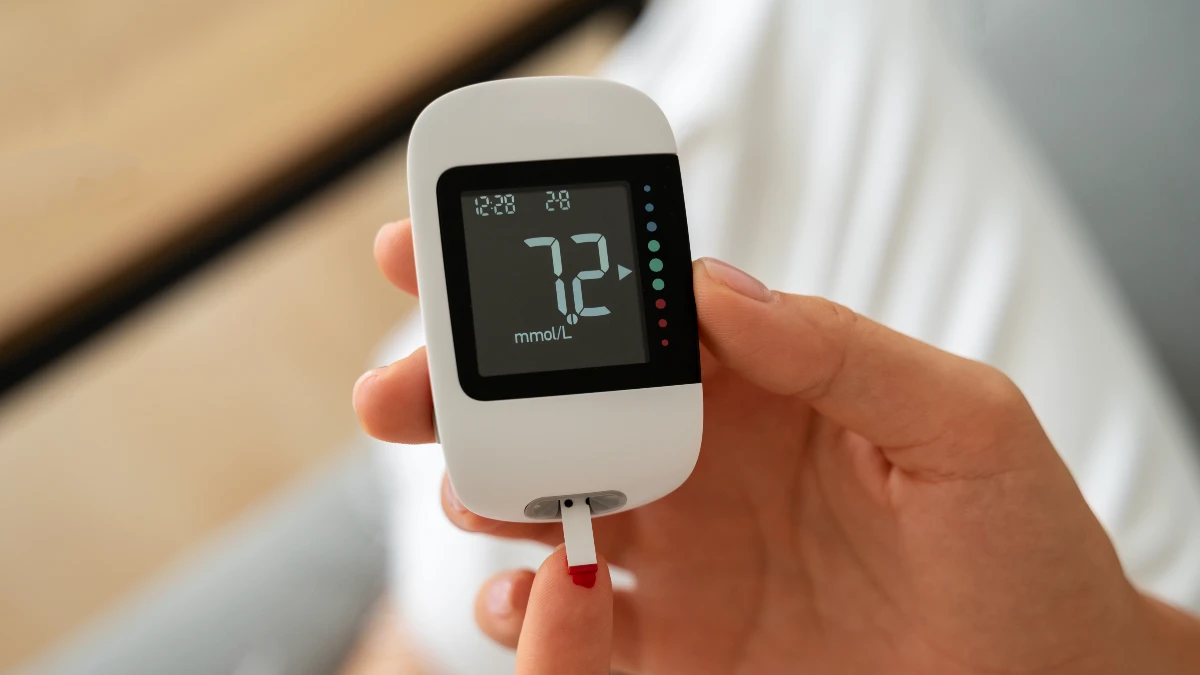
With the Stelo sensor on and his phone connected, Alex lived his normal life, but now he had a new layer of data. The first few days were eye-opening. He saw how a stressful meeting made his glucose slowly rise. He saw how a good night’s sleep gave him a stable, calm line the next morning.
But the biggest surprises came from his food. Foods he thought were healthy were sending his blood sugar on a crazy ride. This section has Alex’s biggest findings—the five “healthy” foods that shocked him the most. For each one, he’ll tell you what happened, show you the data from his monitor, and explain the science behind the spike.
The Virtuous Bowl of Oatmeal
The Scene: Alex’s usual breakfast on a busy morning was a simple bowl of instant oatmeal with a sliced banana. It’s fast, filling, and he always thought it was a great way to start the day. The Spike: [Imagine a CGM graph showing a glucose reading starting at 85 mg/dL, then shooting up to 160 mg/dL within 45 minutes of the meal, before crashing back down below baseline to 75 mg/dL about two hours later.]
The graph looked like a sharp mountain peak. Alex felt full at first, but by 10:30 AM, he was super hungry and tired. His “good” breakfast had set him up for a mid-morning crash. The Science: The problem is how it’s made. Instant oatmeal has a very high Glycemic Index (GI)—a score of 79 out of 100. The GI is a score for how fast a food with carbs raises your blood sugar.
The process that makes oatmeal “instant” breaks it down, so Alex’s body turned it into sugar very quickly. On the other hand, steel-cut or rolled oats are less processed and have a much lower GI (around 55).
The meal also didn’t have much protein or fat, which slow down how fast your body absorbs sugar. This was Alex’s first big lesson: not all carbs are the same. How a food is made matters just as much as what’s in it.
The Post-Workout Banana Smoothie
The Scene: After a morning run, Alex made what he thought was the perfect recovery drink: a large banana, frozen mango, and a cup of unsweetened rice milk. It was tasty, easy, and he thought it was full of good stuff for his muscles.
The Spike: [Imagine a graph showing an even bigger spike than the oatmeal, going from 90 mg/dL to over 180 mg/dL.] This was the highest Alex’s glucose got during the whole two weeks. He felt a quick burst of energy, but the crash an hour later made him feel shaky and tired—the opposite of what he wanted after a workout.
The Science: Blending is like chewing for you. When you blend fruit, the blades break down the fiber that would normally slow down sugar absorption. This basically “pre-digests” the fruit and sends a huge amount of sugar straight into your body.
Bananas are already high in sugar, and the rice milk was another surprise. It has a very high GI of 86—higher than some sugary cereals. This mix created a perfect storm for a huge glucose spike. It taught Alex that the physical form of food is a big deal for how your body handles it.
The “Light” Lunch of Sushi
The Scene: On a busy day, Alex bought a pre-made California roll. It seemed like a great light, healthy lunch: fish for protein, avocado for healthy fats, and some vegetables. The Spike: [Imagine a graph showing a different shape: not a sharp peak, but a quick rise to about 150 mg/dL that stayed high for almost three hours.]
Alex didn’t have a big crash, but he felt a little bit of brain fog all afternoon. He couldn’t focus. The Science: The main part of sushi is also its biggest problem: the rice. A sushi roll is mostly white sushi rice, which is a carb with all the fiber removed. It has a very high GI and turns into glucose fast.
The little bit of protein and fat from the fish and avocado helped, but not enough to stop the big load of starch. This caused a long, slow release of sugar into Alex’s blood that his body had trouble clearing. That’s what made him feel mentally slow.
The Deceptive Garden Salad
The Scene: Alex wanted a low-spike lunch, so he made a huge salad with spinach, cucumbers, peppers, and grilled chicken. He used a store-bought “fat-free” raspberry vinaigrette dressing. He was proud of his choice.
The Spike: [Imagine a graph showing a surprise sharp spike, going from 90 mg/dL to 145 mg/dL.] It wasn’t as high as the smoothie, but Alex was confused. How could a salad spike his blood sugar? The Science: He looked at the dressing bottle.
The second ingredient was high-fructose corn syrup. A small serving had 10 grams of sugar. This was a big lesson about processed foods. When companies take out fat, they often add sugar to make it taste good. Alex’s “healthy” dressing was really just sugar sauce. It turned his good salad into a glucose-spiking meal. You can find these hidden sugars in ketchup, pasta sauces, and yogurts too.
Grapes: Nature’s Candy
The Scene: In the afternoon, Alex wanted a healthy snack. He grabbed a big bunch of green grapes and ate them at his desk. The Spike: [Imagine a graph showing a quick and high spike, almost as fast as the oatmeal.] He was shocked. It’s just fruit, he thought. The Science: This last surprise showed Alex how much people differ.
A Stanford study found that grapes often cause a glucose spike in many people, even if they are healthy. Fruit is good for you, but some fruits have a lot more sugar and less fiber than others. Grapes are like little bags of sugar water.
Eating a lot of them without any protein or fat gives you a quick hit of glucose. This experience taught Alex the most important lesson from wearing a CGM: “healthy” isn’t a simple label on a food. It’s about how your own body reacts to that food at that moment.
The monitor’s real power is not to give you a new list of “good” and “bad” foods. It’s to change how you think about food. It helps you move from a simple, label-based view to a personal and real-time view of your own body. It teaches you to ask, “How does this food affect me, right now?” instead of just, “Is this food ‘healthy’?”
The Stability Playbook — 3 Science-Backed Hacks That Changed Everything
The first week of Alex’s experiment showed him the problems. The second week was about finding answers. With his new data, he looked at the research and the work of people like biochemist Jessie Inchauspé, also known as the “Glucose Goddess,” to find simple, proven ways to flatten his glucose spikes.
Alex didn’t want to stop eating carbs or his favorite foods. He wanted to find smart “hacks” to enjoy his meals and keep his energy steady. He tried three of the best ideas, and the results were amazing.
Hack #1: The Food Order Flip (Veggies First, Carbs Last)
Alex’s Test: He decided to re-test a problem meal: grilled chicken, roasted sweet potatoes, and a big salad with olive oil dressing. The first night, he ate it like he normally does, mixing bites of everything. His glucose spiked to 140 mg/dL. The next night, he ate the exact same meal, but he changed the order. He ate the whole salad first.
Then, he ate the chicken. He only ate the sweet potatoes after he finished the protein. The Result: The difference was huge. The glucose spike was cut by more than 40%. Alex felt full and satisfied after the meal, and he wasn’t tired like the night before. The Science: This simple change has a big effect on your body. Eating vegetables with fiber first creates a thick gel in your gut.
Then, when you eat protein and fats, they tell your stomach to slow down. By the time the carbs (the sweet potatoes) get there, your body is ready to absorb them slowly. This stops a quick flood of sugar into your blood. Studies have shown this works. This “carbs last” method can lower glucose and insulin levels after a meal for people with and without diabetes.
Hack #2: The Pre-Meal Vinegar “Tonic”
Alex’s Test: He loves pasta, but he knew it was a big glucose spiker for him. For this test, he made a simple bowl of spaghetti with tomato sauce. The first night, he just ate it. The second night, about 10 minutes before eating the same meal, he drank a mix of one tablespoon of apple cider vinegar in a big glass of water.
The Result: The vinegar clearly made the spike smaller. Alex’s glucose still went up, but it was much less, and he didn’t feel the energy crash afterward. The Science: The acetic acid in vinegar works in at least two powerful ways. First, it can slow down how fast your stomach empties, which helps control how quickly sugar gets into your blood. But another cool thing happens inside your cells.
Studies show that vinegar can help your muscles take in glucose more easily. In simple terms, it helps your muscles pull sugar out of your blood, getting rid of the glucose from your meal. This works best when you have vinegar with complex carbs like pasta or bread, not simple sugars.
Hack #3: The 10-Minute Post-Meal Stroll
Alex’s Test: This was the easiest and maybe the best hack. He retested his sushi lunch. On day one, he ate his California roll and went right back to his desk. The result was the same high, flat glucose line. On day two, he ate the same sushi, but right after, he went for a quick 15-minute walk.
The Result: The walk basically got rid of the glucose spike. Alex went back to his desk feeling energetic and clear-headed. The Science: This hack uses a cool feature of our bodies.
When you use your muscles, even for light walking, they can take up glucose from your blood without needing insulin. Special things called GLUT-4 transporters make this happen. When your muscles work, these transporters move to the surface of the muscle cells. They open up new doors for glucose to come in and be used as fuel. This is a very powerful process.
By taking a short walk right after a meal, you are telling your biggest muscles (in your legs and butt) to act like “glucose sponges.” They soak up the sugar from your meal before it can build up in your blood. Research shows that timing is very important. Starting the walk as soon as you can after eating is much better than waiting 30 or 60 minutes.
My New Normal — Life After the Monitor

After two weeks, the sensor was done, and Alex took it off. The constant data was gone, but the lessons stayed with him. They completely changed how he thinks about food and his body.
Beyond Food: The Impact of Sleep and Stress
Food was the biggest factor simulating Alex’s glucose, but it wasn’t the only one. When he slept badly, his morning glucose was 10-15 points higher. After a very stressful day, he saw his glucose go up even when he hadn’t eaten.
This matches what research shows. Not enough sleep can make your body resistant to insulin, and stress hormones tell your liver to release sugar into your blood. It was a strong reminder that metabolic health is not just about diet. It’s a whole system where sleep, stress, and exercise are all connected and important.
The Verdict: Is a CGM Worth It for a Healthy Person?
So, should a healthy person get a consumer CGM? Alex’s answer is yes, but with a few conditions. You have to be smart with the data. A CGM is a tool to help you change habits, not to diagnose a disease. Its readings are not the same as a standard blood test like an HbA1c.
It’s easy to get worried about every little change, and that’s not the point. But as a short-term learning tool, it’s amazing. For two weeks, Alex got direct feedback that taught him more about his own nutrition than years of reading. It helped him see past marketing and diet fads. It replaced confusion with clarity. It made health ideas real and personal.
A Call to Action: From Fear to Fluency
Alex’s two weeks with a glucose monitor didn’t give him a new list of foods he can’t eat. He still eats pasta and fruit. But now, he does it with new knowledge. He’ll have a salad before the pasta. He’ll add some nut butter to his apple.
And he will almost always take a short walk after a meal with a lot of carbs. The main goal of tracking your glucose is not to get a perfectly flat line or to become afraid of carbs.
It is to learn your body’s language. It’s about knowing the basics of how your body works so you can make better choices, feel your best, and build a healthy foundation for the rest of your life. You don’t need a sensor on your arm forever to do that. Sometimes, you just need a two-week window to see what’s really going on. The lessons you learn can help you for years.