

You may have been walking more cautiously for years without realizing that the caution itself has become risky. Short, sliding steps leave little room for your toes to clear a rug edge, doorway lip, or crack in the pavement, and a trip can happen before you have time to recover.
Falls are the leading cause of injury in adults 65 and older, and more than one in four older adults reports falling each year.
The one simple change to how you walk after 70 is not to walk faster or take giant steps. It is to restore a controlled, lifted, heel first step instead of sliding the foot forward.
The Quiet Problem Is the Shuffle

Picture a familiar scene. Someone walks across the kitchen with short steps, feet close to the floor, body leaning slightly forward, eyes fixed downward, and very little arm swing.
It feels careful. In reality, it gives the body less time and space to respond when a toe catches.
Low and inconsistent foot clearance is linked with trip risk, while older adults commonly show shorter steps and more variable gait than younger adults. Fear of falling can also produce a cautious walking pattern, which may reinforce slow, shortened steps instead of restoring confident movement.
A shuffle is not a diagnosis. Gait changes can come from pain, weakness, vision problems, medication effects, peripheral nerve damage, inner ear disorders, Parkinson disease, foot drop, stroke, or other neurological conditions.
That is why a persistent or worsening shuffle deserves medical assessment rather than a simple instruction to “pick up your feet.”
| What you notice | Common shuffling pattern | Safer practice cue | Why the cue may help |
|---|---|---|---|
| Foot movement | Foot slides close to the floor | Lift the foot before moving it forward | Creates more space to clear small obstacles |
| First contact | Foot lands flat with little control | Let the heel touch gently first when comfortable | Encourages a smoother roll through the foot |
| Step length | Steps become very short | Reach only slightly farther, without lunging | May reduce the cramped pattern that limits clearance |
| Posture | Chest drifts forward | Keep the breastbone tall and eyes ahead | Keeps body weight from racing ahead of the feet |
| Push off | Toes contribute very little | Roll through the foot and press away through the toes | Restores a more continuous walking rhythm |
The One Change Is Lift, Heel, Roll
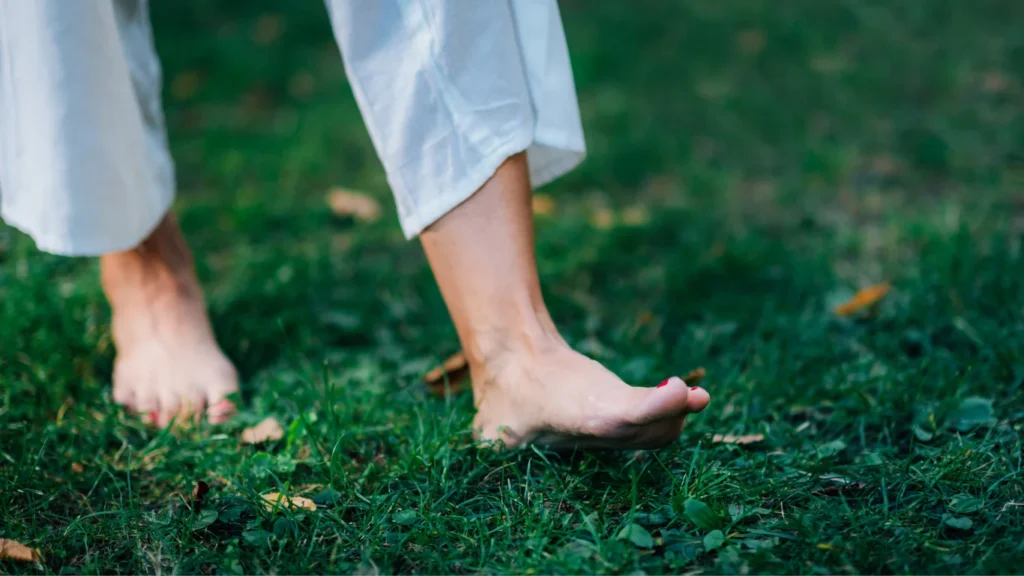
The practical cue has three words: lift, heel, roll.
First, lift the moving foot instead of sliding it. Next, place the heel down gently, when your ankle and foot allow it. Then let your weight roll through the foot before the toes push the body into the next step.
In typical level walking, heel contact is part of the transition into weight acceptance. The body then moves over the planted foot before pushing forward into another step.
Biomechanical research supports the importance of foot placement and step mechanics for stability, but it does not prove that heel contact by itself prevents every fall.
That distinction matters. The useful change is not a hard heel strike, an exaggerated stride, or marching through pain. It is a gentle return to foot clearance and a controlled heel to toe roll.
Why This Cue Can Change More Than the Foot
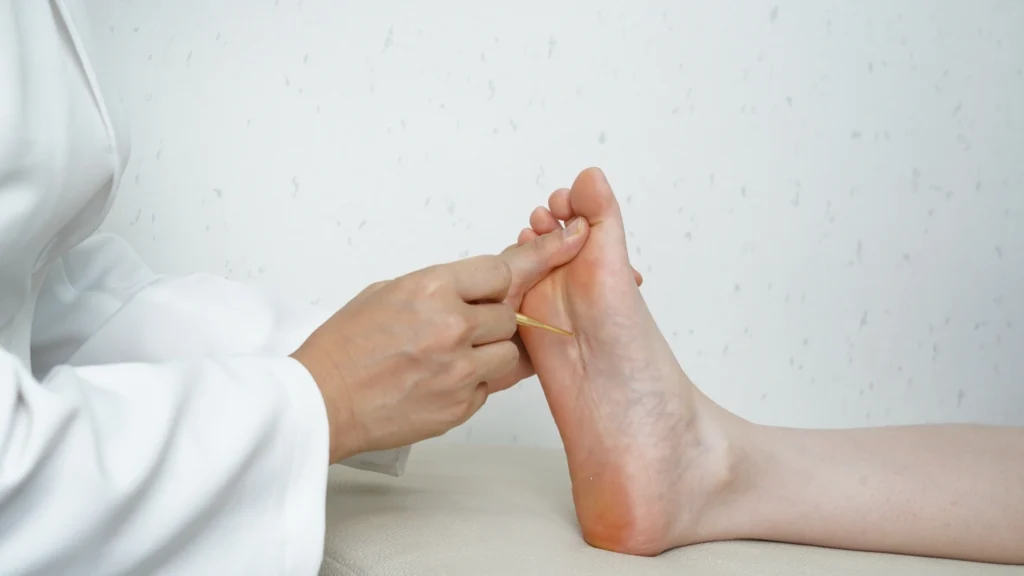
A lifted step asks the muscles at the front of the lower leg and the hip to help move the foot forward. A controlled landing gives the body a clearer base of support, while a toe push helps continue momentum into the next step.
Step length and toe clearance are related, but simply reaching farther is not always safer. Overstriding can make the landing harsh and place the foot too far ahead of the body, so the goal is a modest, comfortable step that stays under control.
Research on minimum foot clearance also shows that variability matters. Consistent clearance may therefore be just as important as lifting the foot higher.
Try the Change With Your Very Next Safe Steps
Stand beside a kitchen counter or along a clear hallway wall. Wear secure footwear and remove pets, cords, loose rugs, and clutter from the path.
Take five slow steps while saying the cue quietly:
- Lift the foot.
- Let the heel touch gently.
- Roll through the foot.
- Push away through the toes.
- Keep the step comfortable, not long.
Turn using several small steps. Do not pivot sharply on one foot.
Practice only while you can stay upright without grabbing, rushing, or holding your breath. Stop if the new pattern causes pain, dizziness, sudden weakness, or greater unsteadiness.
Individual gait problems have different causes. A cue that helps one person may be wrong for someone with foot drop, Parkinson disease, severe neuropathy, a recent joint replacement, painful heel tissue, or restrictions on weight bearing.
Five Exercises That Make the New Pattern Easier
These drills support the same skills used in walking: clearance, controlled placement, balance, and obstacle awareness.
They are starting options, not a substitute for an individual physical therapy plan.
| Exercise | How to begin | Main purpose | Safety limit |
|---|---|---|---|
| Conscious heel first walk | 10 steps out and 10 steps back, up to 3 rounds | Rehearses lift, heel contact, roll, and push | Keep one hand near a wall |
| Supported high knee march | 10 lifts per side, 1 or 2 rounds | Trains deliberate foot lifting | Hold a sturdy counter or chair |
| Comfortable stride practice | Use floor marks 12 inches apart at first | Encourages a slightly fuller step | Never lunge to reach a mark |
| Slow controlled walk | Let each step take about 3 seconds | Builds awareness of each phase | Do not close your eyes |
| Soft obstacle step over | Use a flat towel roll, 1 or 2 inches high | Practices early foot lift | Have another adult nearby |
1. Conscious Heel First Walking
Walk beside a wall and pay attention to only one step at a time. Feel the foot lift, the heel touch, the body move forward, and the toes press away.
Slow practice can make the pattern easier to notice. Once it feels steady on one safe surface, repeat it on another familiar surface, such as firm carpet, while keeping support close.
2. Supported High Knee Marching
Stand tall behind a heavy chair or counter. Lift one knee only as high as you can without leaning backward, then lower the foot with control.
The goal is not height. The goal is to stop dragging the toes and rebuild the habit of clearing the floor.
3. Comfortable Stride Practice
Place two pieces of tape about 12 inches apart. Step so the heel reaches the second mark without stretching, lunging, or tilting the body forward.
Increase the distance only when the movement stays easy and stable. A longer step is not automatically a better step.
4. Slow Controlled Walking
Take several steps at a pace that lets you feel every phase. Lift, pause briefly, place the heel, roll forward, and push away.
Never practice this with closed eyes. Vision is an important part of balance, and removing it while walking can make an already challenging drill unsafe.
Balance problems can also be worsened by vision, inner ear, nerve, muscle, and medication issues.
5. Soft Obstacle Step Over
Place a folded towel on the floor and approach it slowly. Lift the foot early, clear the towel, land under control, and bring the other foot across.
Use a low object that cannot roll. A pool noodle can move underfoot, so it is not the best first choice for someone already at risk of falling.
Do this only with a stable counter, wall, or another adult close enough to help.
The Daily Habit That Actually Works
Try this for five minutes each day:
- Clear one safe walking lane beside a counter or wall.
- Practice 10 thoughtful steps using “lift, heel, roll.”
- Complete 10 supported marches on each side.
- Finish with five normal steps and notice whether the feet still slide.
- Record any pain, dizziness, toe dragging, or need to grab support.
Exercise programs that focus on balance and functional movement reduce falls in community dwelling older adults.
A major Cochrane review involving 59 studies and 12,981 participants found that exercise reduced the rate of falls by about 23 percent. The strongest evidence favored balance and functional exercise rather than walking alone.
A Two Minute Fall Risk Check
The CDC uses the Timed Up and Go test to screen mobility and fall risk. It should be done with another adult standing close enough to help.
Sit in a standard armchair. On “go,” stand, walk 10 feet at your normal pace, turn, return, and sit.
The CDC marks 12 seconds or longer as a fall risk result. Clinicians are also told to watch for short strides, shuffling, little arm swing, loss of balance, or steadying on walls.
| Result or observation | What it may mean | Best next step |
|---|---|---|
| Under 12 seconds with steady movement | Lower risk on this single screen | Continue strength and balance work |
| 12 seconds or longer | Increased fall risk on the CDC screen | Ask for a formal fall risk assessment |
| Shuffling, wall touching, or loss of balance | Gait or balance problem may be present | Discuss it with a doctor or physical therapist |
| Sudden decline from your usual time | New medical or medication issue is possible | Arrange prompt medical evaluation |
This test does not diagnose the cause of a walking change. It is a signal to look more closely.
Common Mistakes That Make the Cue Less Safe
Five gait-cue errors to avoid
Common Mistakes That Make the Cue Less Safe
The goal is a controlled, quiet step that improves awareness without creating a new balance problem. More force, more distance, or more distraction does not make the cue more effective.
Striking the heel hard
A forceful landing adds impact and can turn a sensory cue into a jarring step.
Make the landing quiet
Let the heel contact the ground gently rather than trying to stamp or strike it.
Taking giant steps
Reaching too far can pull the body forward and cause leaning, wobbling, or loss of control.
Use the longest controlled step
Stop increasing the distance before you need to reach, lean, or struggle to stay steady.
Staring down at the toes
Looking directly at the floor can pull the head and chest forward and change upright posture.
Scan the path ahead
Keep the gaze farther forward while continuing to notice floor hazards in the walking path.
Practicing while distracted
Carrying laundry, checking a phone, or talking while turning divides attention and may reduce foot clearance.
Practice with full attention
Early sessions should happen without multitasking, especially during turns or direction changes.
Assuming every shuffle is aging
New or rapidly changing gait problems should not automatically be dismissed as a normal part of getting older.
Investigate meaningful changes
Foot dragging, freezing, one-sided weakness, or a rapidly changing gait may require medical evaluation.