

Walking is often hailed as the holy grail of senior fitness, but if you want to stay out of a nursing home, it’s not enough.
While walking is fantastic for your heart and mental health, it does very little to stop sarcopenia (the medical term for muscle loss) or prevent brittle bones.
As we age, we lose muscle mass, specifically the fast-twitch fibers that catch us when we trip. Walking simply doesn’t activate them.
The solution isn’t running marathons. It’s the Squat, specifically the “Sit-to-Stand” variation.
In this guide, you will learn why orthopedic surgeons call this single functional movement the #1 predictor of independence. You’ll also get a complete toolkit of 9 other surgeon-approved moves to perform safely at home.
Why Walking Isn’t Enough: The “Cardio Trap”
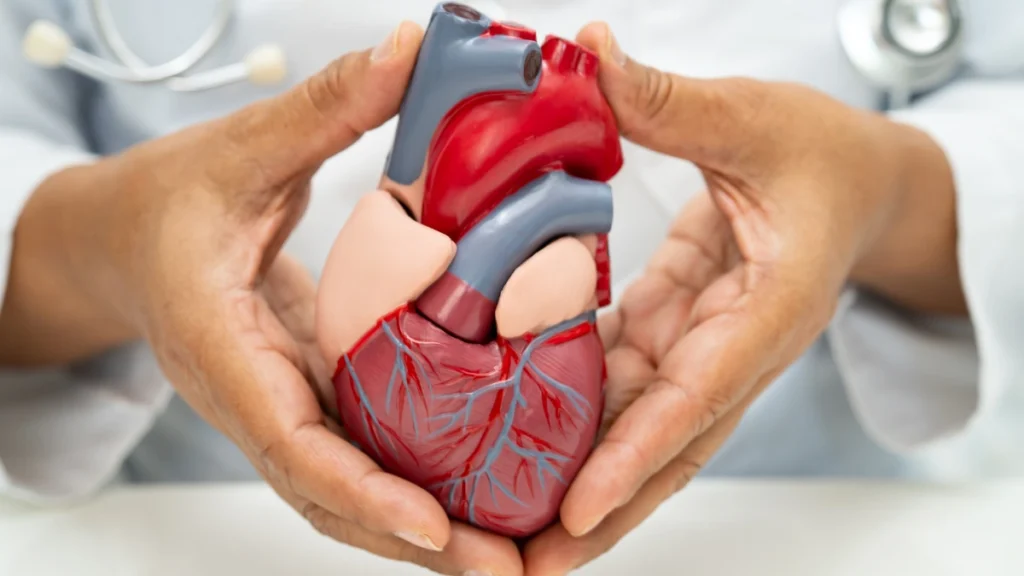
I know you love your daily walk. It feels good, and it gets you outside. However, relying on it exclusively is a trap.
1. It misses the “Fast” Muscles: Walking is a low-impact activity. It uses slow-twitch muscle fibers. But as we age, we lose our fast-twitch fibers first the ones responsible for power and reaction time. If you trip over a rug, walking muscles won’t catch you. Squatting muscles will.
2. Bone Density Truths: Walking maintains bone mass, but it rarely builds it. To actually build bone density, you need axial loading. This means putting weight vertically through your spine and hips. Gravity working against a squat provides this; walking does not.
3. The Metabolic Advantage: Recent 2026 data discussed by experts like Dr. Austin Perlmutter highlights a fascinating find from the Scandinavian Journal of Medicine. They found that “exercise snacks” like doing a few squats every 45 minutes controlled blood sugar and insulin far better than one long, continuous walk.
So, if walking is the bronze medal of aging, what takes the gold?
The Surgeon’s Choice: Why The Squat Reigns Supreme

Ask any orthopedic surgeon what keeps patients out of their operating room, and they will point to the legs.
1. Functional Independence: We use the “Toilet Test.” It sounds crude, but it is the most accurate predictor of independent living. If you lose the strength to squat, you lose the ability to get off the toilet unassisted. That is the moment many seniors lose their dignity and their independence.
2. Fall Prevention: Your glutes (butt muscles) and quads (thigh muscles) are your body’s braking system. Strong legs stop a fall before it happens.
3. Hormonal Response: Because the squat uses the body’s largest muscles, it triggers a release of testosterone and HGH (Human Growth Hormone). These are vital for keeping you young, and isolation exercises (like bicep curls) just don’t produce the same effect.
Surgeon’s Tip: A study in the European Journal of Preventive Cardiology found that the ability to rise from the floor to a standing position is directly linked to a longer life expectancy.
How to Perform the Perfect “Surgeon-Approved” Squat
Forget the heavy barbells you see in gym commercials. We are focusing on functional movement.
Level 1: The Chair Squat (Sit-to-Stand)
This is where everyone should start.
- Sit on a sturdy chair.
- Cross your arms over your chest (No hands!).
- Stand up fully, then sit back down slowly.
Level 2: The Counter-Assisted Squat
- Stand facing your kitchen sink or counter.
- Hold on lightly for balance.
- Push your hips back like you are sitting in a chair that isn’t there.
Level 3: The Goblet Squat (The Pro)
- Hold a water bottle or light weight against your chest.
- Perform the squat. This adds “load” to the skeleton to build bone density.
Safety Checklist
- DO: Keep your chest up and eyes looking forward.
- DO: Push your knees slightly out as you go down.
- DON’T: Let your knees cave inward.
- DON’T: Let your heels lift off the floor.
The “Squat Snack” Protocol: A Daily Plan
You don’t need a gym membership. You need a habit. We use a concept called “Exercise Snacking.”
The Plan: Every time you go to the bathroom, do 5 to 10 squats before you wash your hands. If you drink enough water, you’ll get in 50 squats a day without ever “working out.”
Progression:
- Week 1: Use the chair (Level 1).
- Week 2: Tap the chair with your bum but don’t fully sit.
- Week 3: Do it without the chair (Level 2).
- Week 4: Add a water bottle (Level 3).
9 more Surgeon Approved Moves (The Full Protocol)
While the Squat is King, a King needs a Kingdom. Walking is excellent for cardiovascular health, but it moves you only forward. Real life requires twisting, lifting, pulling, and balancing.
Here are 9 exercises that outperform walking for specific aging issues, designed to build a fortress around your joints.
2. Wall Push Ups
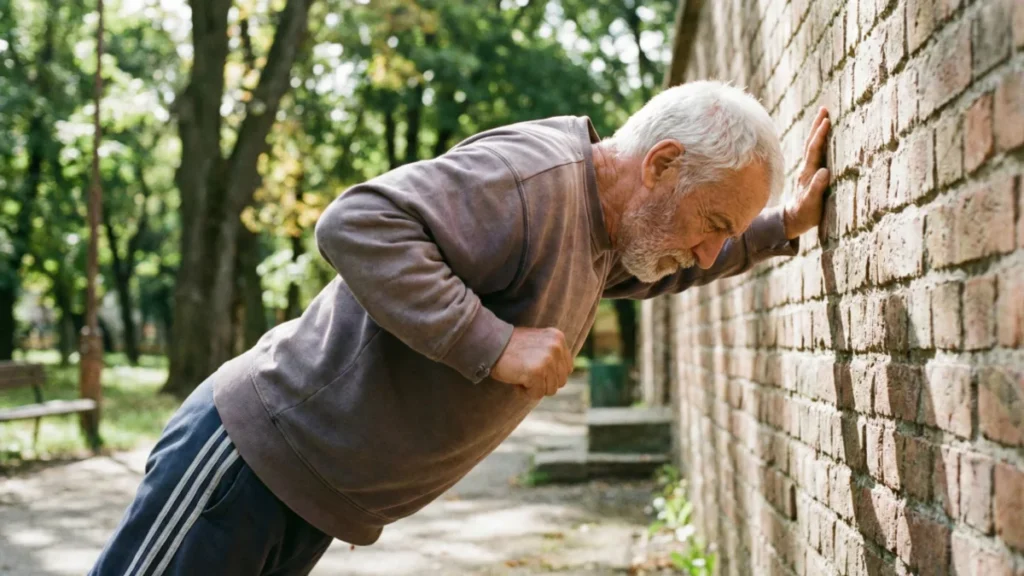
Most seniors fear floor push ups because getting back up is difficult. The Wall Push Up removes that fear while targeting the chest, shoulders, and triceps.
It is a closed chain exercise, meaning your hands are fixed, which provides better feedback to your joints and improves stability without the risk of heavy weights.
- Why: Walking ignores your upper body entirely. If you fall, you need arm strength to catch yourself, break the fall, or push yourself back up.
- How: Stand arms length from a wall. Place hands flat at shoulder height. Keep your body in a straight plank. Lean in until your nose nearly touches the wall, then push back forcefully.
- Benefit: Increases functional upper body strength by 34% in just 8 weeks.
3. Single Leg Stand
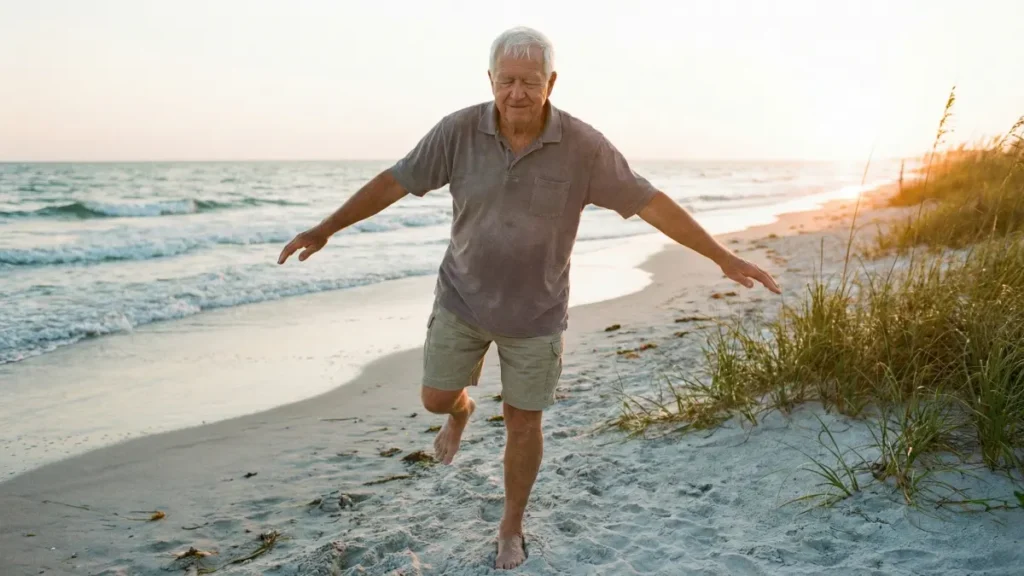
This may look simple, but it is a neurological drill. Balance is not just about muscles; it is about the communication speed between your inner ear, your eyes, and your feet.
This exercise forces your brain to recalibrate that connection, which naturally degrades as we age if not practiced.
- Why: Balance is a “use it or you lose it” skill. The Mayo Clinic notes that the inability to stand on one leg for 10 seconds is a strong predictor of mortality in older adults.
- How: Stand near a sturdy counter or chair for safety. Lift one foot just an inch off the floor. Hold for 10 to 15 seconds. Switch legs.
- Surgeon’s Tip: Do not clamp your eyes shut. Pick a spot on the wall and stare at it to help stabilize.
4. Resistance Band Rows
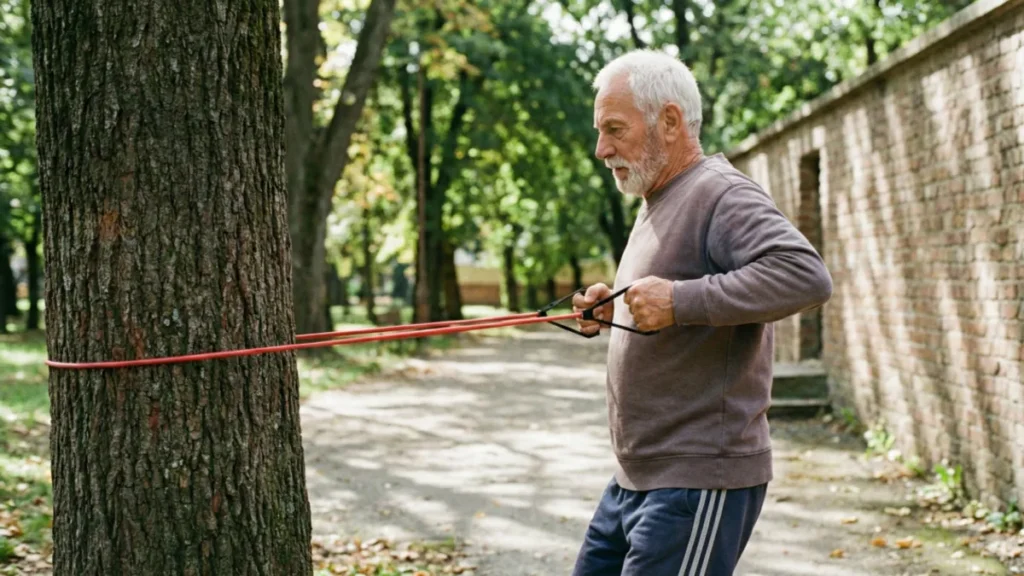
We live in a world where we constantly face forward while driving, cooking, or using computers. This pulls our shoulders forward into a permanent slouch.
This exercise is the antidote. It targets the rhomboids and rear deltoids, the muscles responsible for pulling you back into a proud, upright posture.
- Why: It fixes the “Senior Hunch” (Kyphosis). Walking does not correct posture; in fact, tired walkers often slump more.
- How: Loop a resistance band around a stable doorknob or bedpost. Hold one handle in each hand. Pull your elbows back toward your ribs, squeezing your shoulder blades together as if you are cracking a walnut between them.
- Benefit: Reduces fall risk by improving spinal alignment and shifting your center of gravity back where it belongs.
5. Glute Bridges
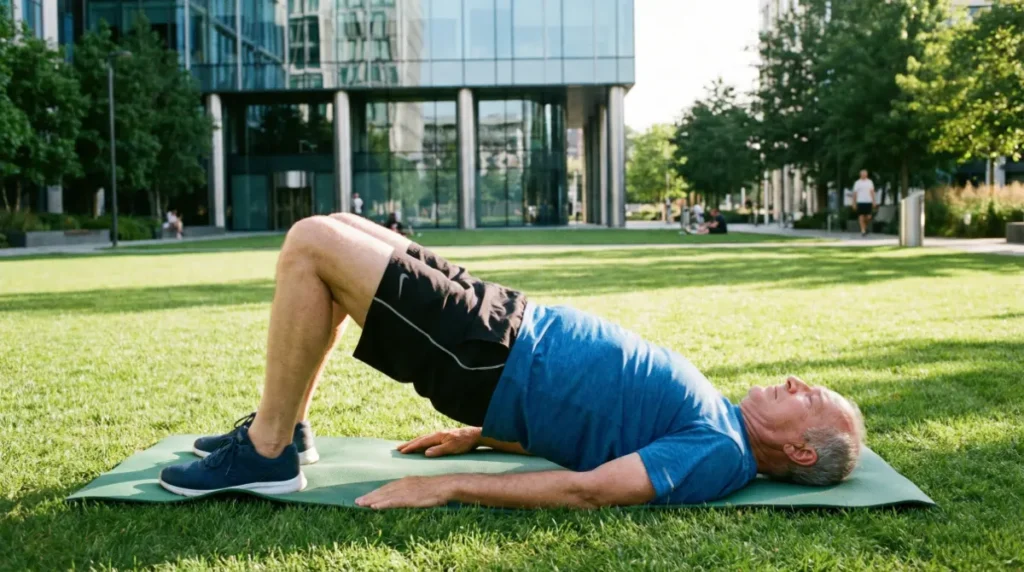
The gluteus maximus is the largest muscle in the human body, yet in many seniors, it is asleep due to years of sitting. This floor based exercise isolates the hips and glutes without putting pressure on the lower back, making it safer than weighted deadlifts for most retirees.
- Why: It counters the effects of sitting. Weak glutes force your lower back to take over the work of lifting, leading to chronic back pain.
- How: Lie on your back with knees bent and feet flat on the floor. Lift your hips toward the ceiling until your body forms a straight line from knees to shoulders. Squeeze the glutes hard at the top for 2 seconds. Lower slowly.
6. Calf Raises
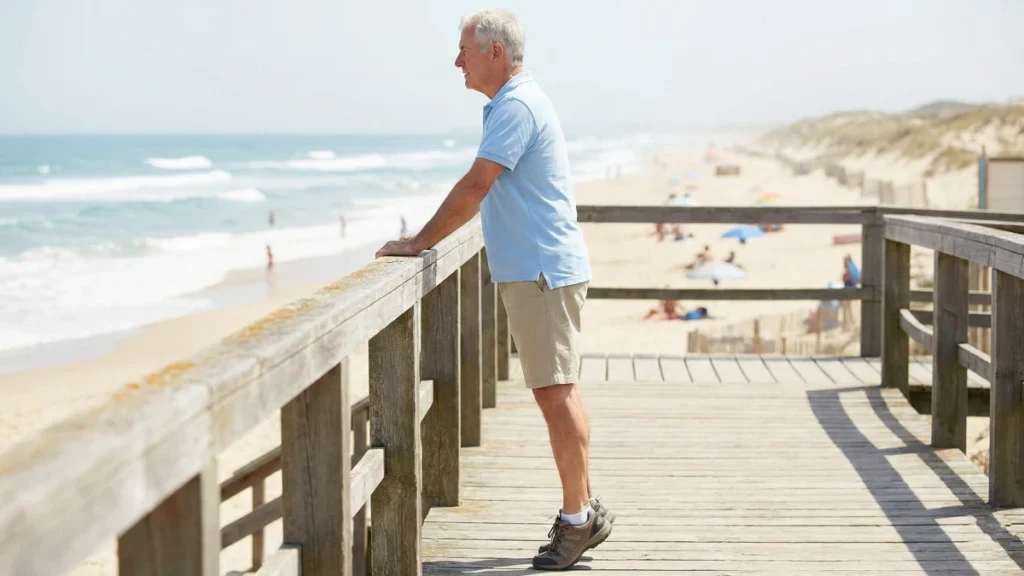
Your calf muscles are often called the “peripheral heart.” Every time they contract, they squeeze the veins in your lower legs, pumping blood back up to your heart against gravity. This exercise is vital for anyone who suffers from swollen ankles or poor circulation.
- Why: They act as your “second heart.” Strong calves also provide the propulsion power needed to walk faster and catch your balance if you lean too far forward.
- How: Stand holding the back of a chair for balance. Rise up high onto your tiptoes. Pause. Lower your heels slowly to the floor.
- Benefit: Improves circulation, reduces ankle swelling, and increases walking speed.
7. The Farmer’s Carry
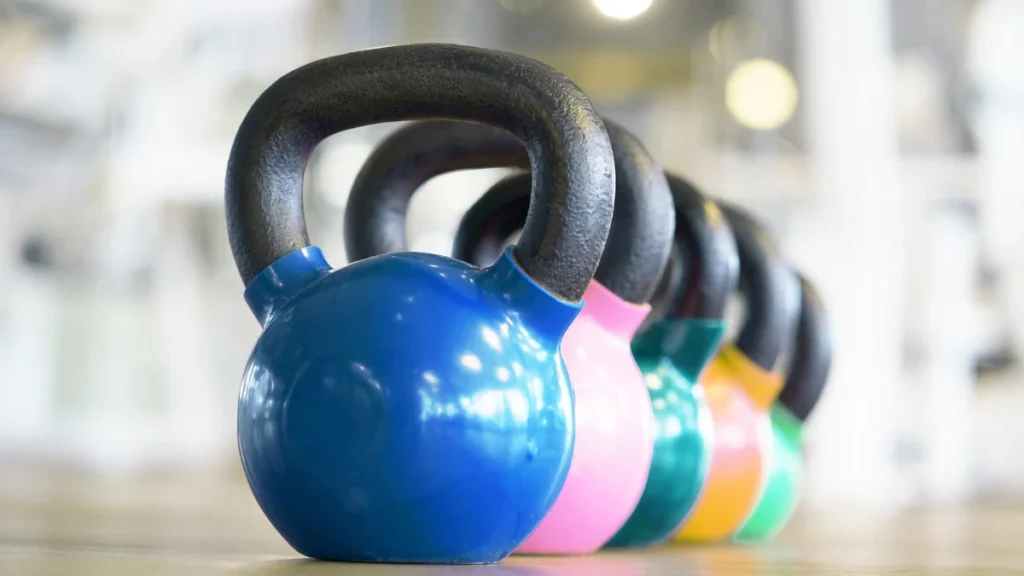
This is the most functional exercise on the list because it mimics the most common chore: carrying groceries. It builds “loaded walking” strength, forcing your core to stabilize your spine while your limbs are moving and carrying weight.
- Why: Grip strength is strongly correlated with overall longevity and heart health. If you cannot grip, you cannot lift, open jars, or hold railings.
- How: Pick up two heavy grocery bags or dumbbells in each hand. Stand tall with shoulders back. Walk around your living room for 60 seconds.
- Surgeon’s Tip: Imagine you are carrying buckets of water that you do not want to spill.
8. The Bird Dog
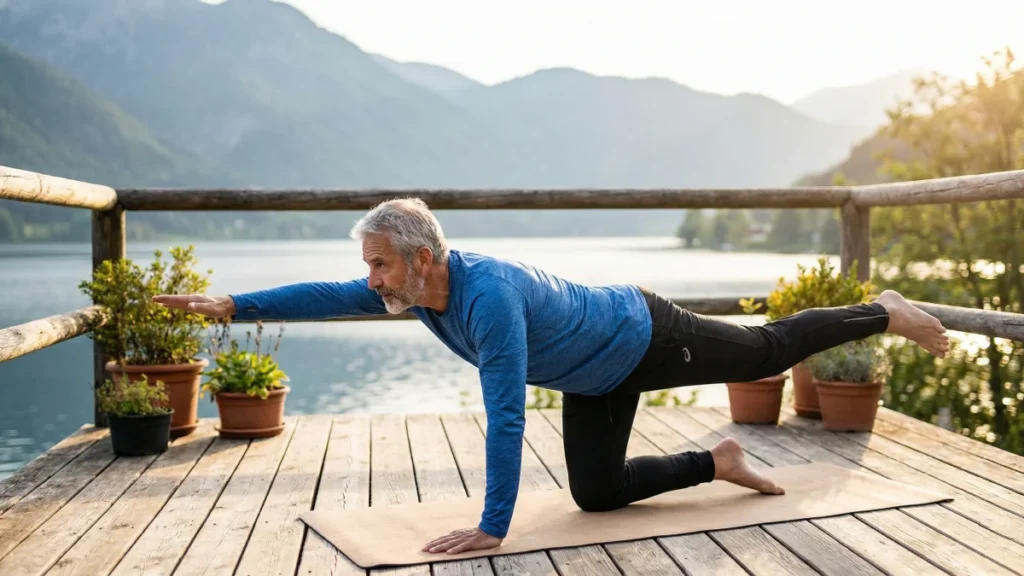
Standard sit ups can be dangerous for senior spines, often causing disc compression. The Bird Dog is a “spine saving” core exercise.
It teaches your body to stabilize the lower back while moving the arms and legs, a skill necessary for everything from sweeping the floor to getting out of bed.
- Why: It offers safe core training that protects the spine rather than stressing it.
- How: Start on your hands and knees in a tabletop position. Reach your right arm forward and your left leg straight back simultaneously. Hold for 3 seconds. Switch to left arm and right leg.
9. Tai Chi Weight Shifting
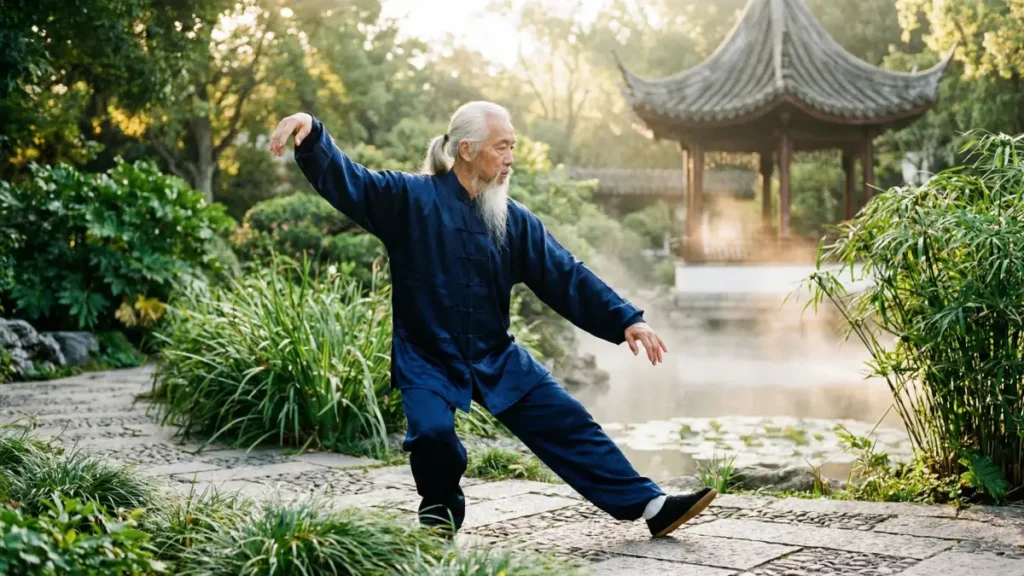
Falls rarely happen when we are standing still; they happen during the transition of weight from one foot to the other.
This movement breaks walking down to its micro components, slowing it down to force your nervous system to control your center of gravity with precision.
- Why: Neural rewiring. Studies show Tai Chi reduces fall risk by 47%, more than any other single intervention, by improving proprioception or body awareness.
- How: Stand with feet wider than shoulder width. Keep knees soft or slightly bent. Slowly shift 100% of your weight to the right leg, tapping the left toe. Then slowly shift to the left. Breathe deeply and move as if you are moving through water.
10. The Dead Bug
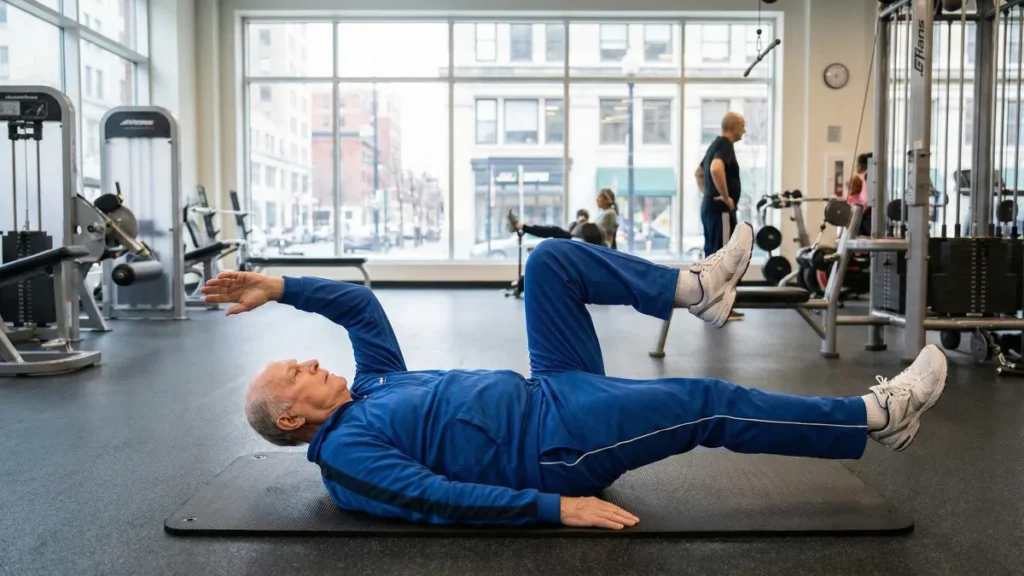
This is the inverse of the Bird Dog and is excellent for those who cannot kneel comfortably. It strengthens the deep abdominal muscles which act as a natural corset for your spine. It requires significant coordination, which keeps the brain sharp.
- Why: It strengthens the deep core without straining the neck or lower back.
- How: Lie on your back with arms extended toward the ceiling and legs in the air with knees bent at 90 degrees. Slowly lower your right arm behind your head and extend your left leg straight out. Keep your lower back glued to the floor. Do not let it arch! Return to center and switch sides.