

Just think your body is a hybrid car. For most of your life, you’ve run on gasoline (sugar). But what happens when you force the tank to run dry for 23 hours every single day?
The One Meal a Day (OMAD) diet is trending again in 2026. But extreme fasting is not just about skipping lunch. It triggers a cascade of hormonal and cellular changes that most people do not expect.
When you start eating only once a day, the effects build quietly. Researchers call this a “metabolic transition.” Your hormones, blood sugar, and energy systems change direction completely. It is like running on a backup battery. You might feel mood dips, fatigue, or sudden clarity.
Metabolic Clock
24 Hours Complete
Your cells have recycled damaged parts and lowered inflammation.
The 24-Hour Biological Timeline of OMAD

When you stop eating, your body does not just sit there. It initiates a survival program. Here is exactly what happens inside you, hour by hour.
0–4 Hours: The Fed State Right after your meal, your body acts normally. Blood sugar rises. Insulin shows up to move that sugar into your cells for energy. You feel fine. But this is the easy part.
4–12 Hours: The “Hobbit” Phase By hour four, your stomach rings the hunger alarm. This is not a fuel shortage. It is a habit. Harvard researchers found that the hunger hormone ghrelin spikes based on your schedule, not your needs.
- The feeling: You might feel annoyed or “hangry.”
- The reality: Your body has plenty of stored energy. It is just complaining because it expects a snack.
- The chemical shift: As you pass hour 12, your body taps into glycogen. This is the sugar stored in your liver. Think of it as your internal pantry.
Status: Storing Fat.
12–16 Hours: The Switch Your glycogen runs low. Now the brain reacts. You might notice every food commercial on TV. The National Institutes of Health notes that alertness hormones rise here. This is why you feel tired but sharp.
- Waves of hunger: These last only 10 to 20 minutes.
- The outcome: If you wait it out, the wave passes. You realize you were not starving. You were just transitioning.
16–24 Hours: Ketosis and Cleanup This is where the magic (and the stress) happens. Your body switches to burning fat for fuel.
- Ketosis: Your liver produces ketones. These provide clean, steady fuel for the brain. A study in Nature Metabolism confirms this can make you feel focused and calm.
- Autophagy: By hour 23, your cells start “taking out the trash.” They recycle damaged parts. This process, identified by Nobel Prize winner Yoshinori Ohsumi, lowers inflammation.
How OMAD Affects Your Metabolism & Hormones
Eating once a day is a massive signal to your hormonal system. It forces your body to adapt.
Insulin Sensitivity When you eat constantly, insulin stays high. This blocks fat burning. Intermittent fasting 23:1 drops resting insulin levels significantly. This helps your body handle sugar better when you finally do eat. It is a powerful tool for managing Type 2 diabetes risks.
Ghrelin: The Hunger Liar The first three days are the hardest. Your body produces ghrelin at your usual breakfast, lunch, and dinner times. It screams for food. But if you ignore it for a few days, the schedule updates. The hunger spikes stop coming.
Growth Hormone (HGH) Spikes This is the most interesting shift for 2026. Studies show HGH can increase by 300% to 500% during fasting.
- Why it happens: Your body is trying to protect your muscles. It knows no food is coming, so it boosts HGH to prevent muscle breakdown.
- The catch: HGH helps, but it cannot do the job alone. You still need protein when you eat.
Weight Loss vs. Muscle Loss: The 2026 Reality

The number on the scale will go down. But what are you losing? This is the most critical part of the OMAD diet.
The Calorie Deficit It is physically hard to overeat in one hour. If you need 2,000 calories but only eat 1,200, you will lose weight. But weight loss is not always fat loss.
The Muscle Risk If your one meal is low on protein, your body will eat its own muscle for amino acids.
= 4 Chicken Breasts
= 1 Block Tofu
= 14 Eggs
- The rule: You need 100g+ of protein in that single meal.
- The problem: Eating that much chicken or tofu in one sitting is difficult. If you fail to hit this target, you end up “skinny fat.” You lose weight, but you also lose the muscle that keeps your metabolism fast.
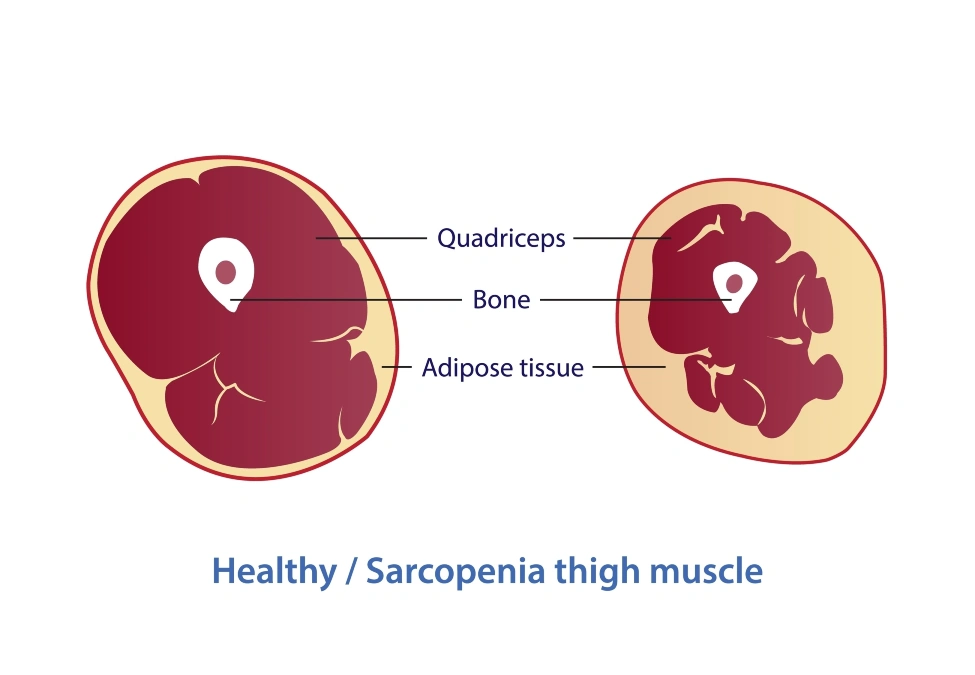
Metabolic Adaptation Your metabolism is smart. If you starve it for weeks, it slows down to save energy. Studies from the University of Illinois show that chronic undereating makes weight loss harder over time. You might feel cold or weak. This is your thyroid slowing down to keep you alive.
Actionable Data: Focus on body composition, not just weight. If your strength drops at the gym, you are losing muscle.
The Hidden Risks (What Influencers Won’t Tell You)

While the benefits are exciting, the data on safety is mixed. You need to know the risks before you start.
Cardiovascular Concerns A major study by Sun et al. (2023) made headlines for a reason. It found an association between eating only one meal a day and higher cardiovascular mortality. While this doesn’t prove cause and effect, it is a serious warning. Skipping meals triggers a stress response that may tax the heart over time.
Nutrient Deficiencies It is nearly impossible to get all your Magnesium, Potassium, and Vitamin D in one sitting.
- The result: You might get leg cramps, heart palpitations, or fatigue.
- The fix: Supplements are often necessary on OMAD.
Hormonal Stress in Women Research suggests women are more sensitive to fasting stress. Some report missed periods or increased anxiety. If your body senses starvation, it shuts down reproductive hormones first.
Gallstones When you don’t eat, your gallbladder doesn’t empty. Sludge builds up. Combined with rapid weight loss, this increases the risk of painful gallstones.
Actionable Guide: How to Eat Once a Day Safely

If you decide OMAD is right for you, execution is everything. Do not wing it. Follow this blueprint.
Timing Matters Try to eat your meal earlier in the day. Eating at 2 PM aligns better with your circadian rhythm than eating at 9 PM. Your body processes food better when the sun is up.
The “One Meal” Blueprint Do not use your one hour to eat junk. That is a disaster for your blood sugar.
- 50% Vegetables: For volume and fiber.
- 25% Protein: Chicken, beef, fish, or lentils. Prioritize this.
- 25% Healthy Fats: Avocado, olive oil, nuts. This keeps you full.
Action: ABORT FAST. EAT IMMEDIATELY.
Electrolytes are Non-Negotiable You lose water and salt fast when insulin drops.
- Take: Sodium (salt), potassium, and magnesium during your fasting window.
- Drink: Water, black coffee, or tea. Nothing else.
Pro Tip: If you feel dizzy or weak, stop. Eat something. There is no prize for suffering.
Conclusion
Is OMAD safe for everyone?
No. Eating once a day is a powerful stressor. It burns fat and fixes insulin, but it risks heart health and muscle mass if done lazily.
It is not a magic solution. It is a tool. Some people feel clearer and lighter. Others feel stressed and tired.
Don’t start cold turkey. Transition from a 16:8 schedule to 20:4 first. Always prioritize protein. And most importantly, listen to your body. It will tell you the truth.