

You sit down in the doctor’s office or at your kitchen table, strap on the cuff, and get a number that dictates your entire health plan.
If that number is artificially high, your doctor might increase your medication dose, leaving you dealing with dizzy spells, fatigue, and a completely avoidable risk of fainting.
It turns out a tiny mistake in how you sit can throw your reading off by nearly 10 points, and researchers at Johns Hopkins just proved exactly why it happens.
Before making any changes based on this article, talk to your doctor, especially if you are currently taking medication or have a diagnosed condition.
The standard medical advice for taking blood pressure seems simple enough. You are told to sit down, stay quiet, and press a button on your machine. Yet, millions of people are doing it in a way that generates falsely elevated numbers.
This is not about a faulty machine or a broken cuff. It is about human error and basic physics. A recent study published in JAMA Internal Medicine by researchers at Johns Hopkins Medicine revealed a massive flaw in how we measure cardiovascular health.
They looked at something almost everyone ignores. They analyzed the exact position of your arm while the machine inflates. Their findings proved that resting your arm on your lap, or letting it hang by your side, forces the reading significantly higher than your true baseline.
The Physics Behind the 10 Point Jump
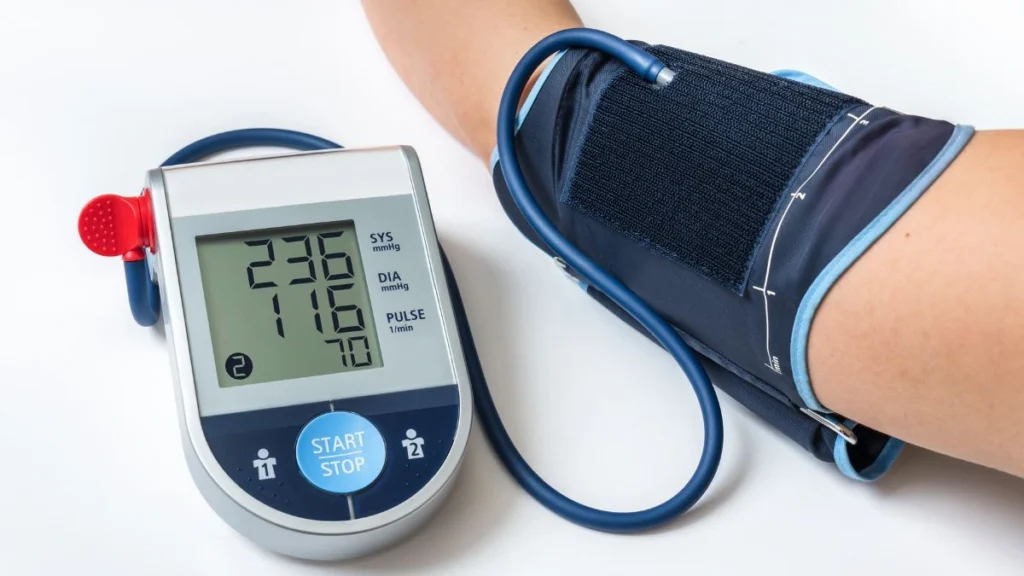
To understand why this happens, you have to understand how your blood pressure cuff actually works. Your home machine uses the oscillometric method to detect the vibration of blood flowing through your brachial artery.
The machine inflates until the blood stops flowing, then slowly releases the pressure while listening for the return of your pulse.
When your arm hangs down at your side, gravity pulls your blood downward toward your hands. This creates increased hydrostatic pressure inside the blood vessels of your arm. Your heart has to pump a little harder against this gravitational pull, and the arteries become slightly more engorged with blood.
Because of this extra pressure, the cuff has to squeeze much tighter to momentarily stop the blood flow. The machine registers this extra effort as a higher blood pressure reading overall.
When you rest your arm on your lap, a similar mechanical error occurs. Your arm is still lower than the optimal position, but you are also engaging the muscles in your shoulder and arm to keep it stable.
Even mild muscle tension forces your blood vessels to constrict slightly, which artificially drives up your systolic number.
What The Johns Hopkins Researchers Found

The Johns Hopkins team rigorously tested these subtle differences in a crossover randomized trial. They tested patients using the proper method with the arm supported on a desk at heart level. They then compared those baseline numbers to readings taken with the arm on the lap or hanging unsupported at the side.
The results were startling for anyone who monitors their health at home. Resting the arm on the lap overestimated systolic blood pressure by nearly 4 points.
Letting the arm hang by the side overestimated systolic blood pressure by almost 7 points on average, with some individuals seeing a full 10 point jump.
| Arm Position | Impact on Systolic Blood Pressure | Impact on Diastolic Blood Pressure | Why It Happens |
| Supported on desk at heart level | Accurate (True Baseline) | Accurate (True Baseline) | Artery is relaxed and aligned with the heart chambers. |
| Resting on lap | Falsely elevated by ~4 points | Falsely elevated by ~2 points | Mild muscle tension and slight gravitational pull. |
| Hanging at side | Falsely elevated by ~7 to 10 points | Falsely elevated by ~4.5 points | High hydrostatic pressure and maximum gravity pooling. |
The Danger of a Wrong Diagnosis

A variance of 7 to 10 points might not sound like a huge deal in the grand scheme of things. However, in the world of cardiovascular medicine, 10 points changes everything.
Clinical guidelines define normal blood pressure as anything under 120/80. If your reading jumps from 118 to 128 because your arm was resting on your lap, you suddenly cross the threshold from normal into elevated territory.
If your true reading is 125, but a dangling arm pushes it to 135, you have just been bumped into Stage 1 Hypertension. This is the exact threshold where many physicians begin discussing daily prescription medications.
This means a simple posture mistake can lead to an official medical diagnosis that remains on your chart for years. It changes how life insurance companies view you, and it fundamentally alters your daily routine.
The Risks of Accidental Overtreatment
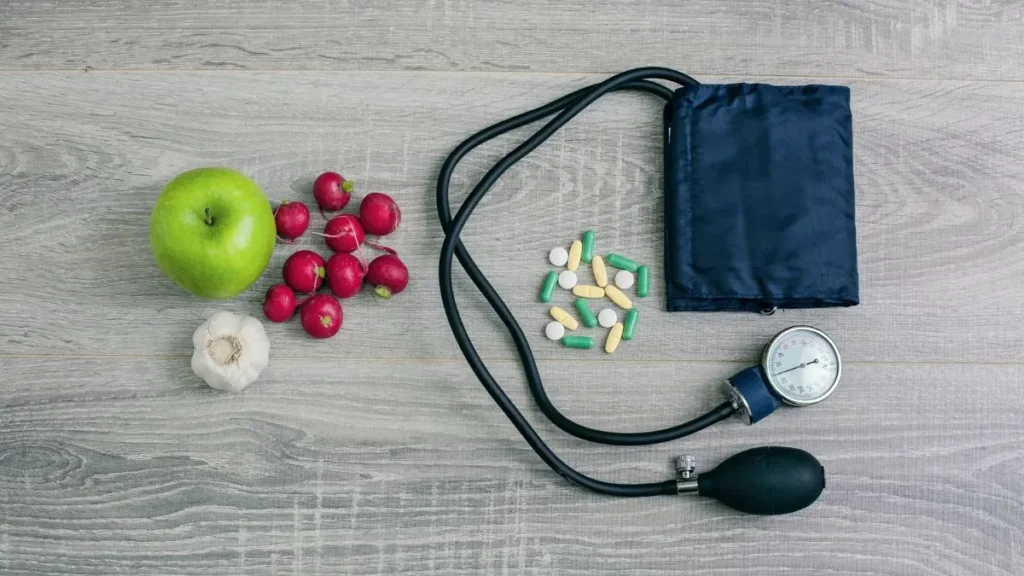
When doctors see a high number, their job is to protect your heart and brain from damage. They will often prescribe medications like ACE inhibitors, beta blockers, or calcium channel blockers based on the data they have. If that data is flawed, you end up taking medication to lower blood pressure that is already perfectly normal.
This leads to a condition called iatrogenic hypotension, which simply means low blood pressure caused by medical treatment. Your body needs a certain amount of pressure to push oxygen rich blood up into your brain against gravity.
When medication drops that pressure artificially low, your brain momentarily loses its oxygen supply when you stand up.
You might feel dizzy when you get out of bed. You might experience chronic fatigue, brain fog, or cold hands and feet. In severe cases, overmedication leads to fainting spells, which can cause devastating falls and bone fractures in older adults.
Everyone’s body responds differently to positioning and stress, so check with your doctor before altering how you monitor your health or if you plan to change your medication routine.
Why The Clinic Often Gets It Wrong
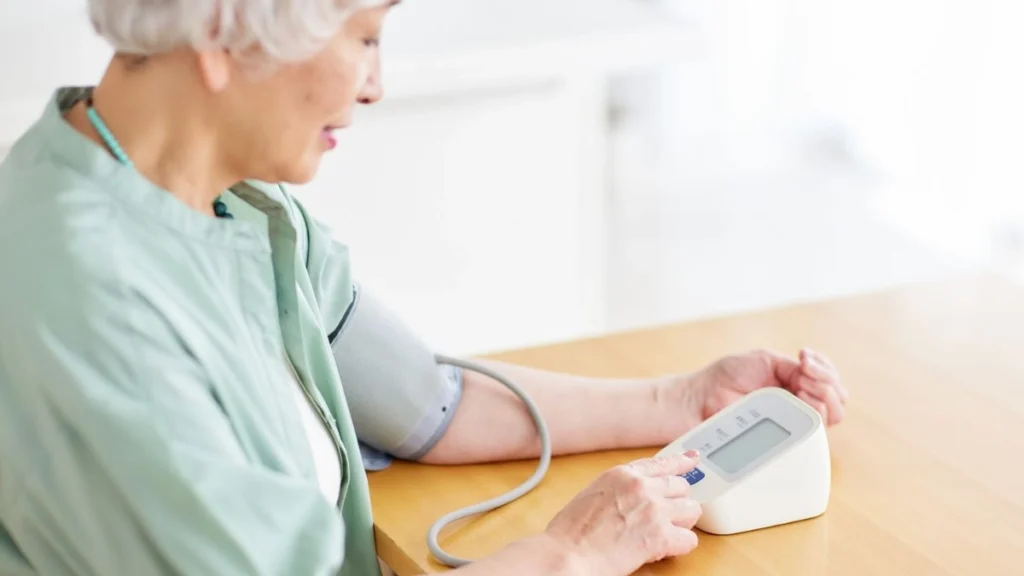
You might assume that medical professionals always take your readings perfectly. Unfortunately, the reality of a busy clinical practice makes this almost impossible.
Think about your last visit to the doctor. The nurse likely called your name, walked you down a long hallway, and immediately asked you to sit on the edge of an exam table. Your feet were likely dangling in the air.
Because the exam table has no armrests, your arm was probably hanging by your side or resting awkwardly on your lap while the cuff inflated. The nurse might have even been asking you questions about your medical history while the machine was running.
Every single one of these factors violates the scientific guidelines for accurate blood pressure measurement. Yet, the number generated in that rushed minute becomes the official record used to dictate your health plan for the next six months.
Other Hidden Triggers Spiking Your Reading
Arm position is the major discovery from the Johns Hopkins study, but it is not the only mechanical error ruining your numbers. Several other common mistakes compound together to create massive inaccuracies.
The Full Bladder Trap
Taking your reading before you go to the bathroom is a massive mistake. As your bladder fills, it sends stress signals to your brain to prevent an accident. This activates your sympathetic nervous system, known as your fight or flight response. A full bladder can temporarily spike your systolic reading by 10 to 15 points.
The Crossed Legs Squeeze
Crossing your legs at the knee compresses the large veins in your thighs. This physical restriction forces a surge of blood back up into your chest, forcing your heart to work harder to distribute it. Simply crossing your legs can elevate your systolic number by 2 to 8 points.
The Tight Cuff Squeeze
Many people buy standard machines at the pharmacy and never check the cuff size. If you have a larger arm and use a standard cuff, the machine has to overinflate to compress your artery.
This acts like a tourniquet and can artificially inflate your reading by up to 10 points. The inflatable bladder inside the cuff must cover at least 80 percent of your upper arm circumference.
| Measurement Mistake | Average Point Increase | The Physiological Cause |
| Full Bladder | 10 to 15 points | Activates sympathetic nervous system and stress hormones. |
| Wrong Cuff Size (Too Small) | 5 to 10 points | Machine overinflates to reach the artery through extra tissue. |
| Talking During Reading | 5 to 10 points | Engaging vocal cords and lungs disrupts resting heart rate. |
| Crossed Legs | 2 to 8 points | Compresses leg veins and forces blood back to the chest. |
| Taking over clothing | 5 to 40 points | Fabric blocks sensors and creates uneven artery compression. |
The “White Coat” Phenomenon Amplified
You have likely heard of white coat syndrome, where anxiety about seeing a doctor raises your heart rate. This is a very real psychological response. When you combine this nervous system spike with a dangling arm and a rushed environment, the results are catastrophic for accuracy.
This is why at home monitoring is widely considered the gold standard by cardiologists today. Your home is a controlled environment where you can eliminate the anxiety of the waiting room.
However, home monitoring only works if you act like a scientist. You must control the variables. If you treat your home readings as casually as the rushed clinic readings, you are simply gathering bad data in a more comfortable chair.
How to Take a Truly Accurate Reading

To get a number you and your doctor can actually trust, you need to follow a strict protocol. You are trying to capture your true resting baseline, not a snapshot of your body under physical or mental stress.
First, you must adhere strictly to the five minute rule. You cannot walk up a flight of stairs, sit down, and push the button. You must sit in a chair with absolute silence and stillness for a minimum of five full minutes before the cuff inflates.
During this rest period, your feet must be planted flat on the floor. Your back must be supported by the chair, not leaning forward or slumping. Your bladder must be completely empty, and you should not have consumed caffeine or tobacco in the previous thirty minutes.
Fixing The Arm Position

When it is time to press the button, your arm position must be flawless. Place the cuff on your bare upper arm.
Slide your chair close to a dining table or desk. Rest your forearm flat on the surface of the table. You want the middle of the cuff to be perfectly level with your heart.
Relax your hand completely. Do not form a fist or grip the edge of the table. Keep your palm facing upward, gently open. Once you press the button, do not speak a single word until the air has completely deflated from the cuff.
The Rule of Averages
Never rely on a single reading. Blood pressure is dynamic and fluctuates with every heartbeat.
Take the first reading and write it down. Keep your arm in the exact same position, stay completely silent, and wait exactly one minute. Press the button and take a second reading.
Wait one more minute and take a third reading. Throw the very first number in the trash, as it is almost always artificially high due to the initial compression shock. Average the second and third numbers together to find your true baseline pressure for the day.
| The Perfect Measurement Checklist | Timing | Why It Matters |
| Empty bladder | Before sitting down | Removes internal physical stress signals. |
| Sit with back supported and feet flat | 5 minutes before reading | Relaxes major muscle groups in the core and legs. |
| Arm supported on table at heart level | During the reading | Neutralizes gravity and prevents muscle tension. |
| Cuff placed on bare skin | During the reading | Ensures the machine sensors can detect the pulse clearly. |
| Complete silence | During the reading | Keeps respiration steady and resting heart rate low. |
| Take multiple readings | 1 minute apart | Eliminates the initial startle response of the first squeeze. |
When to Bring Your Machine to the Doctor
If you are consistently getting numbers at home that look radically different from what the clinic records, do not ignore the discrepancy. Pack your home machine in a bag and bring it to your next appointment.
Ask the nurse or doctor to watch you take a reading with your own machine. This allows them to verify your technique and ensure your arm position is correct. They can also take a reading simultaneously on your opposite arm with their clinical equipment to prove your machine is calibrated properly.
Taking control of your own measurement routine is one of the most powerful things you can do for your cardiovascular health. You are the only person who can ensure the environment is quiet, the position is right, and the resting time is honored.
Try This Today: The Perfect Setup Routine
- Move your machine to the dining room: Stop taking your readings on the edge of your bed or a soft couch where your back lacks support.
- Use a book for height: If your dining table is too low, stack a thick book under your forearm to elevate the cuff perfectly in line with your heart.
- Create a physical logbook: Write down the average of your second and third readings every morning, noting if you slept poorly or felt stressed that day.
When To See A Doctor
Stop reading and seek immediate medical attention if you experience a blood pressure reading higher than 180/120 accompanied by any of the following symptoms:
- Sudden, severe headache or blurry vision.
- Chest pain, shortness of breath, or numbness in your arms or face.
- Extreme dizziness, confusion, or difficulty speaking.These are signs of a hypertensive crisis and require emergency intervention, regardless of how your arm is positioned.
Do not let a simple postural error lead to years of unnecessary medical interventions. By treating your daily readings with the precision of a clinical study, you provide your doctor with the truth. That truth is exactly what you need to protect your heart for the long term.